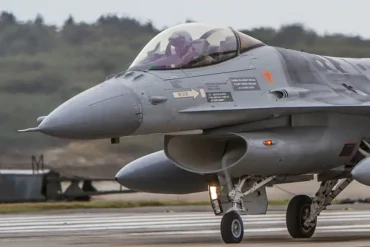
The F/A-18 Hornet is a highly versatile, carrier-capable multirole fighter designed for both air-to-air combat and ground-attack missions. A key aspect of its aerodynamic performance and operational flexibility lies in its air intake design. The air intake system plays a critical role in ensuring stable airflow to the engines, optimizing performance at various speeds and angles of attack, and facilitating carrier operations.
Position and Layout
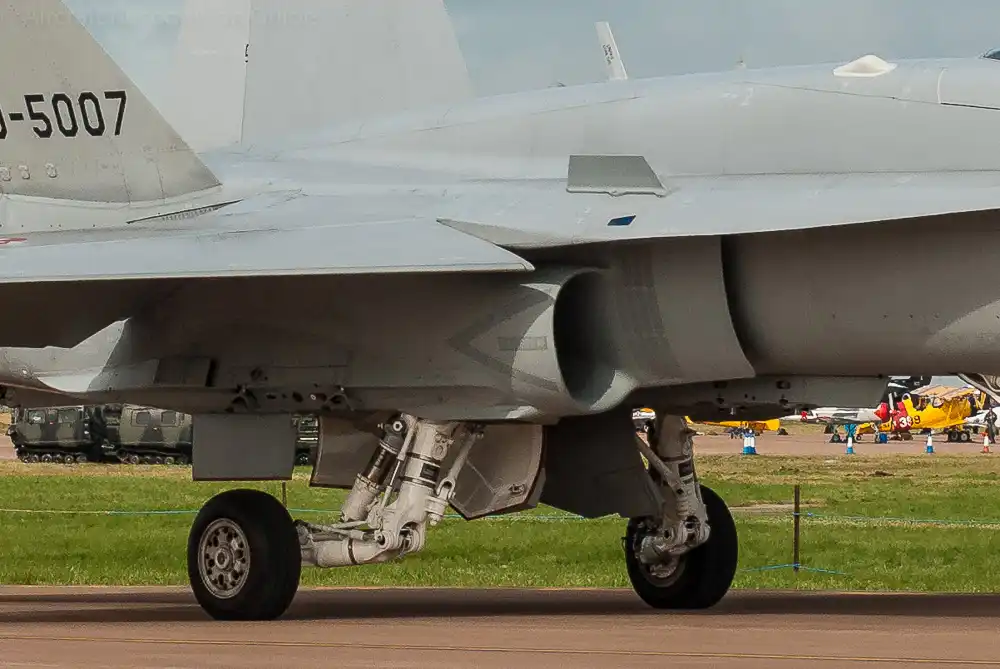
The F/A-18’s air intake system is strategically positioned to optimize airflow and maintain engine stability under dynamic conditions. The key positioning features include:
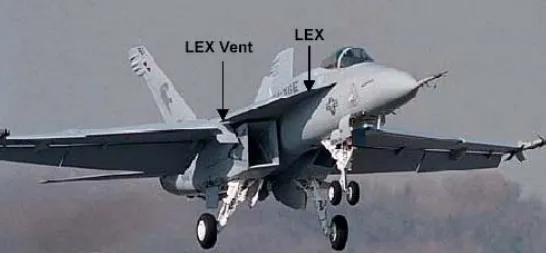
- Under the Leading-Edge Root Extension (LERX): The air intakes are located beneath the wing root LERX. This placement effectively utilizes the vortices generated by the LERX during high-angle-of-attack maneuvers, helping to smooth airflow into the intakes and reducing distortion.
- Symmetrical Dual Air Intakes: Unlike some other fighter aircraft with complex variable inlets, the F/A-18 features fixed, symmetrical dual air intakes. This configuration simplifies the structural design, reduces maintenance complexity, and provides a balanced air supply to both engines.
Structural Design and Shape
The F/A-18’s air intakes are designed to balance aerodynamic efficiency with structural simplicity. The defining structural aspects include:
- D-Shaped Cross-Section: The intakes feature a D-shaped inlet, which provides a smooth airflow transition from the external fuselage to the engines. The straight edges of the intake reduce transonic drag, improving efficiency at speeds approaching Mach 1.
- Seamless Integration: The intakes are blended smoothly with the fuselage, minimizing flow separation and drag, while maintaining efficient pressure recovery.
- Fixed Boundary Layer Separation Ramp: To prevent boundary layer airflow—the slower-moving air that clings to the aircraft’s surface—from entering the engines, a fixed boundary layer diverter is incorporated. This helps in maintaining engine performance by directing stagnant airflow away from the intake.
Airflow Management and High-Speed Efficiency
The F/A-18 air intake system incorporates features to optimize performance across different flight regimes, particularly at high angles of attack and transonic speeds:
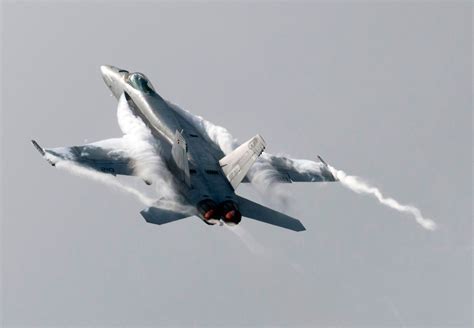
- LERX-Induced Vortex Control: During high angles of attack, the LERX-generated vortices interact with the intake flow, reducing airflow distortion and improving engine stability.
- Bleed Air Exhaust System: The aircraft features a bleed air exhaust system, located on the upper fuselage near the intakes, which regulates excess airflow pressure to prevent shockwave formation at higher speeds.
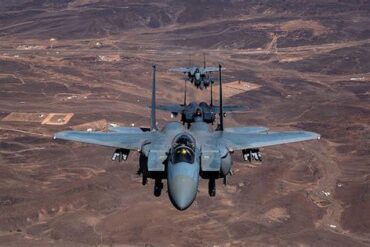
- Fixed Geometry Optimization: Unlike aircraft such as the F-15, which employ variable intake ramps for supersonic speed optimization, the F/A-18’s fixed intake design strikes a balance between high-speed performance and low-speed maneuverability, particularly beneficial for carrier landings.
Material Composition and Durability
To ensure structural integrity while maintaining a lightweight design, the F/A-18 air intake components incorporate advanced composite materials and high-strength alloys:
- Graphite/Epoxy Composite Panels: The intake surfaces feature graphite/epoxy composites, which reduce weight and improve corrosion resistance.
- Titanium Alloy Firewalls: The separator wall between the two engines is constructed from titanium, ensuring heat resistance and structural rigidity in extreme operating conditions.
- Marine-Grade Coatings: Since the F/A-18 operates from aircraft carriers, the intake components are coated with corrosion-resistant materials to withstand saltwater exposure.
Operational Advantages of the F/A-18 Air Intake Design
The F/A-18 air intake system provides multiple operational advantages, including:
- Enhanced High-Angle-of-Attack Maneuverability: The LERX-induced airflow regulation allows the F/A-18 to sustain controlled flight at angles up to 60 degrees, giving it a significant advantage in dogfights.
- Simplified Maintenance and Reliability: The fixed intake design eliminates the need for adjustable ramps, reducing moving parts and maintenance complexity.
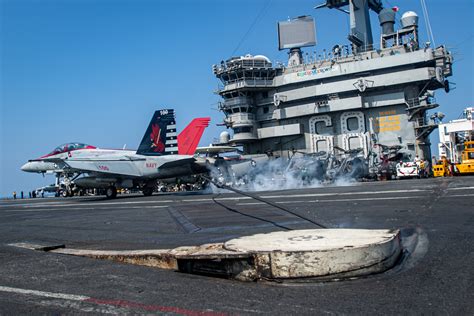
- Carrier Suitability: The design accommodates the aircraft’s low-speed handling requirements, crucial for safe carrier landings and takeoffs.
FAQ
1. Why does the F/A-18 use fixed air intakes instead of variable geometry intakes?
Unlike aircraft that exceed Mach 2, such as the F-15 or F-22, the F/A-18 is optimized for subsonic and transonic speeds. Fixed air intakes simplify the airframe design, reduce weight, and improve maintenance efficiency, while still providing sufficient airflow regulation for high-performance operations.
2. How does the F/A-18’s intake design support high-angle-of-attack flight?
The LERX-generated vortices help stabilize airflow into the intakes at high angles of attack, reducing turbulent air distortion and maintaining engine efficiency even in extreme maneuvering conditions.
3. What materials are used in the F/A-18’s air intake construction?
The intake structure incorporates graphite/epoxy composite materials for lightweight durability, titanium firewalls for heat resistance, and marine-grade coatings to prevent corrosion from prolonged carrier-based operations.
The F/A-18 Hornet’s air intake system exemplifies engineering precision, combining aerodynamic efficiency, structural simplicity, and combat-ready durability to meet the demands of modern naval aviation.