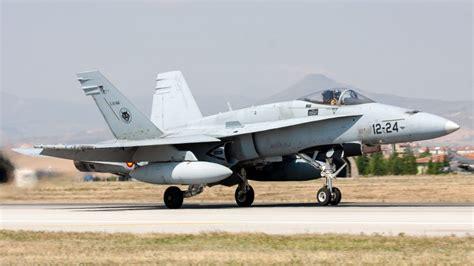
A Spanish Air Force EF-18 Hornet came dangerously close to crashing into the sea off San Lorenzo Beach in Gijón, northern Spain, after encountering a flock of birds mid-display during the Gijón Air Festival. The dramatic moment, captured by dozens of spectators on their phones, unfolded in front of a crowd estimated at over 300,000 attendees — the largest in the festival’s history.
Seconds from Disaster: Jet Dodges Flock of Birds Mid-Flight
The EF-18, a variant of the American-made F/A-18 Hornet, was executing a low-level high-speed maneuver over the bay when a sudden burst of evasive action disrupted the otherwise seamless routine. As the jet approached the beach at high velocity, the pilot spotted a flock of birds directly in the aircraft’s path. In a split-second decision, he initiated a sharp inverted dive, pulling the aircraft away from both the birds and the packed beachfront.

Eyewitness footage shows the aircraft briefly trailing black exhaust smoke, indicating a rapid change in throttle and possible use of afterburners during the evasive climb. The maneuver appeared so abrupt that many spectators began screaming, believing the aircraft was about to crash into the ocean just meters from the shoreline.
Spanish Air Force Confirms Evasive Protocol Engaged
In an official post on X (formerly Twitter), the Spanish Air Force confirmed the nature of the incident:
“The jet performed an evasive manoeuvre when it detected a flock of birds in its path. This action is part of standard protocol to protect both the pilot and the safety of the public. Our pilots are trained to react in milliseconds to any unforeseen event.”
The Spanish Air and Space Force emphasized that these maneuvers, while rare in display events, are part of pre-planned emergency protocols. All military pilots are drilled in such procedures to minimize public risk, especially during low-altitude crowd-facing aerobatics.
Why Birds Are a Deadly Risk in Aviation Displays
Bird strikes are a well-documented hazard in aviation, particularly dangerous during takeoffs, landings, and low-altitude displays. A collision with a bird, especially larger species such as seagulls or storks, can damage an aircraft’s engine, windshield, or canopy, sometimes leading to catastrophic failure.
According to the International Civil Aviation Organization (ICAO), there were over 270,000 wildlife strikes recorded globally between 2016 and 2021. Though most incidents occur near civilian airports, airshows — especially seaside events — are increasingly vulnerable due to higher bird concentrations.
A Recurring Threat: Similar Incident Just Weeks Earlier
In a disturbing pattern, the Gijón near-miss marks the second major bird-related airshow incident in Spain in as many months. In June 2025, a Spanish Eurofighter Typhoon performing at the Aire25 airshow in Murcia suffered a mid-air bird strike when a seagull shattered the canopy and punctured the jet’s windshield. The pilot terminated the routine and made an emergency landing without further incident.
These close calls are prompting growing concern among military aviation experts about the increased risk of bird interference in public flight demonstrations — particularly as crowds at airshows continue to swell each year.
The Gijón Air Festival: A Magnet for Aerobatic Excellence and Risk
The Gijón Air Festival, held annually on the Bay of Biscay, has evolved into one of Spain’s most high-profile aviation spectacles. This year’s edition featured performances from multiple branches of the Spanish military, including the Search and Rescue teams, National Police aerial units, and the Spanish Navy. Civilian stunt teams and vintage aircraft displays also entertained the crowd throughout the weekend.
This particular EF-18 demonstration was expected to be a highlight of the festival’s Sunday program. The fighter’s agile movements, thunderous afterburners, and dramatic flybys are typically crowd favorites. But this year’s moment of unintended drama eclipsed all planned theatrics, reminding spectators — and organizers — of the precarious balance between thrill and danger in military airshows.
A Jet Built for Combat, Tested in Airshows
The EF-18 Hornet, designated by Spain as the C.15, has been in service with the Ejército del Aire y del Espacio since the late 1980s. Originally designed by McDonnell Douglas (now part of Boeing), the Hornet is a twin-engine multi-role fighter capable of both air superiority missions and ground attack roles.
In Spain, the Hornet has undergone various upgrades, including new radar systems, improved avionics, and structural reinforcement to extend its operational life. Though now gradually being replaced by newer platforms like the Eurofighter Typhoon, the EF-18 still plays a vital role in both defense and public engagement roles, such as airshows and ceremonial flypasts.
A Need for Bird-Strike Mitigation Strategy in Air Displays
The frequency of bird strike incidents in Spanish airshows over recent years raises critical questions about current wildlife mitigation protocols in temporary aerial display zones. While commercial airports employ full-time wildlife management teams equipped with radar, deterrents, and culling programs, open coastal venues lack such infrastructure.
Experts suggest:
- Pre-show wildlife sweeps using drones and radar
- Temporary acoustic deterrents to disperse bird flocks near display paths
- Increased altitude buffers over crowd zones to provide pilots more reaction time
- Early-warning ornithological coordination with local environmental agencies
These measures, while logistically challenging, could prove vital as public attendance surges and aircraft speeds push modern limits.
Spectators React: Awe Turns to Alarm
Eyewitness accounts from Sunday’s crowd reflect a mixture of amazement and anxiety. One attendee, Javier López from Madrid, said:
“We were cheering during the dive, but then we saw smoke and the jet flipped — it looked like it was going to hit the water. People screamed. We didn’t understand it was an emergency until the plane climbed again.”
Several families reportedly left the beachfront area shaken, while others applauded the pilot’s skill and courage. The identity of the pilot has not been publicly disclosed, but military sources confirm he returned safely to base with no injuries and no damage to the aircraft.
The Bigger Picture: Are Airshows Due for a Safety Overhaul?
Globally, airshow safety standards are rigorous, governed by both national and international aviation authorities. Yet, the recent string of close calls in Spain and elsewhere has reignited debate over the risks of low-altitude military demonstrations near populated areas.
Calls for reform include:
- Stricter minimum safe altitudes for fast-jet aerobatics over beaches
- Mandatory bird activity assessments before each scheduled routine
- Use of AI-based monitoring systems for real-time threat detection
While the thrill of a roaring jet streaking across a summer sky is undeniably magnetic, experts caution that public events must evolve to reflect the real-time threats of modern display flying, particularly in coastal zones with high avian populations.
Conclusion: A Wake-Up Call in the Sky
The near-disaster in Gijón serves as a stark reminder that even the most experienced pilots and the most powerful aircraft remain vulnerable to nature’s unpredictability. In this case, a flock of birds nearly altered the course of a national celebration, and it was only quick thinking, deep training, and raw flying skill that kept the event from ending in tragedy.
As airshows continue to draw massive crowds across Europe and beyond, aviation authorities must now confront a growing dilemma: how to deliver aerial spectacle without compromising on modern environmental realities and public safety. The sky, it seems, is no longer the limit — it is the battleground for ever-heightened vigilance.