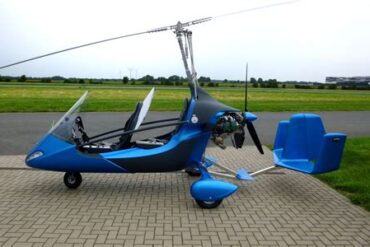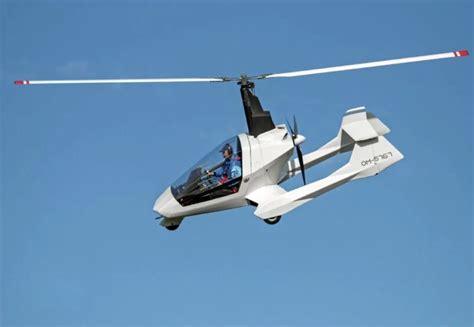
A gyroplane is a type of aircraft that generates lift using a freely spinning rotor. Unlike helicopters, which have powered rotors, the rotor of a gyroplane spins because of the air moving over the rotor blades as the aircraft moves forward. This design eliminates the need for an anti-torque device, like a tail rotor, since there is no torque load associated with powered rotors.
Most gyroplanes feature an airframe with landing gear, a single rotor typically consisting of two or three blades, and a propulsion engine with a propeller. The propeller can be in a pusher or tractor configuration. Additionally, they have a tail assembly that includes a vertical fin and rudder, along with a horizontal stabilizer and elevator. The flight controls for the rudder and elevator function similarly to those found in conventional aircraft. Sometimes, a wing is added to improve performance.
One key difference between helicopters and gyroplanes is that during powered flight, gyroplane rotors operate in a state called autorotation. This means that the rotor spins freely due to air flowing upward through the blades, instead of relying on engine power to turn them. This autorotation generates forces that keep the rotor blades turning and provide the lift needed for flight. In normal conditions, the rotor system of a gyroplane behaves like a helicopter rotor when descending without engine power.
Before taking off, a gyroplane’s rotor must reach a speed adequate for generating lift. Basic gyroplanes may require manual spinning of the blades at first. After this, the aircraft is taxied with the rotor tilted backward, allowing air to flow through and accelerate it to the necessary speed. More sophisticated gyroplanes use prerotators, which can be powered mechanically, electrically, or hydraulically to spin the rotor. However, these prerotators only function on the ground, as the torque they produce needs to be balanced by the friction between the gyroplane and the surface. In rare cases, jets on the rotor tips have been used for prerotation. While many prerotators can only achieve partial rotor speeds, some advanced systems can reach speeds above what is needed for flight, allowing for a quick vertical takeoff.
When it comes to operating, handling, and flying gyroplanes, detailed methodologies and evaluations are outside the scope of general discussions. For specific guidance, it is best to refer to the FAA Rotorcraft manual.