United Airlines has redefined the boundaries of customer experience (CX) through the strategic deployment of big data and real-time decision-making. In an era where travelers expect hyper-personalized, seamless, and responsive service, United has emerged as a case study in digital transformation. The airline’s commitment to integrating vast datasets into actionable intelligence exemplifies how aviation can harness digital ecosystems for both operational efficiency and customer delight.
The foundation of this transformation lies in a unified data hub—a central infrastructure that aggregates information from disparate systems. With this hub, United Airlines orchestrates interactions not just reactively, but predictively. Real-time insights empower frontline employees, optimize flight operations, and allow customers to enjoy frictionless journeys tailored to their behavior and preferences.
Real-Time CX as a Growth Driver
In a study conducted by Insight Partners and MIT-CISR, companies operating with high real-time interaction capabilities recorded over 50% higher revenue growth and 97% better profit margins than competitors lagging in digital responsiveness. Real-time CX is not merely an upgrade to traditional customer service—it is a strategic growth enabler.
United Airlines exemplifies this. By leveraging real-time data from over 85% of its mobile app users, United creates agile feedback loops that respond instantly to changing travel circumstances. Whether it’s gate changes, rebookings, or last-minute delays, customers are no longer passive recipients of updates—they are empowered participants in their travel experience.
United’s Unified Data Hub: The Backbone of Responsiveness
Data consolidation is the cornerstone of United’s real-time infrastructure. This unified data hub integrates inputs from internal systems, customer interactions, flight operations, and external variables like weather patterns. The system then pushes real-time updates through all digital channels—app notifications, kiosks, in-flight systems, and customer service tools.
This architectural leap means data is no longer locked in silos. A disruption in Houston? Ground crews, pilots, and passengers are notified simultaneously with context-aware options. An aircraft maintenance issue in Denver? The system already knows where the nearest replacement plane is and if it can be rerouted with minimal disruption.
Connection Saver: Data-Driven Decisions in Real Time
One of United’s most lauded innovations is its Connection Saver tool—a testament to big data meeting customer empathy. The tool dynamically evaluates if connecting passengers can reach their gate on time and whether it’s beneficial to hold the departing flight briefly.
By balancing operational efficiency with customer satisfaction, Connection Saver turns what used to be a source of frustration—missed connections—into an opportunity to showcase customer-first thinking. This initiative directly contributes to United’s impressive Net Promoter Score (NPS) of 50, nearly double the airline industry average.
Empowering Customers Through Data
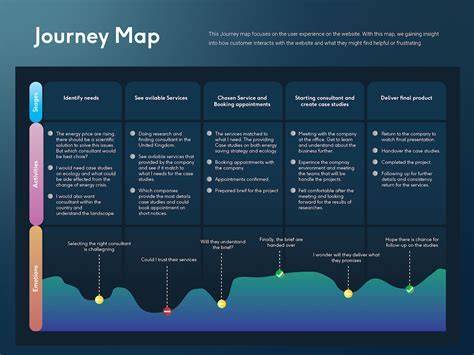
United’s mobile app, built on customer journey mapping, is a data-powered travel assistant. Travelers can:
-
Track checked bags in real time
-
Rebook flights automatically when delays occur
-
Receive gate updates and weather advisories
-
Chat live with support agents
Each function is informed by real-time data flows. More importantly, every digital interaction becomes a data point, feeding back into the system to continuously refine the experience.
Predictive Capabilities: Anticipating Needs Before They Arise
Big data at United isn’t only about responding faster—it’s about seeing the future. Frequent flyer habits, historical travel disruptions, and personal preferences inform the airline’s predictive models. If a Platinum-tier customer’s regular route from Chicago to San Francisco faces disruption, the system proactively suggests alternate options—sometimes before the delay is even announced.
This foresight builds trust and fosters loyalty. It tells the customer, “We know your preferences, and we’ve already solved your problem.”
Employee Enablement Through Smart Tools
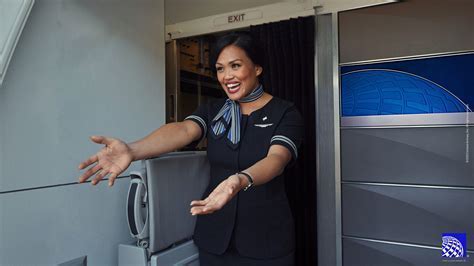
United’s investment in data extends to its workforce. Flight attendants are equipped with a dedicated app that provides instant access to passenger information, service requests, and operational updates. This tool turns every crew member into a customer service agent capable of delivering timely solutions.
In situations where customer complaints arise mid-flight, the crew can act immediately—resolving issues on the spot rather than offering impersonal compensation days later. Real-time responsiveness builds satisfaction faster and more effectively than reactive gestures.
Operational Resilience Under Pressure
Airlines operate under constant uncertainty—weather changes, air traffic congestion, mechanical issues. United’s real-time big data environment equips it with resilience. When a storm impacts Newark Airport, the airline simulates thousands of permutations to reassign aircraft, adjust crew schedules, and minimize passenger disruption.
This is not just smart logistics—it’s systemic intelligence that protects the brand promise. The efficiency here directly links to reduced costs, improved margins, and higher customer retention.
Real-Time CX: A Cultural Shift, Not Just a Tech Stack
Achieving real-time CX requires more than infrastructure. It demands a cultural transformation where decision-making becomes distributed, agile, and data-backed. At United, the empowerment of employees—whether at gates, in the air, or behind screens—is rooted in trust and access to information.
This organizational design ensures customer decisions are not bottlenecked by hierarchy. Instead, frontline agents can resolve issues confidently, knowing the data supports their actions.
The Strategic Value of “Real-Time-ness”
The term “real-time” often evokes technology, but in the CX context, it is a strategic orientation. Companies in the top quartile of real-time performance:
-
Deliver 62% higher revenue growth
-
Operate with radically improved margins
-
Report significant gains in customer satisfaction and loyalty
United Airlines’ journey illustrates that being real-time is not optional—it is the competitive frontier for global service providers. As travelers demand more personalization and less friction, only those businesses capable of adapting in milliseconds will thrive.
A Glimpse Into the Future of Customer Experience
What United is building today reflects the broader future of digital aviation. With AI integration, machine learning, and edge computing on the horizon, airlines will evolve from responders to anticipators. United’s real-time ecosystem is the prototype for what aviation giants must build to meet tomorrow’s expectations.
In the upcoming book Personalized, the authors argue that CX winners are those who empower customers to get what they want—better, faster, cheaper, or easier. United has internalized this philosophy. The real-time data framework not only reacts but predicts, creating an experience that’s both dynamic and deeply human.
FAQs
What is United Airlines’ real-time CX strategy?
United Airlines uses a centralized data hub to collect and process real-time information from across its operations. This data supports immediate decisions in flight connections, passenger notifications, and issue resolutions, improving satisfaction and reducing delays.
How does the Connection Saver tool work?
The Connection Saver analyzes real-time passenger movement and flight schedules to determine whether it’s worthwhile to hold a flight for a few minutes. This minimizes missed connections without significantly disrupting the airline’s overall schedule.
Why is big data important to customer experience in aviation?
Big data enables airlines like United to anticipate disruptions, personalize service, and automate decisions. It transforms static customer service into a responsive, predictive, and loyalty-enhancing system.