Antarctica is the most remote and least inhabited continent on Earth, yet it hosts several airfields and aerodromes that serve as critical lifelines for scientific operations, research expeditions, and logistical support. Unlike traditional airports in populated countries, Antarctic airports are not commercial in the usual sense. They primarily support government operations, scientific institutions, and, in some cases, private logistics firms. These airports play a pivotal role in sustaining human presence on the continent, enabling year-round access despite some of the harshest conditions known to aviation.
The continent’s airfields are primarily concentrated around scientific bases operated by various countries, and none of them operate under conventional ICAO standards. However, their strategic importance cannot be overstated. The following are five of the most prominent airfields that serve as domestic and international gateways in Antarctica.

McMurdo Station Ice Runway – The Primary U.S. Gateway
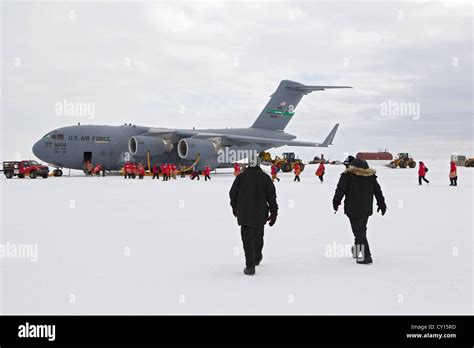
The Ice Runway at McMurdo Station is perhaps the most iconic and widely utilized airfield in Antarctica. Operated by the United States Antarctic Program (USAP), this seasonal runway is constructed annually on the sea ice near McMurdo Station on Ross Island. It is typically operational from October to December, during the austral summer, when the ice is thick enough to support aircraft weight.
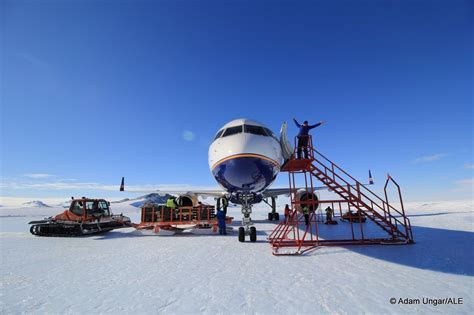
The runway accommodates a variety of aircraft, including C-17 Globemaster III, LC-130 Hercules, and even commercial Boeing 757s on rare missions. It serves as a critical lifeline for transporting cargo, personnel, and scientific equipment.
During the early part of the season, the Ice Runway is the primary entry point to Antarctica for U.S. operations. Once the sea ice begins to degrade, operations shift to Williams Field and Phoenix Airfield, also near McMurdo.
Wilkins Aerodrome – Australia’s Frozen Gateway
Situated about 70 km inland from Australia’s Casey Station, Wilkins Aerodrome is a unique blue ice runway operated by the Australian Antarctic Division. It is capable of handling large wheeled aircraft such as the Airbus A319 and C-17, making it one of the few Antarctic aerodromes that support direct intercontinental flights.
Unlike the seasonal ice runways, Wilkins operates on a naturally formed glacial blue ice surface. It allows for intercontinental operations directly from Hobart, Tasmania, cutting down travel time dramatically for Australian personnel. However, operations are highly dependent on weather and ice conditions, making precision meteorological forecasting vital.
Despite its remote location and ice-based infrastructure, Wilkins Aerodrome is equipped with navigation aids and weather monitoring systems to support safe landings in some of the most challenging aviation conditions on the planet.

Rothera Research Station Runway – The UK’s Antarctic Lifeline
Operated by the British Antarctic Survey, the airstrip at Rothera Research Station is located on Adelaide Island off the Antarctic Peninsula. Unlike ice runways, Rothera’s airstrip is a gravel surface, which makes it more durable and usable over longer seasons.
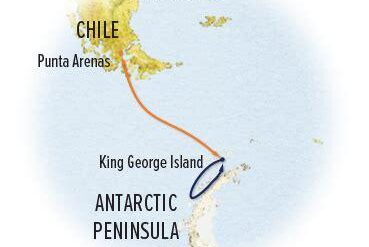
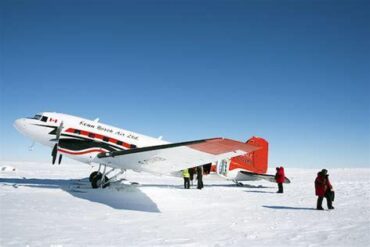
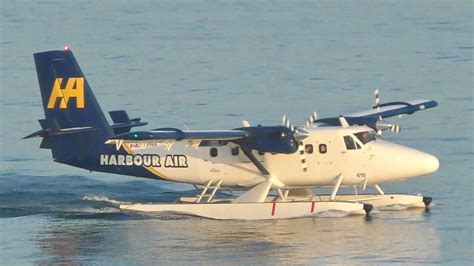
The Twin Otter and Dash 7 aircraft are most commonly used to service this station, flying in supplies and transporting researchers from Chilean airfields such as Punta Arenas. These short takeoff and landing (STOL) aircraft are ideally suited for the compact and rugged terrain of Rothera.
Rothera’s location on the Antarctic Peninsula also makes it a hub for intra-continental flights between British outposts and field camps across the continent. It serves as both a base of operations and a critical transit hub for regional logistics.
Troll Airfield – Norway’s Intercontinental Antarctic Air Hub
Located near Norway’s Troll Research Station in Queen Maud Land, Troll Airfield is one of the few Antarctic airfields certified for intercontinental flights. It is operated by the Norwegian Polar Institute and features a 3,000-meter long blue ice runway capable of handling large aircraft such as the Boeing 767.
Troll Airfield operates in cooperation with the Dronning Maud Land Air Network (DROMLAN), a multi-national effort to streamline logistics to the region. This network connects countries like South Africa, Germany, and the UK with their respective bases in East Antarctica via Troll.
The airfield’s altitude (around 1,200 meters) and geographic location require precise flight planning, but it remains a vital point for cargo and personnel transport during the brief summer operating window.

Teniente R. Marsh Airport – The Only Public-Use Airfield in Antarctica
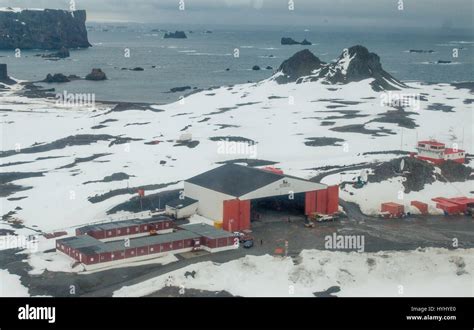
Teniente Rodolfo Marsh Martin Airport, located on King George Island, is the only airfield in Antarctica that somewhat resembles a public-use international airport. It is operated by Chile and situated at the Base Presidente Eduardo Frei Montalva, a permanent Chilean base.
What sets this airport apart is its gravel runway, approximately 1,300 meters long, which allows for operations of smaller commercial aircraft. The airport is connected with scheduled and chartered flights from Punta Arenas, Chile, making it the closest thing Antarctica has to a commercial flight connection.
This location is shared by multiple countries, including Russia, China, and South Korea, all of which maintain nearby bases. As a result, King George Island acts as a gateway to the Antarctic Peninsula and a hub for diplomatic and scientific exchanges.
Unique Challenges of Aviation in Antarctica
Operating aircraft in Antarctica involves navigating a complex web of environmental, logistical, and technical challenges. Extreme cold, high winds, and rapid weather changes are standard. Moreover, many runways are made of compacted snow or ice, requiring specialized landing gear and pilot training.
Navigation is also difficult due to the lack of conventional infrastructure and unreliable magnetic compass readings near the pole. GPS systems must be specially configured, and most aircraft rely on satellite communication for coordination.
Fuel is another significant consideration. Many stations rely on pre-positioned fuel caches or complex fuel delivery systems involving sealifts and overland transport. Every operation must be meticulously planned to minimize risk and maximize efficiency.
International Cooperation and Future Outlook
Despite the continent’s geopolitical neutrality under the Antarctic Treaty System, air travel in Antarctica is a prime example of international collaboration. Facilities such as DROMLAN and multi-nation hubs like King George Island are critical in ensuring seamless movement between countries’ research stations.
As climate change continues to reshape global priorities, Antarctica’s role in climate science, ice core research, and atmospheric monitoring will only grow. With this will come the demand for more efficient and reliable air access, potentially leading to more year-round facilities and even semi-permanent runways made from advanced materials.
While Antarctica will never become a destination for commercial tourism en masse, its airfield infrastructure will remain vital for those whose work depends on reaching the bottom of the Earth — and surviving it.