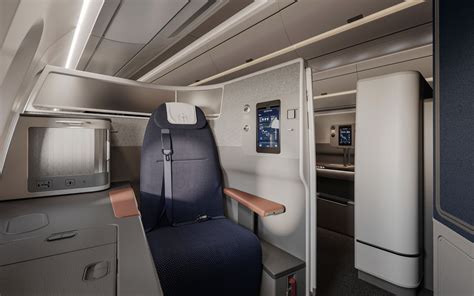
Lufthansa has stepped into a delicate experiment: stripping traditionally bundled perks from its premium cabins and selling them back piece by piece. The result is Premium Economy Light and Business Class Light, two new fare categories that promise lower entry prices while quietly dismantling long-standing expectations of what “premium” means in modern aviation.
From March 17, these fares are rolling out across Lufthansa Group carriers—including SWISS, Austrian Airlines, Brussels Airlines, and Discover Airlines—on long-haul routes spanning Europe to Asia, Africa, the Middle East, and parts of the Americas. The strategy is not subtle. It is a calculated pivot toward unbundling, a model long associated with low-cost carriers, now migrating upward into cabins once defined by inclusivity.
A Premium Experience, Piece by Piece
At first glance, the Light fares appear to preserve the core of the onboard experience. Seats remain the same. Meals are still served. Entertainment screens still glow in front of passengers crossing oceans. But the fine print tells a more revealing story.
Passengers choosing these lower-tier premium fares will encounter reduced baggage allowances, paid seat selection, stricter change policies, and in many cases, non-refundable tickets. These are not minor adjustments—they reshape the psychological contract between airline and traveler.
For Business Class Light, the most striking change is the reduction from two checked bags to one, each still capped at 32kg. In Premium Economy Light, the allowance drops from two bags to just one 23kg piece. Carry-on policies remain unchanged, but that stability feels more like an anchor than a reassurance.
The deeper disruption lies in seat selection. Even HON Circle Members, Senators, and Star Alliance Gold travelers—passengers who have historically been insulated from such fees—must now pay to choose their seats when booking Light fares. This shift dissolves one of the last symbolic privileges of elite status.
When Loyalty Meets a Price Tag
Frequent flyers are not reacting quietly. Online forums and aviation communities have lit up with frustration, not merely because of the fees themselves, but because of what they represent: a recalibration of loyalty.
For decades, airline loyalty programs have functioned as quasi-social contracts. Fly often enough, spend enough, and the airline reciprocates with comfort, flexibility, and recognition. Lufthansa’s new structure introduces a subtle but profound twist—loyalty no longer guarantees convenience if you choose the “wrong” fare bucket.
This creates a layered system where even elite passengers must navigate trade-offs. The cheapest premium ticket may now come with inconveniences once reserved for economy travelers. In effect, Lufthansa is asking: how much is each perk really worth to you?
The Economics Behind the Unbundling Shift
From a business perspective, the logic is almost textbook. Airlines operate in a world of razor-thin margins, volatile fuel costs, and unpredictable demand cycles. Unbundling allows carriers to segment customers with surgical precision, extracting additional revenue from those willing to pay for comfort while offering a lower headline price to attract more price-sensitive travelers.
Think of it as modular aviation. The seat is the base product. Everything else—baggage, flexibility, seat choice—becomes an add-on. This model thrives on behavioral economics. A lower upfront fare draws attention, while incremental fees accumulate quietly during the booking process.
Yet there is a tension here. Premium cabins have traditionally been insulated from this logic because their value proposition relies heavily on simplicity and completeness. When a business traveler books Business Class, they are not just buying a seat; they are buying time, predictability, and ease. Fragmenting that experience risks eroding its core appeal.
How Lufthansa Compares to Finnair and Others
Lufthansa is not alone in this experiment. Finnair’s Business Lite fare has already removed lounge access, checked baggage, and seat selection entirely. Compared to that, Lufthansa’s version appears almost restrained—it still includes some baggage and retains the full onboard service.
But the direction of travel is unmistakable. Across the industry, airlines like KLM and Qatar Airways have begun trimming inclusions from certain fare classes, testing how far they can push unbundling without damaging their premium brand.
The interesting nuance lies in execution. Finnair’s approach is more radical, effectively redefining what Business Class can exclude. Lufthansa, by contrast, is attempting a hybrid model, preserving enough benefits to maintain brand identity while introducing friction points that generate additional revenue.
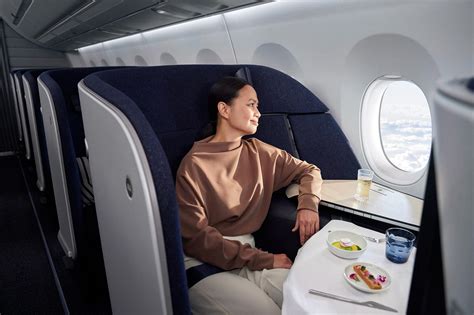
This creates a competitive landscape where the definition of “premium” becomes increasingly fluid. A Business Class ticket on one airline may include lounge access and two bags, while another offers the same seat but charges for both.
Will Travelers Accept the Trade-Off?
The success of Lufthansa’s Light fares hinges on a deceptively simple question: does the price difference justify the loss of convenience?
If the fare gap is significant, travelers may tolerate the stripped-down inclusions. Leisure passengers, in particular, might accept fewer perks in exchange for a more affordable entry into premium cabins. But if the savings are marginal, the psychological friction could outweigh the financial benefit.
There is also a branding risk. Premium cabins are aspirational spaces. They symbolize a step above the ordinary. When too many elements become transactional, the experience can start to feel less like an upgrade and more like a negotiation.
Airlines are, in essence, running a grand behavioral experiment at 35,000 feet. They are probing the boundaries of what passengers will accept, how loyalty evolves under pressure, and whether the meaning of “premium” can survive disassembly.
The outcome is not predetermined. Aviation has a long history of bold ideas that reshaped the industry—and just as many that quietly vanished when passengers pushed back. Lufthansa’s gamble sits right on that edge, where economics meets expectation, and where even the smallest fee can ripple into a much larger question about what flying, at its best, is supposed to feel like.