Delta Air Lines is raising the bar for premium travelers around the globe with a bold fleetwide retrofit program and strategic network expansions designed to deliver uniform luxury and unmatched consistency. As the carrier embarks on a multi-year overhaul of its aging wide-body jets, rival airlines—Thai Airways, Finnair, Cathay Pacific, Qantas, and Singapore Airlines—are racing to retrofit their own A330 and A350 cabins, setting the stage for an unprecedented battle for the sky’s most discerning customers.
From sleek private suites to mood lighting and advanced in-flight entertainment, the industry’s leading carriers recognize that consistency is king: a single subpar flight experience can drive high-value passengers to a competitor. In response, Delta has unveiled a comprehensive strategy that goes beyond mere cabin refreshes to embrace network optimization and hub development—most notably in Austin, Texas—underscoring a new era in which premium travel is defined not only by sumptuous seats but by seamless service across every route and aircraft type.
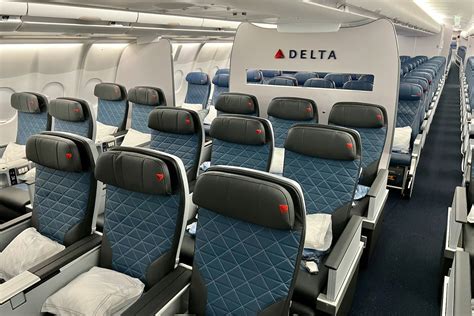
Delta’s Ambitious Strategy to Unify Premium Experience
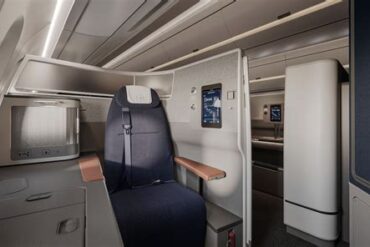
Recognizing fragmentation in its own international offerings, Delta has committed to retrofitting every Airbus A330-200 and A330-300 with its signature Delta One Suites. Once equipped only on the newer A330-900neo and A350 fleet, these private pods with sliding doors will replace the aging reverse-herringbone business-class seats, delivering a uniform premium environment on long-haul routes. The retrofit rollout will span several years, ensuring travelers flying out of Atlanta, New York, and beyond can reliably expect the same high-end cabin no matter the aircraft.
Beyond seating, Delta is standardizing in-flight entertainment, lighting, and connectivity, while retraining crew to provide a consistent brand-defining service at every touchpoint. By insisting that every international flight reflect the latest suite design and technology, Delta sends a clear message that premium travel is no longer a patchwork of varied experiences but a cohesive promise fulfilled across its network.
Boeing 767 Retirement and Next-Generation Replacements
While A330s receive the spotlight, Delta’s Boeing 767 fleet faces a different fate. The carrier will preserve its 767-400 cabins in their current configuration—sans the sliding doors of newer suites—while retiring the older 767-300s entirely. These retirements make way for factory-delivered Airbus A330-900neo and A350 jets, each outfitted with Delta One Suites and Premium Select cabins from day one. The move both accelerates fleet modernization and eliminates inconsistencies that occur when multiple cabin types share the same route.
Replacing the oldest 767s with brand-new wide-bodies also brings operational efficiencies. Newer jets boast improved fuel burn, lower maintenance costs, and enhanced environmental performance—vital considerations as airlines balance passenger expectations with economic and regulatory pressures.
A350 Standardization: From Legacy Layouts to ‘35H’ Excellence
Delta’s A350 fleet presents its own challenges. Some aircraft, acquired from LATAM Airlines, still operate with a 2-2-2 business-class layout and lack the coveted Premium Select product. To erase this inconsistency, Delta will retrofit these “35L” variants to the “35H” configuration by 2027, installing 40 Delta One Suites and expanding Premium Select seating while reducing economy capacity. Once complete, every Delta A350 will offer the same state-of-the-art cabin that passengers now enjoy on its newest long-haul aircraft.
This strategic standardization underscores Delta’s belief that loyalty hinges on predictability: no passenger should wonder whether they’ll find privacy doors or the latest amenity kits on their next transoceanic flight.
Premium A321neos: Bringing Flat Beds to Domestic Routes
Delta isn’t limiting its innovations to international service. The airline’s fleet of nearly 20 premium-configured Airbus A321neos—each boasting flat-bed Delta One seats—awaits final certification before entering service on key transcontinental markets such as New York–Los Angeles, New York–San Francisco, and Boston–Los Angeles. While rumors swirled about A321neos flying to Europe, Delta insists that wide-bodies will remain the workhorses for transatlantic travel. Nevertheless, the flexible deployment of premium A321neos adds capacity on high-demand domestic routes and offers travelers a taste of Delta One luxury at cruising altitudes closer to home.
Expanding Premium Select Across the U.S.
After seeing robust uptake on New York–Los Angeles flights, Delta will extend its Premium Select cabin—an enhanced premium economy product with wider seats, increased recline, and upgraded meal service—to all JFK–SFO rotations. Though launch dates remain unannounced, this expansion signals Delta’s commitment to elevating domestic comfort and blurring the line between international and U.S. premium offerings.
Austin: Delta’s Next Major Hub
On the ground, Delta is transforming Austin, Texas, from a focus city into a full-fledged hub. With nearly 80 daily departures already and plans to reach the 120-departure benchmark typical of a hub, Austin’s rapid growth as a tech and cultural center makes it an ideal candidate for Delta’s next major investment. The airline is adding routes, enhancing ground services, and forging local partnerships to secure market share in one of America’s fastest-expanding urban areas—a move that could reshape fare competition and connectivity throughout the central United States.
Global Retrofit Revolution: Airlines Follow Delta’s Lead
Delta’s retrofit ambitions mirror a broader industry trend. Airlines worldwide are pouring billions into A330 and A350 cabin overhauls to keep pace with escalating premium demand. Rather than procure entirely new fleets, carriers retrofitting existing jets can deliver factory-fresh experiences at a fraction of the cost and lead time. As a result, passengers will encounter private suites, mood lighting, and advanced entertainment systems even on aircraft that have logged millions of miles.
Finnair and Singapore Airlines: European and Asian Titans Retool for Premium
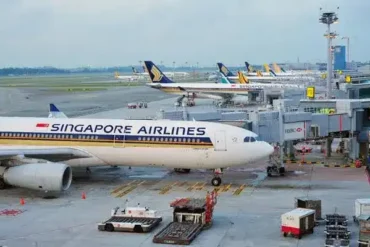
Finnair has completed retrofits across eight A330s and seventeen A350s, unveiling refreshed business-class cabins, a new premium economy product, and upgraded economy seating on routes spanning Europe, Asia, and North America. Meanwhile, Singapore Airlines has allocated over SGD 1 billion to revamp its A350-900 fleet, rolling out even more private and spacious business-class suites by late 2025—an aggressive timetable that underscores the fierce pressure to stay at the forefront of luxury service.
Cathay Pacific and Thai Airways: Elevating Regional and Long-Haul Offerings
Cathay Pacific’s A330s now feature lie-flat regional business seats optimized for intra-Asia flights, while its A350s are slated to showcase an “Aria Suite” design inspired by the carrier’s flagship offerings. Thai Airways has signed on for A350-900 retrofits as well, introducing new Royal Silk business cabins, expanded Economy Plus sections, and state-of-the-art in-flight entertainment systems, a bid to reclaim its status in a highly competitive Southeast Asian market.
Qantas and Virgin Atlantic: Southern Hemisphere Carriers Double Down on Style
Down under, Qantas has wrapped up its A330-200 cabin upgrades, integrating mood lighting, high-resolution screens, new upholstery, and connectivity enhancements in preparation for its ultra-long-haul Project Sunrise flights. Across the globe, Virgin Atlantic’s A330neo program is delivering “business-plus” suites complete with sliding doors, chic communal areas, and Bluetooth-enabled entertainment, showcasing how retrofits can reinforce brand identity and capture premium customers.
The Strategic Imperative of Retrofitting
Retrofitting is more than a cosmetic exercise: it’s a strategic necessity. With premium travel demand surging post-pandemic, airlines cannot risk inconsistent cabin products undermining loyalty. Upgrades extend aircraft lifespans, delay capital-intensive new orders, and allow carriers to respond rapidly to market shifts. For passengers, the result is private cabins, personalized lighting, and seamless connectivity—amenities once reserved for brand-new jets.
Navigating Challenges in the Retrofit Race
Yet cabin overhauls come with complexity. Airlines must secure regulatory approvals, manage prolonged groundings, and coordinate engineering for new seat installations, wiring changes, and system integrations. Delta’s A350 standardization will stretch into 2027, while Singapore Airlines’ transformations demand exhaustive testing. Smaller carriers may struggle to fund or schedule extensive retrofits, potentially widening the gap between industry leaders and laggards.
The Future of Premium Flight Travel
As airlines worldwide refit their fleets, passengers stand to enjoy unprecedented levels of comfort and privacy, regardless of a plane’s age. Delta’s sweeping program, from A330 and A350 retrofits to the rise of premium A321neos and the emergence of Austin as a key hub, exemplifies how carriers can leverage both cabin innovation and network strategy to capture high-value travelers.
The retrofit revolution is in full flight. In the coming years, flying premium will mean more than a plush seat—it will guarantee a cohesive, high-touch experience that transcends borders, aircraft models, and route lengths. For travelers and airlines alike, the sky’s the limit.