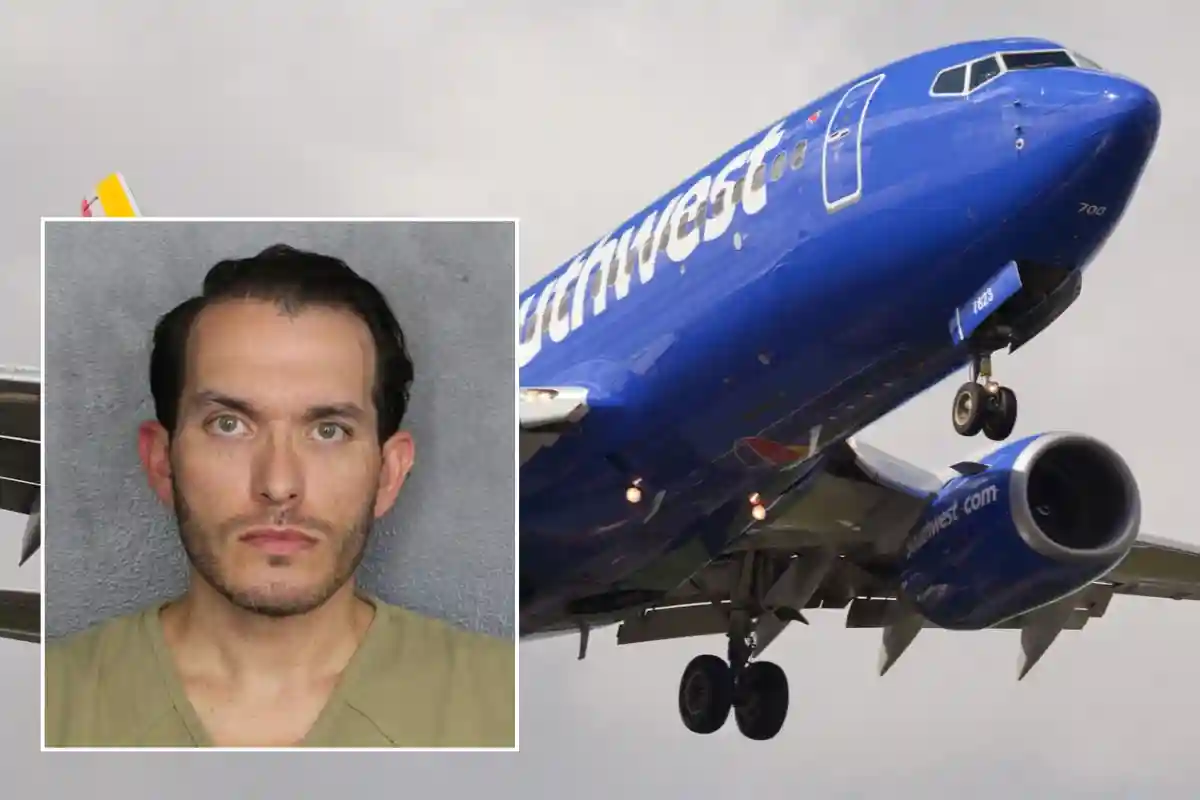
A newly trained Southwest Airlines flight attendant surrendered to authorities in Broward County, Florida, this week, weeks after completing his cabin crew training while an active arrest warrant for grand theft hung over him. Anthony Weaver, 39, turned himself in at the Broward County Jail facing a third-degree grand theft charge, according to Aviation Journal. He is accused alongside his partner, James Calvert, of systematically exploiting an 85-year-old woman whose cognitive function had been impaired by brain ischemia, seizing control of her accounts and diverting her money toward their own household expenses. The case raises uncomfortable questions about how thoroughly airlines screen the people entrusted with passenger safety, and whether a criminal warrant issued before a hiring decision should have surfaced long before a badge was pinned to a uniform.
Southwest Hired Weaver While a Fraud Warrant Was Outstanding
Reports indicate that Southwest may have brought Weaver aboard while a warrant for defrauding the Florida pensioner was already in place. He completed the airline’s flight attendant training program this month and never operated a single flight for the carrier. Simple Flying reached out to Southwest for confirmation, but an airline spokesperson could not be reached immediately. The timeline is the most troubling element of the story: an arrest warrant is a matter of public record, and yet the hiring process moved forward through interviews, a contingent offer, and four weeks of intensive instruction at Southwest Airlines University in Dallas without interruption. Whether the airline’s background check simply failed to capture the warrant or whether it was completed before the warrant was filed remains unclear, and Southwest has so far declined to clarify.
How the Alleged Scheme Drained an Elderly Woman’s Accounts
The allegations trace back to 2020, when Weaver and Calvert are said to have befriended the 85-year-old woman through Papa Pal, a companion-matching platform that pairs older adults with vetted caregivers for everyday tasks such as transportation to appointments, grocery shopping, and light housekeeping. Papa Pal markets itself on the promise that every caregiver is screened, a claim now under scrutiny. According to investigators, the pair exploited the woman’s impaired judgment to take control of her financial accounts, then used her funds to pay their own utility bills and wrote checks to themselves for personal use, draining thousands of dollars over time. The scheme ultimately collapsed when the victim’s daughter grew suspicious after overhearing a conversation between the two men and intervened to secure her mother’s money. Calvert was arrested first, and Weaver followed by turning himself in.
Charges, Custody, and What Comes Next
Weaver now faces a third-degree grand theft charge, a felony under Florida law that carries potential prison time and restitution obligations depending on the amount involved and the vulnerability of the victim. The Broward County case will likely hinge on bank records, cancelled checks, and testimony from the victim’s daughter, who effectively ended the scheme. Neither Weaver nor Calvert has been convicted, and both are presumed innocent. Simple Flying also contacted Papa Pal and its parent company, Papa, for comment, but a spokesperson could not be reached immediately.
Inside Southwest’s Rigorous Flight Attendant Hiring Standards
Becoming a Southwest flight attendant is a demanding process. Applicants must be at least 20, legally authorized to work in the United States, hold a valid passport for routes into Latin America and the Caribbean, and possess a high school diploma or GED. Candidates join the airline’s talent community, clear multiple interview stages, and receive a contingent job offer before entering a four-week training program that requires memorizing up to 125 three-letter airport codes. They must also pass the Pre-Placement Screening Test, which includes lifting 50 pounds to shoulder height, walking narrow aisles, and opening overwing window exits, along with appearance standards and a Department of Transportation drug and alcohol screening with zero tolerance for marijuana. Weaver almost certainly passed a background check as part of that process, which makes the outstanding warrant all the more puzzling.

The Accountability Gap in Airline Vetting
Southwest operates more than 800 active Boeing 737s, and every one of them depends on crew members who have cleared layers of physical, medical, and character screening. A warrant issued for financial crimes against an elderly person should be a red flag visible to any competent background check, and the fact that Weaver reportedly reached the training graduation stage suggests either a gap in the screening vendor’s coverage or a lag between the warrant’s issuance and the airline’s hiring timeline. The case also casts a harsh light on caregiver platforms that promise vetting while leaving vulnerable seniors exposed to predators who exploit loneliness and declining cognition. For families relying on companion services, the lesson is blunt: oversight by relatives remains the most reliable safeguard, as the victim’s daughter demonstrated when she stepped in.
For Southwest, the reputational damage is limited by the fact that Weaver never flew, but the operational questions endure. Airlines will face pressure to confirm that background checks capture open warrants in real time rather than relying on periodic snapshots, and regulators may revisit how elder financial abuse cases intersect with transportation-sector hiring. Weaver’s surrender closes one chapter; the broader examination of how he slipped through has only begun.