
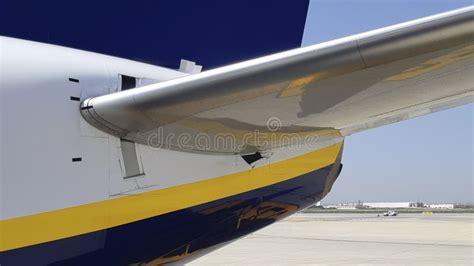
A stabilator, also known as an all-moving tail, is a fully adjustable horizontal stabilizer found on some aircraft. Unlike traditional elevators, which are part of a fixed or adjustable horizontal stabilizer, stabilators move entirely in response to the pilot’s controls. This design is especially common in high-speed military combat aircraft, where they improve maneuverability and help prevent issues like mach tuck, a problem caused by shock waves at the elevator hinge line of conventional tails.
While stabilators are primarily seen in military jets, they can also be found in certain light, general aviation aircraft. These stabilators pivot around their aerodynamic center, allowing pilots to make control inputs with minimal effort. This ease of control remains constant, regardless of airspeed or angle of attack. To avoid over-controlling, light aircraft often feature an anti-servo tab on the trailing edge of the stabilator. When the pilot inputs a control, this tab moves in the same direction but further, creating a counteracting aerodynamic force that helps stabilize the aircraft.
In many cases, the anti-servo tab doubles as a trim tab, aiding in fine adjustments. However, supersonic aircraft typically do not use these tabs. Older aircraft dealt with the risk of over-controlling through resistance from springs or hydraulic pressure. Today, modern military jets employ fly-by-wire systems, which effectively manage control inputs to prevent excessive movements.