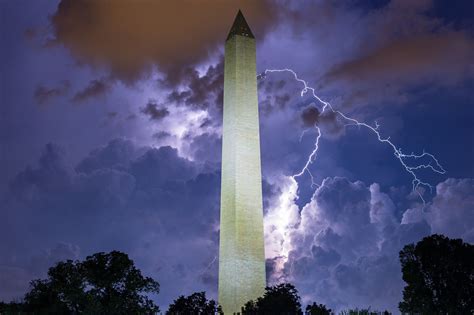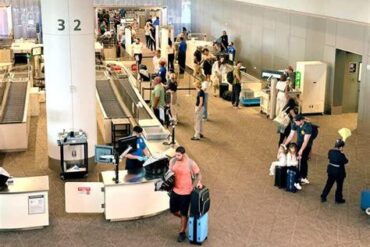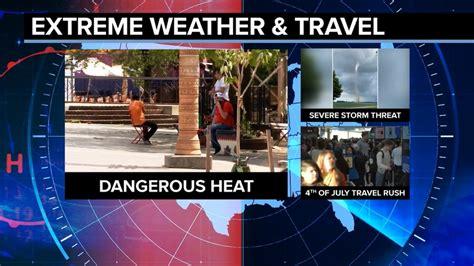
As the nation gears up for the busiest Independence Day air travel period in 15 years, travelers heading to July Fourth celebrations should brace themselves for potential disruptions. Stormy weather is predicted to cause significant delays, particularly along the East Coast, where showers and thunderstorms are expected to affect major travel hubs such as Florida, Washington, D.C., and Baltimore. This storm system, which has already caused considerable chaos earlier in the week, continues to impact airports across the region, leaving many travelers uncertain about their plans.
On Tuesday, ground stops were issued across the Eastern Seaboard, creating havoc at major airports in New York City, Boston, and Washington, D.C. While skies have largely cleared since then, the lingering effects of these storms mean that passengers traveling in and out of these cities may still encounter significant delays. Travelers at Hartsfield-Jackson Atlanta International Airport also faced long waits last Friday due to severe weather, with some passengers left stranded on the floor, illustrating the extensive disruptions caused by these conditions. Adding to the concern, a flood watch is currently in effect for Norfolk, Virginia, following heavy rainfall that swept through the area in the last 24 hours.
Despite these challenges, the overall forecast for the July Fourth weekend looks much brighter. For most of the nation, clear skies are expected—ideal for fireworks displays and outdoor celebrations. However, travelers in the northern Plains and Florida should remain vigilant, as they could face heavy thunderstorms and rain, potentially causing localized disruptions.
The Federal Aviation Administration (FAA) has cautioned that this year’s holiday travel season will be exceptionally busy, with approximately 300,000 flights scheduled over the course of the week. The peak day for flight volume is projected to be Wednesday, with nearly 50,000 flights scheduled. In detail, the breakdown of scheduled flights for the upcoming days is as follows:
- Wednesday: 49,784 flights
- Thursday: 51,284 flights
- Friday (July 4): 35,066 flights
- Saturday: 42,866 flights
- Sunday: 47,966 flights
- Monday: 50,128 flights
Given the high number of travelers, the Transportation Security Administration (TSA) is preparing for a record 18.5 million passengers to pass through security checkpoints during the holiday period. Friday, July 6, is forecasted to be the peak travel day, with an estimated 2.9 million passengers flying across the country. Airlines, particularly United Airlines, are gearing up for a surge in passenger numbers. United anticipates flying over 6 million passengers from June 27 to July 7, marking a 500,000 increase from last year. Notably, the peak travel days for United are expected to be June 27 and July 3, with approximately 580,000 passengers flying each day.
Additionally, the American Automobile Association (AAA) predicts that a record 72.2 million Americans will travel domestically from June 28 to July 6. This represents an increase of 1.7 million travelers compared to 2024 and 7 million more than in 2019. Among these travelers, 61.6 million will choose to travel by car, 5.84 million will be flying, and 4.78 million will utilize buses, trains, or cruises. The top travel destinations this holiday season include Florida’s popular cities—Fort Lauderdale, Miami, and Orlando—alongside Seattle, New York, Anchorage, Alaska, and Hawaii. These locations attract both locals and tourists with their picturesque beaches, spectacular fireworks displays, and vibrant holiday festivities.
As weather conditions remain unpredictable, travelers are strongly advised to plan ahead and stay informed about potential delays. It is highly recommended to check flight status frequently, especially for those departing from major airports along the East Coast. With careful preparation and awareness of current conditions, most passengers can enjoy a smooth and memorable Independence Day celebration. Keeping abreast of local weather forecasts and airline updates will be crucial in navigating the challenges posed by stormy weather and record air traffic.