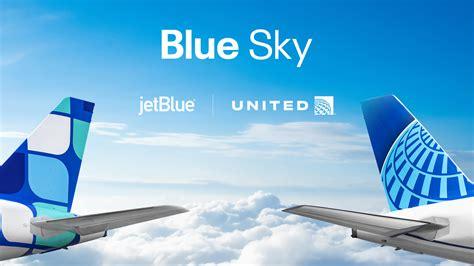
United Airlines and JetBlue have taken a decisive step in reshaping the U.S. aviation landscape. Under their rapidly evolving Blue Sky partnership, passengers can now book flights operated by either carrier directly through United.com, JetBlue.com, or their respective mobile apps. This strategic integration marks a pivotal shift in how customers search, compare, and purchase airfare, effectively broadening network access without requiring travelers to leave their preferred booking platform.
For travelers, the experience becomes instantly more expansive. A customer browsing JetBlue’s website will now see relevant United-operated flights displayed alongside JetBlue’s own services. The same applies in reverse. Instead of toggling between multiple airline sites, passengers are presented with a consolidated set of route options, all clearly labeled to indicate the operating carrier. The booking process supports cash payments, points, and miles, reinforcing the depth of the collaboration.
The implications extend well beyond convenience. This development signals a meaningful commercial alignment between two major U.S. airlines that historically operated in largely separate spheres—United as a dominant global network carrier and JetBlue as a premium-focused leisure and transatlantic challenger.
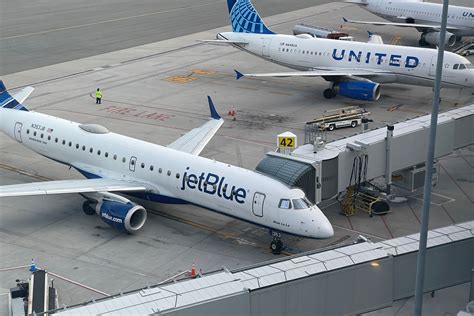
How Cross-Airline Booking Works on United and JetBlue Platforms
The integration is designed to be seamless. Flights operated by the partner airline appear in standard search results on both websites and apps. Each listing is clearly marked, ensuring transparency regarding which carrier operates the aircraft. Customers can complete the purchase entirely within their chosen airline’s ecosystem, whether they are booking with United MileagePlus miles or JetBlue TrueBlue points.
Currently, travelers can book eligible itineraries operated by one airline at a time. Mixed-airline itineraries—where one segment is flown by United and another by JetBlue under a single ticket—are not yet available. However, both airlines have publicly stated that this functionality is expected to launch in the near future. Once implemented, passengers will be able to construct single itineraries that combine the strengths of both networks, eliminating the friction of managing separate reservations.
For JetBlue loyalists, access to United’s extensive international reach opens new long-haul possibilities. United’s global network spans Europe, Asia, Africa, and beyond, connecting through major hubs such as Newark, Chicago, Houston, and San Francisco. Meanwhile, United customers gain streamlined access to JetBlue’s strong presence in the Caribbean, Latin America, and transatlantic leisure markets, areas where JetBlue has cultivated a distinctive brand appeal.
Blue Sky Partnership: From Loyalty Alignment to Revenue Integration
The cross-booking functionality represents the latest expansion of the Blue Sky collaboration, first announced less than a year ago. The partnership initially focused on reciprocal loyalty earning and redemption benefits, allowing frequent flyers to accumulate and use miles across both carriers.
This new phase introduces revenue booking integration, a deeper commercial commitment that signals long-term strategic alignment. By embedding each other’s inventory into their sales channels, United and JetBlue are effectively extending their virtual route maps without adding physical aircraft to every market.
Later this year, the partnership is expected to introduce reciprocal elite perks, including benefits such as priority boarding and same-day changes. These enhancements would further blur the distinction between the two networks from a customer-experience standpoint.
Additionally, United’s MileagePlus Travel platform will transition to JetBlue’s Paisly travel portal, consolidating vacation-related bookings. Paisly serves as a comprehensive travel marketplace for hotels, cruises, car rentals, and bundled vacation packages. It also differentiates itself with a 24/7 human support team that maintains notably short response times. For United customers, this migration promises a more streamlined and service-oriented booking environment.
Strategic Impact at New York JFK Airport
One of the most significant operational dimensions of the partnership unfolds at New York John F. Kennedy International Airport (JFK). United is set to return to JFK in 2027, a move made possible through slot access facilitated by JetBlue. Under current plans, United will operate up to seven daily roundtrips from the airport’s new Terminal 6.
JetBlue maintains a dominant presence at JFK, operating over 180 daily departures. By aligning with JetBlue, United regains access to one of the world’s most competitive and high-yield aviation markets without the lengthy process of independently securing scarce takeoff and landing slots.
The anticipated 2027 launch will likely include premium coast-to-coast routes, positioning United to compete aggressively in lucrative transcontinental corridors. For JetBlue, the collaboration reinforces its strategic importance at JFK while strengthening its connectivity beyond its traditional network footprint.
Regulatory Scrutiny and Competitive Dynamics
The partnership initially drew scrutiny from competitors, most notably Spirit Airlines, which argued that the arrangement could distort competition. Critics suggested the relationship risked subordinating JetBlue within United’s broader strategic orbit.
However, the U.S. Department of Transportation approved the collaboration, overruling objections and clearing the path for its continued expansion. Regulatory approval underscores a key distinction between this partnership and previous airline alliances that faced legal challenges: Blue Sky centers on commercial integration and loyalty alignment rather than a full-scale merger or joint venture with revenue sharing on specific routes.
The result is a model that enhances consumer choice while preserving each airline’s independent identity.
What This Means for Travelers and the Aviation Market
For passengers, the benefits are immediate and tangible. Broader flight visibility, simplified booking processes, and expanded redemption opportunities collectively create a more flexible travel experience. Travelers loyal to one airline no longer face artificial boundaries when seeking optimal routing options.
For the aviation industry, this development reflects a broader trend toward strategic partnerships that extend network reach without traditional consolidation. Instead of acquiring new fleets or pursuing mergers, airlines increasingly leverage digital integration and loyalty ecosystems to achieve scale.
As mixed-airline itineraries and reciprocal elite benefits come online, the Blue Sky partnership will likely deepen its competitive influence. The integration of booking systems, loyalty programs, and airport operations signals a calculated evolution rather than a temporary marketing alliance.
United Airlines and JetBlue are not merely sharing inventory—they are constructing a shared commercial bridge. For travelers navigating an increasingly complex aviation landscape, that bridge offers more routes, more flexibility, and a glimpse into the future of airline collaboration.