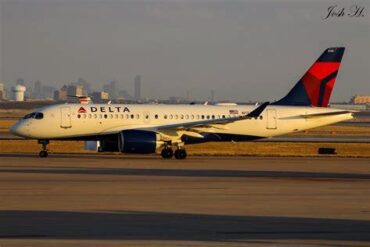
In a transformative leap for transpacific travel, Delta Air Lines has officially launched a new nonstop route connecting Seattle-Tacoma International Airport (SEA) to Seoul Incheon International Airport (ICN), heralding a major milestone in US–South Korea aviation ties. The route, celebrated by aviation leaders, diplomats, and business executives on both sides of the Pacific, is far more than just a commercial flight—it’s a geopolitical, economic, and cultural bridge linking two of the world’s most dynamic regions.
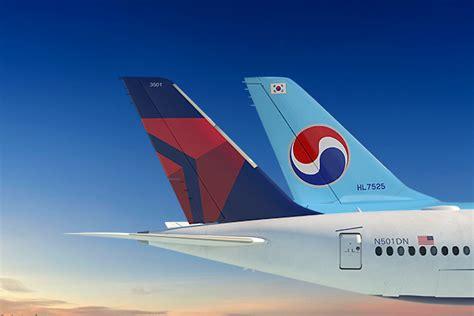
The inaugural flight, which took off with significant fanfare, marks Delta’s latest expansion in the Asia-Pacific region, reinforcing its strategic joint venture with Korean Air. This partnership, one of the most influential in global aviation, now offers enhanced connectivity, shorter layover times, and broader code-share benefits to millions of travelers annually.
A Historic Milestone for Bilateral Relations
The announcement of this route comes amid deepening diplomatic and trade relations between the United States and South Korea, coinciding with the 70th anniversary of the alliance forged during the Korean War. The new air corridor is being positioned not only as a tourism and business gateway, but also as a symbol of enduring cooperation. US Ambassador to South Korea Philip Goldberg hailed the route as “a powerful expression of mutual commitment to shared prosperity, cultural exchange, and strategic security.”

South Korea’s Minister of Land, Infrastructure and Transport, Park Sang-woo, echoed these sentiments, emphasizing how aviation connectivity plays a crucial role in strengthening bilateral ties. “This route is more than infrastructure—it is an artery for innovation, trade, and people-to-people diplomacy,” he stated during the ceremony at Seoul Incheon.
Delta’s Growing Pacific Presence and Strategic Joint Venture
Delta’s Seattle–Incheon launch is part of a larger Asia-Pacific realignment and reflects its broader ambitions to serve the most critical business corridors of the 21st century. This launch complements Delta’s existing service to Seoul from Atlanta, Detroit, and Minneapolis-St. Paul, creating a cohesive network anchored by its transpacific joint venture with Korean Air, which was formalized in 2018.
The joint venture provides seamless codeshare options, reciprocal frequent flyer benefits, and coordinated schedules. Passengers can now enjoy smoother connections to over 80 destinations across Asia through Korean Air’s ICN hub. For Seattle travelers, it means one-stop access to cities like Tokyo, Bangkok, Hanoi, and Manila, reducing travel time and increasing convenience.
A Surge in Demand and the Timing Behind the Launch
This strategic move comes at a moment of surging travel demand between North America and Asia. In the post-pandemic rebound, US–Asia routes have seen sharp growth. Business travel, academic exchanges, and leisure tourism are all rising, fueled by pent-up demand and renewed confidence in international mobility.
According to IATA (International Air Transport Association), US–South Korea traffic in Q1 2025 has grown by over 38% year-over-year, a trend that Delta is well-positioned to capture. Executives cited forecasts showing steady annual increases through 2028, particularly for cities like Seoul, which serves as a major Asian financial, cultural, and tech hub.
High-Level Amenities, Premium Cabins, and Sustainability Goals
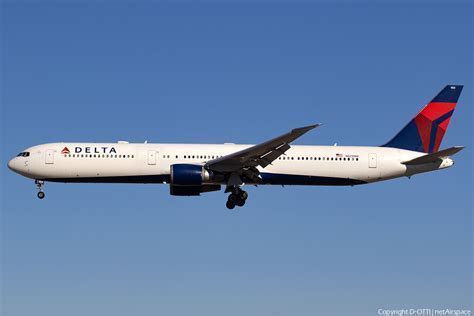
Delta’s new route is operated by the Airbus A330-900neo, one of the most fuel-efficient widebodies in the market. The aircraft is equipped with Delta One Suites, featuring lie-flat seats with full-height sliding doors, memory foam cushions, and Michelin-starred in-flight cuisine designed in partnership with Korean and American chefs.
The A330neo also features:
- Delta Premium Select with enhanced recline, legroom, and elevated dining
- High-speed Wi-Fi powered by Viasat
- In-seat power and USB-C ports across all cabins
- Next-generation mood lighting to help combat jet lag
Delta also emphasized its commitment to sustainable aviation, citing that this aircraft produces 25% fewer carbon emissions per seat compared to previous-generation aircraft. By aligning operations with global sustainability goals, Delta seeks to make long-haul flying both luxurious and responsible.
Strengthening the Role of Seattle as a West Coast Gateway
Seattle’s emergence as a critical hub in Delta’s network is a calculated bet. It is one of the fastest-growing metropolitan areas in the United States, with a rising Korean-American population, strong trade links with Asia, and a flourishing tech and aerospace sector. Microsoft, Amazon, and Boeing all maintain major operations in the region, creating constant business travel demand.
Seattle’s Port Authority has invested heavily in airport infrastructure, with recent expansions to international arrival facilities, additional gates, and streamlined customs processing. This has enabled SEA to handle rising transpacific traffic with greater efficiency. The Delta–Korean Air alliance is expected to funnel over 250,000 passengers annually through this corridor, significantly boosting the city’s international profile.
A Win for Tourism, Students, and Startups
The new route also promises a boost for tourism sectors in both countries. South Korea continues to attract US travelers drawn to its rich cultural heritage, music, cuisine, and technological innovation. Meanwhile, inbound tourism to the US, especially on the West Coast, is expected to rise with this new connectivity.
Educational institutions also stand to benefit. With thousands of Korean students studying in American universities, and a growing number of exchange programs, this new route provides faster, more accessible links between academic institutions.
Startup ecosystems are another area of growth. Seoul has become a global innovation hub, home to world-class accelerators, venture capital, and deep-tech labs. Seattle’s startup scene—particularly in AI, biotech, and clean tech—mirrors many of Korea’s strengths, and this air link will play a catalytic role in fostering cross-border collaborations, venture deals, and tech exchange programs.
Navigating Airspace Challenges Amid Regional Tensions
Despite the optimism surrounding this route, the broader aviation industry in the region faces new uncertainties. In recent weeks, travel disruptions have struck key regional hubs—Tel Aviv, Dubai, Doha, and Istanbul—with over 500 flights delayed or canceled due to escalating geopolitical tensions. Airlines like Delta, Emirates, Saudia, and Qatar Airways have been forced to reroute or temporarily halt operations.
This turmoil underlines the importance of stable, diversified routes like the Seattle–Incheon corridor, which bypasses many of the unstable airspaces and serves as a more reliable transpacific conduit. Aviation analysts note that the Northeast Asia–Pacific corridor is emerging as a “safe passage” for global travelers amid a changing security environment.
Economic Impact and Long-Term Forecasts
Delta’s route launch is projected to deliver substantial economic impact. Based on modeling from Tourism Economics and the US Travel Association, direct routes of this magnitude generate:
- Over $320 million in annual economic output for each connected metropolitan area
- Creation of 2,400 new jobs in aviation, hospitality, and logistics
- Increase in foreign direct investment due to enhanced executive mobility
In South Korea, the Ministry of Economy and Finance estimates a 6.7% increase in US-bound export efficiency, attributing faster air logistics and executive travel as key catalysts. High-value industries such as semiconductors, pharmaceuticals, and electronics are expected to capitalize on the tighter connection.
Looking Ahead: What’s Next for Delta in Asia?
Delta has signaled that more announcements may be on the horizon. Executives hinted at possible future expansions, including seasonal flights from Los Angeles and San Francisco to Busan, pending regulatory approval and bilateral negotiations. Analysts predict that Delta’s Asia-Pacific network will grow by 12% over the next two years, with particular focus on Northeast Asia and India.
Delta’s vision, articulated at the launch event, centers around one word: connectivity. Not just physical routes, but cultural, intellectual, and digital connections between two innovation-driven nations. With the new Seattle–Incheon route, the airline is not only expanding its network but cementing its role as a global bridge-builder in the 21st century.
As the aircraft climbs above the Pacific, it carries with it more than passengers—it carries history, possibility, and a shared future.