The claim that the Airbus A350 cost roughly 50% less to develop than the Boeing 787 Dreamliner sounds remarkable at first. Both aircraft belong to the same generation of advanced widebody jets, both rely heavily on composite materials, both introduced major improvements in fuel efficiency, and both were designed to reshape long-haul commercial aviation. Yet the reported development costs are strikingly different, with the A350 program estimated at about $15 billion, compared with approximately $30–32 billion for the Boeing 787.
That difference needs careful interpretation, however. It does not mean Airbus sold the A350 to airlines for half the price of a 787, nor does it mean the A350 is somehow a cheaper or less sophisticated aircraft. The figures generally discussed in this context are program development costs, not the list price of an individual aircraft. Aircraft transaction prices are influenced by configuration, engine selection, customer negotiations, order volume, financing, support packages, and other commercial factors.
The more interesting question is therefore not simply whether the A350 was 50% cheaper. It is why the two programs could produce highly competitive aircraft while consuming such different amounts of development capital. The answer lies in the way Boeing and Airbus approached technological innovation, manufacturing responsibility, supplier management, and risk.
Airbus A350 and Boeing 787 Development Costs
The approximately $15 billion A350 development estimate and the $30–32 billion Boeing 787 estimate are often presented as evidence that Airbus developed its aircraft at roughly half the cost. At a broad program level, that is a useful illustration of the difference between the two projects, although exact figures depend on what expenditures are included and how development spending is calculated.
The Boeing 787 was an unusually ambitious program. Boeing did not simply create another long-range aircraft with incremental improvements. It attempted to introduce a new manufacturing model alongside a new aircraft architecture. The company wanted suppliers around the world to take much greater responsibility for designing and producing major sections of the aircraft before those sections reached final assembly.
That strategy was intended to reduce Boeing’s direct development burden and distribute investment among partners. In theory, it could have allowed the 787 to reach the market faster and at lower cost. In practice, the complexity of coordinating a global network of suppliers became one of the program’s biggest challenges.
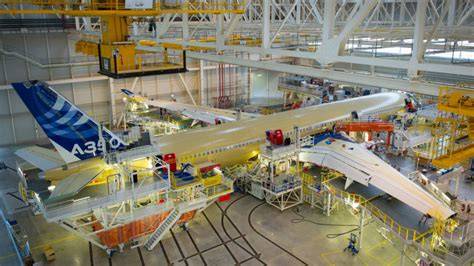
The A350 followed a different path. Airbus also embraced composite materials and new-generation engines, but the company retained greater responsibility for engineering integration, industrial coordination, and final aircraft development. That gave Airbus more direct control over the interfaces between major systems and structures.
The resulting difference is important because the two aircraft did not emerge from identical development environments. Boeing was simultaneously changing the aircraft and the way the aircraft was manufactured. Airbus was able to introduce substantial technological improvements while maintaining a development structure that was comparatively more familiar and controlled.
Why the Boeing 787 Became So Expensive
The Boeing 787’s development cost was heavily influenced by the scale of its technological and industrial ambitions. The Dreamliner was designed around a structure containing roughly 50% composite materials by weight, a major departure from the traditional aluminum-dominated structures used on many earlier commercial aircraft.
Composite construction offered substantial advantages. It allowed Boeing to reduce structural weight while creating a highly efficient airframe. The aircraft could also maintain a higher cabin humidity level and lower cabin altitude than many previous-generation aircraft, contributing to the Dreamliner’s distinctive passenger experience.
But composites were only part of the technological leap.
The 787 also introduced a more-electric aircraft architecture, replacing many conventional pneumatic functions with electrically powered systems. This created opportunities for efficiency improvements and reduced reliance on traditional systems, but it also increased integration complexity.
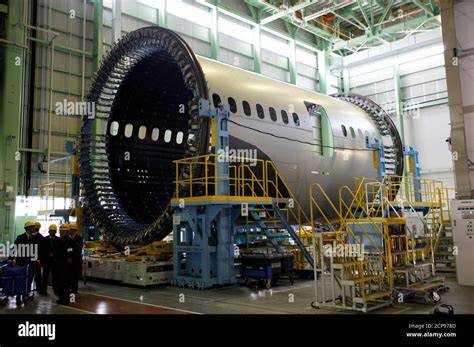
At the same time, Boeing adopted an extraordinarily ambitious global supply-chain strategy. Around 70% of the aircraft’s design and manufacturing work was outsourced to partners in different countries. Major sections were developed and produced across a geographically dispersed industrial network before being delivered to Boeing for final integration.
That model looked efficient on paper. It was far more difficult in reality.
The 787 Supply Chain Created a Hidden Cost
A commercial aircraft is not simply a collection of independent components. Every structural section, electrical connection, hydraulic system, software interface, and mechanical assembly has to work together with extraordinary precision.
When responsibility is divided among dozens of suppliers, communication becomes critical. Engineering changes at one company can affect another company’s work thousands of miles away. A component that is technically correct on its own can still create problems when it does not interface correctly with the next component.
The 787 program experienced precisely this kind of difficulty.
Boeing encountered problems involving incomplete work, incompatible components, supply-chain disruptions, and the need to perform additional integration and rework at final assembly. Instead of eliminating costs, the outsourcing strategy sometimes shifted costs into less visible areas such as coordination, troubleshooting, redesign, transportation, and recovery work.
The original target for entry into service was 2008, but the aircraft eventually entered commercial service in 2011. A delay of more than three years is enormously expensive on a program of this scale. Engineering teams remain active, suppliers require additional support, aircraft have to be reworked, and customers have to be managed through schedule changes.
Those delays compounded the financial burden.
The 787 therefore became an important aerospace case study in the risks of treating a highly integrated aircraft program as a collection of separately managed manufacturing projects. The underlying technology was not necessarily the problem. The difficulty came from attempting to coordinate so many new technologies and industrial relationships simultaneously.
How the Airbus A350 Took a Different Route
The Airbus A350 XWB was not a low-technology alternative to the Dreamliner. Quite the opposite. Airbus designed the A350 as a clean-sheet widebody aircraft with an extensive composite structure, advanced aerodynamics, and new-generation engines.
The key difference was the way Airbus managed that innovation.
Airbus had the opportunity to observe the 787 program’s difficulties before finalizing its own development strategy. The A350 program evolved significantly during its development, eventually becoming the A350 XWB, or Extra Wide Body, with a larger fuselage and a broader market position than the earliest concepts.
Instead of attempting to revolutionize every aspect of aircraft development simultaneously, Airbus placed greater emphasis on controlled integration and established industrial relationships.
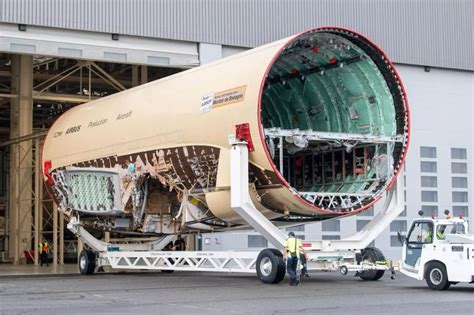
Airbus still relied on an international supply chain, as virtually every modern commercial aircraft manufacturer does. However, it retained greater control over the design and integration process. This helped reduce some of the coordination risks associated with Boeing’s particularly aggressive outsourcing model.
The result was a development program that was complex but comparatively stable. Airbus still faced technical challenges and production issues, but the A350 did not experience the same kind of prolonged development disruption that characterized the early 787 program.
The A350 Was Not Simply a Cheaper 787
One of the biggest misunderstandings surrounding the 50% lower development-cost claim is the assumption that it represents the price airlines pay for the aircraft.
It does not.
An aircraft’s development cost is the enormous investment required to design, test, certify, industrialize, and bring an aircraft family into production. The selling price of an individual aircraft is a completely different financial calculation.
The Boeing 787 and Airbus A350 both have list prices that can reach well into the hundreds of millions of dollars depending on the variant and published pricing assumptions. Airlines, however, rarely pay the published list price. Large fleet orders are negotiated individually, and the final commercial value can be affected by discounts, engines, maintenance agreements, training, spare parts, financing, and other arrangements.
Therefore, saying that the A350 “cost 50% less than the 787” is misleading if the statement refers to the price of one aircraft.
The more defensible interpretation is that the A350 program may have required roughly half as much development investment as the 787 program, based on commonly cited industry estimates.
That is a very different claim.
Boeing 787 vs Airbus A350: Size and Mission
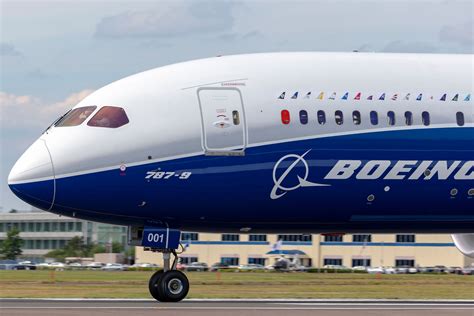
The differences between the two aircraft also matter when assessing their respective development programs. The 787 family generally occupies a smaller capacity category, with typical configurations ranging from roughly 242 to 335 passengers, depending on the variant and airline layout.
The A350 family is larger. Depending on the variant and cabin configuration, it can accommodate approximately 300 to more than 400 passengers.
This means the aircraft are not perfect substitutes in every airline network.
The 787-9, for example, has a published range of approximately 7,565 nautical miles, or about 14,010 kilometers. The A350-900 reaches roughly 8,100 nautical miles, or around 15,000 kilometers, under published specifications.
That difference gives the A350 greater capacity and range potential, while the 787’s relatively smaller size makes it particularly attractive for routes where an airline wants long-haul capability without the capacity of a larger widebody.
The 787 has consequently become an important tool for airlines opening long-distance routes that might not support a larger aircraft. The A350, meanwhile, is particularly well suited to high-demand long-haul and ultra-long-haul markets where additional passenger and cargo capacity can generate greater revenue.
Boeing’s Bold Innovation Came With Greater Risk
The 787 program demonstrates a fundamental reality of aerospace development: innovation does not come with a fixed price tag.
Boeing attempted to change materials, aircraft systems, manufacturing methods, and supplier relationships at the same time. Each decision offered potential advantages, but each also introduced another source of uncertainty.
The use of composites promised a lighter and more efficient aircraft. The more-electric architecture promised a new approach to onboard systems. The global supplier model promised reduced direct manufacturing responsibility and potentially lower development costs.
Individually, these ideas were defensible.
The problem was their interaction.
When multiple high-risk changes are introduced simultaneously, unexpected problems can reinforce one another. A manufacturing delay can expose an engineering problem. An engineering modification can require a supplier to redesign a component. That redesign can affect another supplier’s schedule. The resulting disruption can then require Boeing to perform additional work at final assembly.
This is how apparently manageable problems can become billions of dollars in additional program expenditure.
The 787 ultimately delivered on much of its technological promise, but the route to commercial service was considerably more expensive than Boeing initially intended.
Airbus Learned From the Dreamliner’s Difficulties
Timing gave Airbus an important advantage.
The A350 was developed after the aviation industry had already seen the consequences of Boeing’s 787 strategy. Airbus could therefore study the Dreamliner’s problems rather than discovering all of those problems independently.
That does not mean Airbus simply copied Boeing’s solutions. Instead, the A350 incorporated similar technological principles while using a more measured implementation strategy.
Airbus used extensive composite materials, but it maintained stronger control over integration. It adopted new-generation engines, but did not attempt to reinvent every aircraft system simultaneously. It created a global industrial network, but did not rely on outsourcing to the same extreme degree.
This is one reason the A350’s development story is particularly interesting.
Being second can sometimes provide an engineering advantage.
The second company to develop a technology has access to lessons that the first company had to learn through trial and error. Airbus could see which approaches created unacceptable levels of industrial risk and could adjust its own program accordingly.
The A350’s lower development cost therefore reflects more than simple efficiency. It also reflects timing, experience, risk management, and learning from a competitor’s mistakes.
Does a Lower Development Cost Make the A350 Better?
Not necessarily.
A development program’s financial efficiency is important, but it cannot be used as a simple ranking system for aircraft quality.
The 787 transformed the long-haul market. Its combination of composite construction, efficient engines, aerodynamic improvements, passenger-focused cabin features, and relatively modest capacity gave airlines new opportunities to operate long-distance routes profitably.
The A350 delivered a different but equally compelling proposition. Its larger cabin, greater capacity, long range, composite-intensive structure, advanced aerodynamics, and efficient engines positioned it as a powerful alternative for airlines seeking a larger next-generation widebody.
Both aircraft have achieved significant commercial success.
The difference in development spending therefore tells us more about how the manufacturers managed their programs than about which aircraft is inherently superior.
What the 50% Figure Really Tells Us
The most important lesson from the reported cost gap is not that Airbus built an aircraft for half the price. It is that development strategy can dramatically influence the economics of aerospace programs.
The Boeing 787 represented a high-risk, high-reward approach. Boeing sought to introduce a technological revolution while also transforming its manufacturing model. The result was an aircraft with important innovations, but the program suffered from severe delays, supplier problems, redesigns, and escalating costs.
The Airbus A350 followed a more controlled path. Airbus still pursued advanced materials, modern engines, sophisticated aerodynamics, and a new widebody design, but it placed greater emphasis on integration and program oversight.
The resulting development cost of roughly $15 billion, compared with the often-cited $30–32 billion for the 787, illustrates the financial consequences of those different philosophies.
Ultimately, the Airbus A350 was not “50% cheaper” than the Boeing 787 in the sense of an airline purchasing one aircraft for half the money. The more accurate statement is that the A350’s development program is commonly estimated to have cost around half as much as the 787’s.
That distinction matters.
The A350 and 787 represent two different answers to the same fundamental aviation challenge: how to make long-distance flying more efficient while giving airlines commercially useful aircraft. Boeing pushed aggressively into new technology and a radically distributed manufacturing model. Airbus combined similarly advanced technology with a more controlled development process.
The contrast offers a powerful lesson for the aerospace industry. The most expensive part of innovation is not always the technology itself; it can be the complexity created when too many new ideas, suppliers, systems, and processes are introduced at once. In that respect, the A350’s lower development cost is less a story about a cheaper airplane and more a story about the value of disciplined engineering execution.