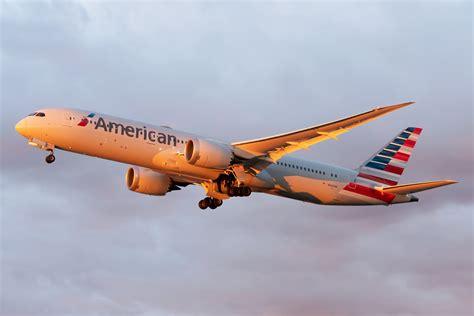
American Airlines is fighting a battle most visible not in boardrooms or balance sheets, but on the frontlines of customer interaction. In its push to become a more premium carrier, the airline has struggled with the one asset that defines premium service—its people. The reality is stark: the service culture is broken, fractured between pockets of excellence and overwhelming mediocrity.
The Culture Void at 30,000 Feet
American Airlines’ leadership has made headlines with initiatives aimed at elevating the passenger experience, from upgrading lounges to optimizing aircraft interiors. But no amount of capital expenditure can fix a disengaged workforce. At the heart of the issue is a management philosophy adrift in ambiguity. Employees aren’t being told who they’re supposed to be.
Is American a no-frills carrier with global reach, or a premium brand fighting for loyalty in a market dominated by Delta’s polished consistency and United’s self-aggrandizing vision? Without clarity, employees are left to interpret customer service through their own lens—and the results vary wildly.
This inconsistency isn’t hypothetical. It was on full display at Philadelphia International Airport (PHL) during a recent experience that illustrated how American Airlines can, within minutes, feel like two entirely different airlines.
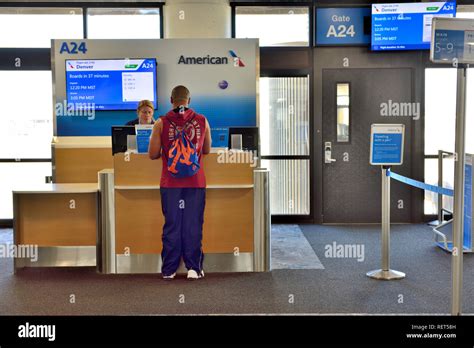
The Gatekeeper of Apathy
The encounter began at the priority check-in counter, where the intent was simple: rebook a delayed flight. The execution, however, felt like navigating a bureaucratic minefield wrapped in disdain. After a simple, polite greeting, the response from the agent was a stare—stone cold, devoid of warmth or interest.
When informed of a significant flight delay, and asked about alternate options, the response wasn’t one of empathy or urgency. Instead, it was delivered with the kind of rhetorical detachment that makes you question your sanity:
“And what do you want me to do about that?”
She eventually did assist, mechanically typing away and confirming the rebooking—but there was no acknowledgment of the stress caused by the delay, no apology, no hint that the customer standing in front of her was anything more than a nuisance. This wasn’t just poor service. It was a perfect reflection of systemic apathy: a frontline employee going through the motions, unsupported and uninspired by a larger mission.
Walking past various gates, this tone wasn’t an anomaly. The loud, almost combative PA announcements from gate agents scolding passengers as if corralling livestock amplified a singular point: the service culture is broken.
The Human Touch That Rewrites The Narrative
Then, as if stepping into another dimension, came Roseann at the Admirals Club in Terminal A-West. Within 20 minutes, she completely rewrote the narrative of the day.
Roseann’s energy was radiant, warm, and deeply human. She acknowledged each guest personally:
“Welcome in, I hope you enjoy the lounge.”
“Thank you for visiting us, have a happy holiday.”
What distinguished her wasn’t just politeness—it was genuine sincerity, the kind that cannot be faked. She greeted passengers not as transactions, but as people. When approached for help with a complex ticketing issue involving a partner airline and weather waiver, she didn’t flinch. She leaned in:
“I always say, if you don’t ask, you don’t get. Let’s see what we can do.”
When faced with technical complications, Roseann didn’t retreat behind policy or deflect responsibility. She pivoted, tried alternative systems, made calls, and most importantly—kept the guest informed throughout. Her mindset was clear: solve the problem, keep the passenger smiling.
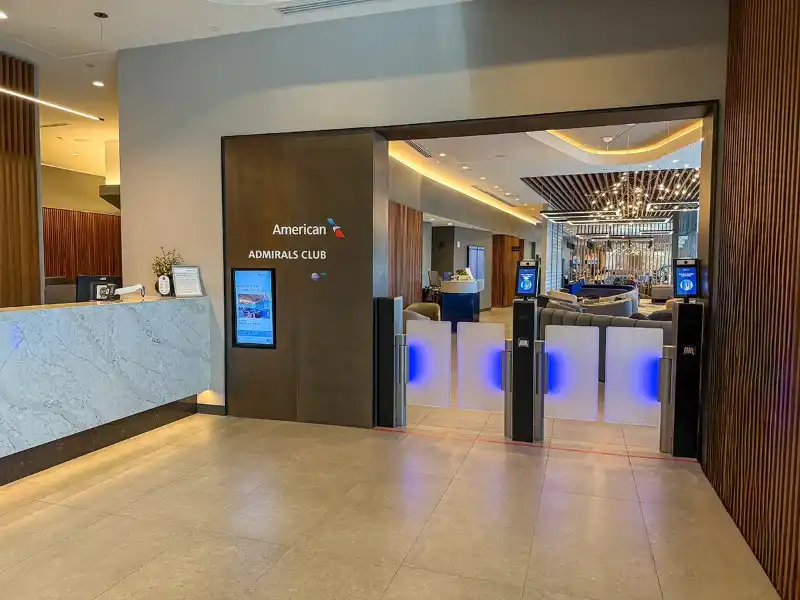
This wasn’t robotic courtesy. It was service excellence rooted in decades of pride, perhaps carried over from the days of Eastern Airlines or TWA—carriers known for training staff not just to do a job, but to embody a brand ethos.
A Split Personality Airline
The issue isn’t that American lacks great employees. The tragedy is that these great employees operate in isolation, unsupported by a unified culture. In any other industry, such dramatic inconsistency would trigger immediate reform. At American, it’s Tuesday.
Roseann is a reminder of what American Airlines could be. Her impact wasn’t just in solving a ticketing issue—it was in restoring dignity to a process that had moments before felt dehumanizing. When told how valuable her demeanor and efforts were, she smiled and said:
“Taking care of passengers is my job.”
She should be leading training for every customer-facing employee in the company. But instead, she quietly continues her mission at the lounge desk, setting a gold standard that rarely travels beyond her terminal.
Why Management Is The Root Problem
Employees reflect the priorities of their leadership. American’s frontline staff receive mixed signals at best and no signal at worst. When an airline’s strategy for years has been defined by phrases like “the schedule is the product,” it’s no surprise that people stop caring about the human side.
Contrast this with Delta Air Lines, whose leadership continually reinforces a service-forward vision. Or United, whose aspirational declarations—however exaggerated—at least provide a cohesive narrative for employees to rally around.
American’s leadership must stop relying on infrastructure upgrades and digital tweaks to define a premium future. If the core service delivery model is broken, no seatback screen can hide it.
The Road to Redemption
To fix this, American must start with its cultural foundation:
- Define a Clear Service Vision: Employees must know what kind of airline they represent. Is American trying to be premium? Affordable? A hybrid? Define it.
- Empower Consistency: Standardize customer service expectations across roles. Build tools and training systems to reinforce them daily.
- Recognize and Elevate Talent: People like Roseann aren’t just great at their jobs. They’re culture carriers. Use them as mentors, trainers, and symbols of what American should stand for.
- Measure More Than Metrics: Go beyond on-time performance and cost savings. Track real customer sentiment, employee engagement, and service consistency.
None of this is easy. But without it, the transformation to a premium brand is nothing more than a press release.
Final Descent: A Tale of Two Airlines
In a single airport, within a span of 20 minutes, American Airlines managed to embody both the worst and best of air travel. A dismissive check-in agent, indifferent to delays and discomfort, followed by a lounge representative who made every traveler feel like family.
That’s the cultural paradox holding American back. The company has the talent. It lacks the structure, the storytelling, and the internal belief system that unites individuals around a purpose larger than ticketing systems and flight delays.
Until American Airlines aligns its leadership vision with the realities on the ground, it will continue to be an airline torn between its past and potential.
Roseann deserves more than praise. She deserves replication.