The promise was ambitious from the very beginning: an airline built entirely around luxury, offering an exclusive all-business-class experience to one of the world’s most sought-after leisure destinations. Yet today, Beond finds itself navigating a far harsher reality. Reports that employees have been asked to continue working despite months of unpaid wages have cast fresh doubt over the future of the Maldives-focused carrier, transforming what was once marketed as a bold premium disruptor into one of the aviation industry’s most closely watched survival stories.
Beond has not entered formal insolvency proceedings, nor has the airline publicly acknowledged that it faces imminent collapse. Nevertheless, mounting evidence suggests that the company’s financial position has become increasingly fragile. Scheduled operations have already been suspended until October, employee salary payments have reportedly fallen behind, and the airline’s immediate future appears increasingly dependent on the successful execution of a Saudi Arabian aviation project that remains subject to regulatory approval.
The developments raise difficult questions not only about Beond’s prospects but also about the broader viability of niche all-premium airline models operating in an increasingly volatile global aviation landscape.
Beond’s Luxury Vision Meets Financial Reality
When Beond launched, it sought to redefine the journey to the Maldives. Rather than competing with conventional leisure carriers transporting hundreds of passengers in economy cabins, the airline introduced an entirely different proposition. Every seat onboard was designed to offer a premium experience, targeting affluent travelers seeking exclusivity from departure to arrival.
The concept generated significant interest across the aviation industry. The Maldives had long established itself as a destination synonymous with luxury resorts, overwater villas, and high-spending international visitors. Beond positioned itself as the airline extension of that lifestyle.
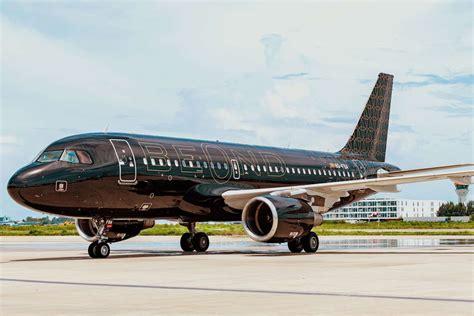
Its fleet, however, reflected the limitations of a startup operation. The airline currently operates just two aircraft: an Airbus A319 configured with 44 lie-flat seats and an Airbus A321 accommodating 68 premium passengers.
Unlike larger competitors equipped with long-haul widebody aircraft, Beond’s narrowbody jets cannot operate nonstop between Europe and the Maldives. Instead, flights require intermediate stops in the Middle East, primarily through Dubai’s Al Maktoum International Airport.

While passengers still receive an upscale onboard experience, the mandatory stopover weakens one of the most compelling aspects of premium travel: convenience. For many travelers, especially those already familiar with established Middle Eastern carriers, the additional transit raises questions about the overall value proposition.
Internal Memo Reveals Growing Payroll Crisis
The airline’s operational challenges have now been compounded by a reported payroll crisis.
According to multiple reports referencing an internal communication from Chief Executive Officer Tero Taskila, Beond has accumulated approximately two months of unpaid salary obligations to employees. The memo reportedly acknowledged that previously anticipated funding timelines had slipped, leaving the company unable to meet payroll commitments as expected.
Perhaps most concerning was the uncertainty surrounding future payments. Employees were informed that management could not provide a definitive timeline regarding when overdue salaries would be settled.
Despite those circumstances, staff were reportedly encouraged to continue supporting the airline’s remaining operations, particularly charter services that management views as essential to preserving Beond’s ability to fulfill its financial obligations.
The situation places employees in an extraordinarily difficult position. Aviation professionals often dedicate years to specialized training and certifications. Many rely heavily on predictable income streams to support their families. Requests to maintain operations despite extended periods without pay inevitably intensify anxiety across the workforce.
For any airline, employee confidence represents a critical asset. Once trust begins to erode internally, operational resilience can deteriorate rapidly.
Scheduled Flight Suspensions Signal Broader Difficulties
Beond’s decision to suspend scheduled European operations throughout the summer season has further amplified concerns regarding its financial health.
The airline has characterized the pause as an opportunity to refresh aircraft interiors, undertake maintenance activities, and redirect resources toward charter opportunities. Officially, the suspension remains temporary, with bookings indicating an intended return during the winter season.
Yet industry observers recognize that suspending scheduled flying carries substantial risks.
Passengers may hesitate to book future travel with an airline perceived as unstable. Travel advisors could redirect clients toward competitors offering greater certainty. Meanwhile, rebuilding momentum after prolonged operational interruptions often proves challenging, especially for smaller carriers lacking widespread brand recognition.
The reliance on charter flying introduces another layer of complexity. While charter contracts can generate valuable revenue, they typically offer less predictability than established scheduled networks.
For a two-aircraft operator, maintaining both charter flexibility and scheduled reliability simultaneously becomes an exceptionally delicate balancing act.
Structural Weaknesses Within the Business Model
Even before recent financial concerns emerged, Beond faced considerable structural challenges.
An all-business-class airline requires consistently strong yields to remain viable. Unlike conventional carriers that spread risk across multiple cabin classes and diverse customer segments, Beond depends almost entirely on premium demand.
That dependency creates several vulnerabilities.
Seasonality represents one of the most significant. Although the Maldives enjoys robust visitor numbers during winter months, demand softens considerably during other periods of the year. Maintaining sufficient load factors throughout these fluctuations becomes increasingly difficult for airlines operating highly specialized products.
Fleet size presents another obstacle.
With only two aircraft available, operational disruptions carry outsized consequences. A single maintenance event, technical issue, or charter reassignment can cascade through the entire network, resulting in cancellations and diminished customer confidence.

Competition further complicates the equation.
Travelers willing to purchase premium tickets frequently compare Beond against established global carriers such as Qatar Airways, Emirates, and Etihad Airways. These airlines offer expansive route networks, comprehensive loyalty programs, premium lounges, extensive recovery options during disruptions, and decades of operational experience.
Beond’s boutique appeal may resonate with certain travelers, but competing against such formidable rivals requires sustained differentiation and flawless execution.
Regional Instability Intensifies Existing Pressures
External conditions have only magnified Beond’s challenges.
Elevated fuel prices continue placing pressure on airline economics worldwide. For smaller carriers with limited cash reserves, even modest increases in operating expenses can significantly impact profitability.
Regional geopolitical tensions introduce additional uncertainty.
Airspace restrictions and route adjustments increase operational complexity while potentially extending flight times and raising costs. Because Beond’s European services depend on Middle Eastern transit points, instability within the region directly influences its operational environment.
Consumer sentiment also matters.
Travelers often prioritize reliability when making high-value purchases. In periods of uncertainty, larger airlines with stronger reputations may benefit disproportionately from cautious booking behavior.
The convergence of these factors has created an exceptionally difficult environment for niche operators attempting to establish themselves.
Saudi Arabia Could Offer a Path Forward
Amid the challenges, one potential lifeline remains.
In late 2025, Saudi Arabia’s General Authority of Civil Aviation selected alliances involving Beond and Jazeera Airways for charter-related initiatives supporting the Kingdom’s expanding tourism ambitions.
The opportunities associated with Saudi Arabia’s Vision 2030 strategy are substantial.
Authorities have outlined plans involving dozens of domestic and international destinations, millions of annual seats, expanded fleet capacity, and significant job creation. For Beond, participation could provide access to broader markets less dependent on Maldives seasonality.
The strategic implications extend beyond immediate financial relief.
A successful Saudi subsidiary could diversify revenue streams, strengthen operational scale, and reposition Beond from a niche Maldives carrier into a more versatile premium aviation provider.
However, important hurdles remain.
Tender awards do not automatically translate into operational approval. Economic licensing requirements, technical certifications, ownership structures, maintenance arrangements, staffing considerations, and regulatory oversight processes must all be completed before flights commence.
These procedures require both time and resources.
If anticipated Saudi-related funding is indeed linked to employee salary payments, delays within the approval process could prolong Beond’s current difficulties.
A Defining Moment for Beond’s Future
The unfolding situation represents a pivotal chapter in Beond’s short history.
The airline introduced an imaginative concept to the market, aligning luxury air travel with one of the world’s premier vacation destinations. Its product generated curiosity, enthusiasm, and optimism among travelers seeking alternatives to traditional airline experiences.
Yet innovation alone rarely guarantees commercial success in aviation.
Capital intensity, operational complexity, regulatory demands, and external shocks continuously test even well-established carriers. For emerging airlines operating specialized business models, those pressures become even more pronounced.
Beond now stands at a crossroads.
Should new funding materialize and Saudi opportunities progress as envisioned, the airline could emerge stronger and more diversified than before. If those initiatives falter, however, the combination of payroll arrears, suspended operations, and persistent market headwinds may prove difficult to overcome.
For employees awaiting overdue salaries, passengers monitoring future bookings, and industry observers assessing the sustainability of premium-only aviation models, the months ahead will offer critical answers.
Whether Beond ultimately becomes a case study in successful reinvention or a cautionary tale about the risks of boutique airline economics remains uncertain. What is increasingly clear, however, is that the airline’s next chapter will determine whether its original vision can survive the harsh realities of the modern aviation industry.