
The aviation industry thrives on consolidation narratives, but not every strategic alignment needs to culminate in a merger. American Airlines and Alaska Airlines are demonstrating precisely that, choosing a more nuanced path that emphasizes revenue sharing, joint ventures, and network optimization over outright corporate integration. While speculation briefly surfaced about a potential merger, the reality is far more calculated—and arguably more effective in the current regulatory and economic climate.
Why a Full Merger Was Never the Endgame
Behind closed-door discussions, the idea of merging American Airlines with Alaska Airlines did surface, but it quickly lost traction. The reasoning is straightforward: mergers in today’s airline landscape are regulatory minefields, often triggering prolonged scrutiny and potential rejection. After witnessing the dismantling of American’s Northeast Alliance with JetBlue in 2023, the airline has little appetite for another high-stakes regulatory gamble.
Instead, both carriers recognized that deep commercial cooperation could unlock similar benefits without the structural risks. By pivoting toward joint venture participation, the airlines retain operational independence while achieving many of the financial and strategic advantages typically associated with mergers.
The Strategic Power of Revenue Sharing Agreements
At the heart of this pivot lies the concept of joint ventures, a model already proven successful across global alliances. These agreements allow airlines to coordinate fares, align schedules, and share revenue on specific routes, particularly long-haul international markets.
For Alaska Airlines, integration into American’s established joint ventures—especially across the transatlantic and transpacific corridors—represents a transformative opportunity. American’s partnerships include heavyweights such as British Airways, Iberia, Finnair, Aer Lingus, and Japan Airlines, creating a vast global network that Alaska can tap into with minimal friction.
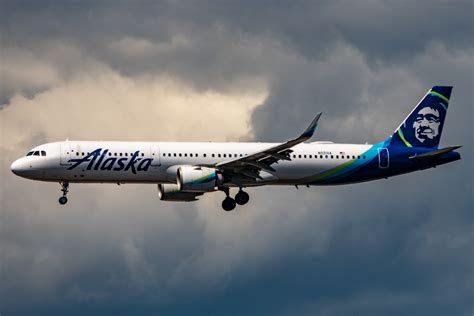
This move is made smoother by Alaska’s relatively recent entry into the oneworld alliance in 2021, aligning its loyalty program and operational standards with American’s broader ecosystem. The groundwork is already in place; now it’s about scaling the benefits.
West Coast Strength Meets Global Reach
One of the most compelling aspects of this partnership is how naturally the airlines complement each other. Alaska Airlines commands a dominant presence on the US West Coast, particularly in Seattle (SEA) and San Francisco (SFO)—two gateways critical for transpacific travel. American, by contrast, has historically relied heavily on Los Angeles (LAX), a hub where competition from Delta and United is intense.
By leveraging Alaska’s regional strength, American effectively extends its reach across the Pacific Northwest, gaining access to high-demand routes and customer bases that were previously underserved within its network.
Conversely, Alaska Airlines gains a foothold in long-haul international markets, particularly on the East Coast and across the Atlantic. Its ambitions are no longer hypothetical. The airline is actively launching transatlantic routes, beginning with Seattle–Rome (FCO), followed by services to London Heathrow (LHR) and Reykjavík (KEF).
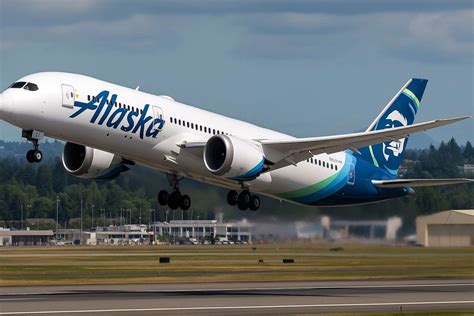
These expansions are powered by Alaska’s newly acquired Boeing 787-9 fleet, inherited through its merger with Hawaiian Airlines. The aircraft not only enable long-haul capability but also signal Alaska’s serious intent to evolve beyond its traditional regional model.
A Carefully Timed Expansion Strategy
Timing plays a critical role in this strategic pivot. The airline industry is navigating a period marked by fuel price volatility and increasingly aggressive competition from Delta Air Lines and United Airlines, both of which have posted strong financial performances.
In this environment, efficiency and network synergy are more valuable than sheer scale. Revenue-sharing agreements allow American and Alaska to maximize profitability on key routes, reduce duplication, and present a unified front against larger competitors—all without the operational disruption of a merger.
Alaska’s long-term vision further underscores this strategy. By 2030, the airline aims to operate around a dozen long-haul routes from Seattle, transforming the city into a major international hub. Partnering with American accelerates this trajectory, providing immediate access to global distribution channels and passenger feed.
Regulatory Realities Still Loom Large
Even without a merger, expanding joint ventures is far from a regulatory free pass. Authorities, particularly the US Department of Justice, closely examine such arrangements to ensure they do not reduce competition or harm consumers.
American’s past experience serves as a cautionary tale. The collapse of its JetBlue alliance highlighted how regulators are increasingly wary of partnerships that resemble de facto mergers in their market impact.
As a result, any expansion involving Alaska’s inclusion in American’s joint ventures will likely require concessions, such as slot divestitures or capacity adjustments. The goal for regulators remains clear: prevent monopolistic dominance while preserving fair pricing and consumer choice.
A Modern Blueprint for Airline Collaboration
What emerges from this evolving partnership is a blueprint for the future of airline strategy. Rather than pursuing headline-grabbing mergers, carriers are increasingly opting for modular cooperation models that deliver flexibility, scalability, and resilience.
American and Alaska are not abandoning ambition—they are refining it. By focusing on revenue sharing, alliance integration, and targeted expansion, they are positioning themselves to compete more effectively in a rapidly shifting market landscape.
In an industry where scale once dictated success, precision and partnership are becoming the new currency. And for American and Alaska, that shift may prove far more valuable than any merger could have delivered.