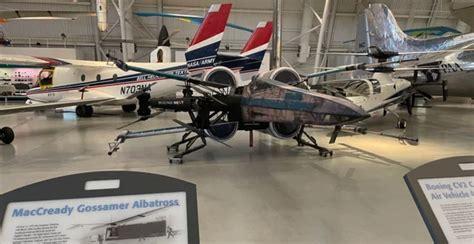
Science fiction has always shaped how people imagine the future of technology. From sleek starships to gravity-defying vehicles, fictional machines often inspire real-world engineers to push the limits of design. Among the most recognizable spacecraft ever created is the X-wing starfighter from Star Wars, a vessel synonymous with rebellion, speed, and cinematic heroism. Surprisingly, that iconic silhouette once appeared in the real sky—not in a movie studio, but through a collaboration between Boeing and Walt Disney.
In 2019, Boeing unveiled something that looked astonishingly like a real-life Star Wars X-wing starfighter, soaring above crowds during the opening celebration of Star Wars: Galaxy’s Edge at Walt Disney World. Although the aircraft could not jump to hyperspace or engage in space battles, the illusion was convincing enough to thrill fans and demonstrate the creative intersection between aerospace engineering and entertainment spectacle.
The flying X-wings were actually modified Boeing CV2 Cargo Air Vehicles (CAVs)—experimental drones originally designed to test new forms of electric aviation and cargo transport. Engineers transformed these test drones into convincing starfighters, proving that sometimes the line between science fiction and engineering experimentation can blur in delightfully unexpected ways.
The Boeing CV2 Cargo Air Vehicle Behind the X-Wing Illusion
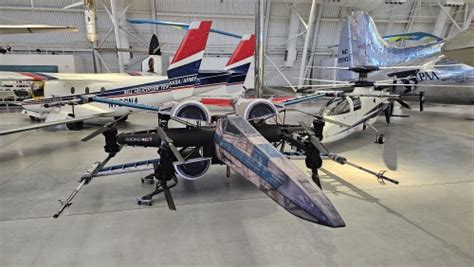
At the heart of the spectacle was the Boeing CV2 CAV, an experimental aircraft first developed in 2017 as part of Boeing’s push into autonomous aerial logistics. The drone represented an early exploration into large electric vertical takeoff and landing aircraft, often abbreviated as eVTOL. These aircraft combine electric propulsion with helicopter-like vertical lift, allowing them to take off, hover, and land without a runway.
The CV2 drone was designed to carry approximately 500 pounds of cargo, making it suitable for potential future applications such as automated delivery networks, military logistics, and remote supply transport. With its boxy central fuselage and multiple rotors, the aircraft looked more like an industrial machine than a science-fiction starfighter—until Boeing engineers and Disney Imagineers got involved.
For the Galaxy’s Edge celebration, Boeing fitted the drones with lightweight X-wing starfighter shells. These external frames recreated the famous four-wing configuration permanently locked in the classic “attack position” familiar to Star Wars fans. While the wings themselves were purely cosmetic and did not articulate like their cinematic counterparts, the visual effect from a distance was remarkably convincing.
Engineering Tricks That Made the X-Wing Illusion Work
The illusion relied on a clever mix of aerospace engineering and theatrical design. Because the CV2 drones were far smaller than the fictional spacecraft they represented—each had a wingspan of about 20.2 feet—Disney Imagineers needed to ensure the audience never saw the aircraft too clearly.
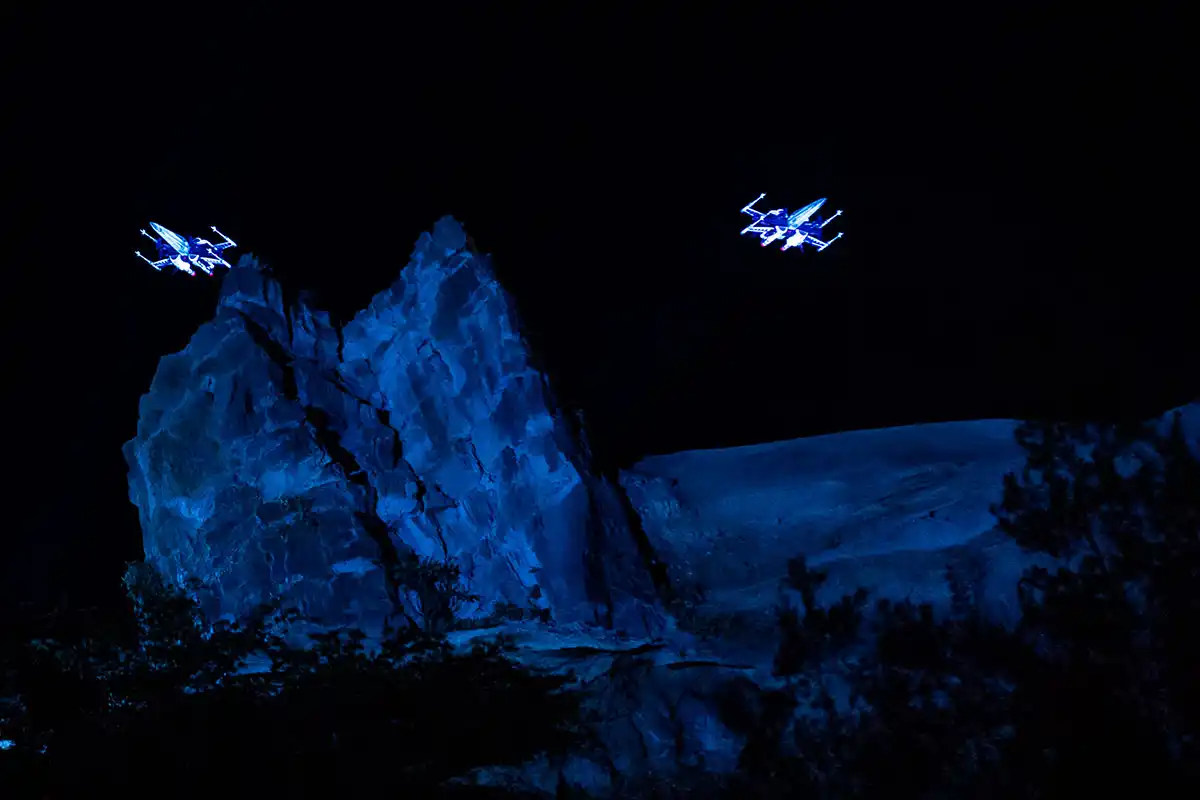
Ultraviolet spotlights were installed around the show area. These lights illuminated the X-wing shells while leaving the underlying drone hardware mostly hidden in darkness. As the aircraft hovered overhead, spectators saw glowing starfighters drifting through the night sky while the mechanical rotors faded into the background.
The drones moved slowly, hovering rather than streaking through the sky like cinematic fighters. Yet that slower pace actually enhanced the illusion, allowing audiences to appreciate the recognizable X-shaped silhouette without noticing the engineering compromises beneath the shell.
From Delivery Drone to Museum Artifact
Despite their brief moment of fame, the X-wing drones represented the only public showcase of the CV2 platform. The aircraft served primarily as a testbed for Boeing engineers studying electric propulsion, autonomous flight systems, and remote piloting technologies.
One of the modified drones eventually found a permanent home at the Smithsonian National Air and Space Museum’s Steven F. Udvar-Hazy Center in Chantilly, Virginia. Without the theatrical lighting, visitors can see the machine in full detail, including the drone structure hidden beneath the X-wing shell.
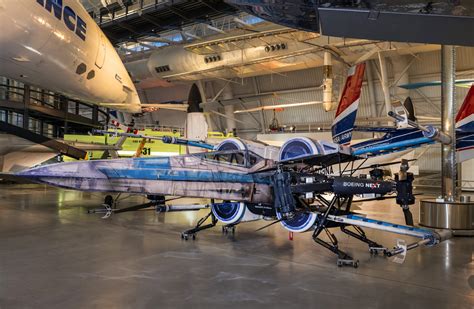
Displayed in a museum environment, the aircraft tells two stories at once: a glimpse into experimental aviation technology and a rare moment when aerospace engineering collided with pop culture mythology.
Why the CV2 Program Ended So Quickly
The CV2’s story might have continued, but timing proved unforgiving. Boeing faced enormous challenges after the 737 MAX crashes in 2018 and 2019, which forced the grounding of the entire fleet and triggered a major corporate crisis. Engineering resources and company attention shifted toward resolving safety issues and rebuilding trust in its commercial aviation division.
Shortly afterward, the COVID-19 pandemic devastated global air travel. Airlines cancelled orders, passenger numbers collapsed, and aerospace companies scaled back experimental projects. Boeing eventually shut down Boeing NeXt, the innovation division responsible for developing projects like the CV2 drone.
Ironically, the pandemic era accelerated interest in autonomous delivery drones, especially for medical supplies, food delivery, and logistics in crowded cities. Around the world, drone networks began transporting hospital equipment, consumer goods, and emergency supplies. Had the timing been slightly different, fleets of Boeing CV2 aircraft might have entered that emerging ecosystem.
Instead, the experimental drone’s most famous mission remains its transformation into a real-life X-wing starfighter, hovering above a Disney theme park and briefly turning a piece of science fiction into something visible in the night sky.