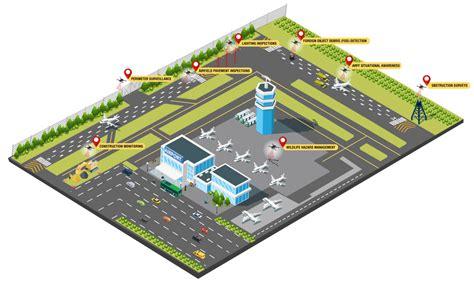
Most aerodromes offer communal briefing facilities for pilots, providing essential aeronautical and meteorological information. However, airline flight crews often rely on briefing materials supplied by their companies, specifically tailored for their planned flights. The availability and type of briefing facilities can vary significantly based on the aerodrome and national regulations. Key guidelines are outlined in ICAO Annex 15, Chapter 8, and Annex 3, Chapter 3, which form the foundation for many national rules. These facilities should be easily accessible, and the information presented must be clear and understandable, even for less experienced pilots. For instance, NOTAMs should be straightforward, allowing pilots to grasp their meaning without decoding efforts. When appropriate, NOTAMs should be displayed on charts, enabling pilots to quickly identify if a specific NOTAM impacts their route.
ICAO Annex 15: Aeronautical Information Services, Chapter 8, paragraph 8.1.1 states that at any aerodrome commonly used for international air operations, essential aeronautical information must be available for flight operations personnel, including flight crews and pre-flight information services. The information provided typically includes crucial elements from various national publications such as AIPs (Aeronautical Information Publications), amendments, supplements, NOTAMs, and pre-flight information bulletins (PIBs) that contain current operationally significant NOTAM information. Aeronautical Information Circulars (AICs) and related maps and charts may also be included. While similar information may be offered for other states, it is usually limited to those nearby. In such cases, a comprehensive library of aeronautical information will be accessible from a central location, which should be directly contactable from the aerodrome AIS unit.
Briefing rooms are equipped with up-to-date information regarding departure aerodrome conditions, including ongoing construction or maintenance work, runway and taxiway conditions, obstacles, hazards, changes in airfield lighting, and navigational aids status. Notably, many aerodromes not typically used for international air operations also provide similar, albeit limited, briefing facilities. Smaller aerodromes, particularly those not engaged in commercial or military activities, might offer only basic briefing options or none at all.
Meteorological offices may also be set up at aerodromes, providing forecasts and relevant flight information directly to flight crews and other personnel. If no meteorological office exists on-site, relevant data can often be accessed electronically, or arrangements may be made to contact another office.
In Europe, many countries have transitioned to online platforms for aeronautical and meteorological briefing materials. The specifics of these online facilities can differ from one country to another.