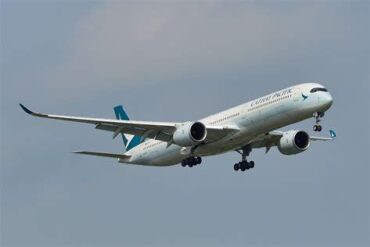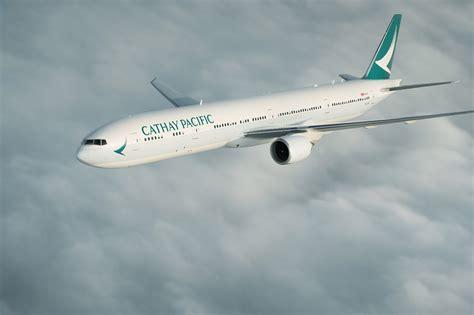
Cathay Pacific is quietly but decisively reshaping its long-haul network across the South Pacific. As global demand continues to normalize and premium leisure traffic rebounds, the Hong Kong flag carrier has scheduled more than 12% additional flights to Australia and New Zealand in the first quarter of 2026, reinforcing Oceania as one of its most strategically important international regions. This expansion is not symbolic or seasonal tinkering. It is a structural increase in capacity, frequencies, and network depth, backed by fleet choices and hub connectivity logic.
The timing matters. The airline is entering its 80th anniversary year with renewed confidence, highlighted by the reintroduction of its iconic “lettuce leaf” retro livery on an Airbus A350-900. That aircraft type, along with the larger A350-1000 and the long-serving Boeing 777-300ER, forms the backbone of Cathay Pacific’s Oceania operations. These widebody aircraft are optimized for ultra-long-haul efficiency, premium cabin density, and cargo uplift, all critical ingredients for routes linking Hong Kong with Australia and New Zealand.
In raw numbers, the expansion is significant. Cathay Pacific has scheduled 1,201 departures from Hong Kong to Australia and New Zealand in Q1 2026, according to current Cirium data. That represents a 12.2% increase in flight count year-on-year, alongside a 11.6% rise in total seat capacity, reaching nearly 381,000 seats and over 1.7 billion available seat miles. This is not just about adding flights; it is about scaling presence in markets that deliver consistent yields and strong alliance feed.
A Strategic Bet on Oceania Demand Recovery
Oceania has long been one of Cathay Pacific’s most resilient long-haul markets, supported by deep business ties, visiting-friends-and-relatives traffic, and a robust premium leisure segment. As Asia-Pacific travel flows continue to rebuild, the airline is positioning Hong Kong International Airport as a high-efficiency transfer hub for passengers moving between Australasia, mainland China, Northeast Asia, and Europe.
This growth also aligns with Cathay Pacific’s broader recovery narrative. The airline has steadily rebuilt capacity across its network, but Australia and New Zealand stand out for receiving above-average frequency growth, signaling confidence in sustained demand rather than short-term spikes.
Australia: Dense Frequencies and a New Route
Australia accounts for six of the eight Oceania destinations served from Hong Kong, making it the core of Cathay Pacific’s regional strategy.
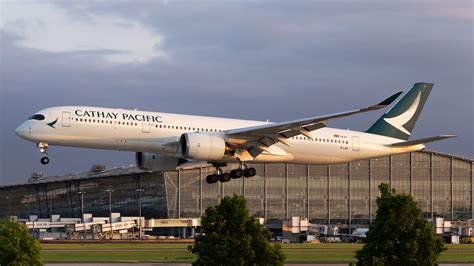
Sydney remains the undisputed heavyweight. With 351 departures scheduled in Q1 2026, the Hong Kong–Sydney corridor will operate at close to four flights per day, reflecting its role as both a premium business route and a major leisure artery. Melbourne follows closely behind with 265 departures, averaging around three daily services. Both cities benefit from strong onward connectivity through Qantas, Cathay Pacific’s oneworld partner, reinforcing alliance synergies at both ends of the route.
Brisbane and Perth form the second tier, each seeing roughly two daily flights on average. Perth’s 172 departures underline its importance as Western Australia’s primary international gateway, while Brisbane’s 168 services continue to support Queensland’s tourism-driven recovery.
The most notable development is Adelaide, which emerges as the only entirely new Australian route compared to Q1 2025. Services will ramp down gradually across the quarter, with 14 departures in January, 12 in February, and 11 in March. While frequencies are modest, the route signals Cathay Pacific’s intent to probe secondary Australian markets with direct long-haul connectivity.
Cairns is the lone outlier. Its 26 scheduled departures represent a reduction from the previous year, reflecting a recalibration of leisure-focused capacity rather than a retreat from the Australian market as a whole.
New Zealand: Auckland Takes Center Stage
New Zealand tells a more nuanced story, defined by aggressive frequency growth on one route and quiet optimization on another.
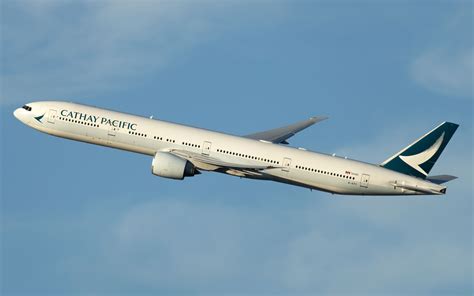
Auckland is the clear winner. Cathay Pacific will operate 136 flights to Auckland in Q1 2026, a dramatic 54.5% increase compared with the same period last year. The airline has explicitly linked this expansion to its ambition to strengthen New Zealand connectivity via Hong Kong, offering smoother onward links to Europe, North Asia, and the Chinese mainland. Interestingly, seat capacity growth lags frequency growth, suggesting smaller or more varied aircraft deployment to fine-tune supply.
Christchurch, by contrast, remains stable. Frequencies dip slightly from 47 to 46 flights year-on-year, yet total seat capacity rises by just over 2%, pointing to the use of larger aircraft and a focus on efficiency rather than expansion.
What This Means for Cathay Pacific in 2026
This 12% expansion is not a headline-grabbing gamble. It is a measured, data-driven recalibration of Cathay Pacific’s long-haul network, aimed squarely at markets with proven resilience and alliance leverage. By increasing frequencies rather than merely adding seats, the airline improves schedule flexibility, connection windows, and overall competitiveness against rivals from the Middle East and Southeast Asia.
For Australia and New Zealand, the message is clear. Cathay Pacific is not just back; it is leaning in, betting that Oceania will remain one of the most reliable pillars of its global network well into 2026 and beyond.