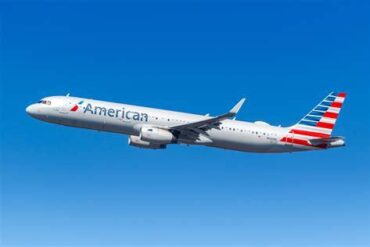
The global aviation industry is no stranger to turbulence, yet the latest performance from major U.S. carriers suggests a remarkable ability to stay aloft even in the face of geopolitical shocks. Despite a sharp spike in oil prices linked to the ongoing conflict in Iran, Delta Air Lines, American Airlines, and JetBlue Airways have all raised their first-quarter revenue forecasts, signaling a powerful rebound in travel demand that is outpacing rising operational costs.
Fuel, long considered one of the most volatile and significant expenses in aviation, typically accounts for 20% to 30% of total airline costs. When oil markets react to geopolitical instability, airlines often face immediate financial strain. This time, however, the narrative is shifting. Instead of retreating, carriers are leaning into strong booking trends, particularly as spring travel demand surges across both leisure and corporate segments.
The result is a rare alignment of high costs and even higher revenues, a dynamic that is redefining expectations for airline profitability in early 2026. Rather than acting as a brake on growth, the fuel price spike has become a stress test—one that major U.S. airlines are currently passing with surprising strength.
Delta and American Absorb $400M Fuel Impact While Raising Forecasts
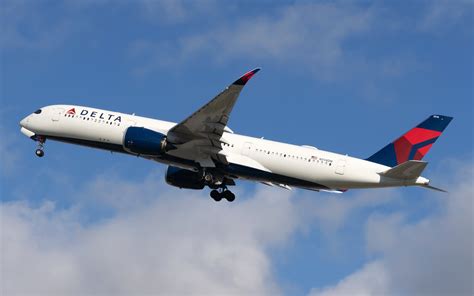
Delta Air Lines offers perhaps the clearest example of resilience under pressure. The carrier disclosed that it absorbed approximately $400 million in fuel-related costs, driven not only by rising oil prices but also by operational disruptions such as a severe winter storm season. Under normal circumstances, such a hit would force downward revisions. Instead, Delta has raised its revenue growth expectations to the high-single-digit range, surpassing earlier projections.
This performance is not مجرد luck; it reflects a deliberate strategy centered on high-value customers. Premium cabins, loyalty programs, and corporate travel contracts have become key revenue drivers, enabling Delta to maintain pricing power even as costs climb. The airline also reaffirmed its earnings guidance of $0.50 to $0.90 per share, reinforcing investor confidence.
American Airlines mirrors this trajectory. The carrier now expects first-quarter revenue growth exceeding 10%, a notable upgrade from its prior forecast of 7% to 10%. Like Delta, American anticipates roughly $400 million in additional fuel expenses, yet remains confident in sustained demand momentum. Financial markets have responded positively, with airline stocks rising as investors digest the updated outlooks.
Record-Breaking Bookings Signal Unrelenting Travel Demand
Behind these optimistic forecasts lies a powerful driver: record-setting booking activity. Delta’s CEO Ed Bastian highlighted that eight of the airline’s top ten sales days in history occurred within the current quarter, with a remarkable concentration in March alone. Even more striking, revenues and bookings have surged 25% year over year, underscoring the intensity of demand.
This surge is not confined to one segment. Leisure travelers continue to prioritize experiences, while corporate travel—once slow to recover post-pandemic—has returned with renewed strength. The convergence of these two segments creates a demand environment that is both broad-based and resilient.
Airlines are capitalizing on this momentum through refined revenue management systems, dynamic pricing, and targeted capacity deployment. In effect, they are extracting more value per passenger, offsetting the financial drag of higher fuel costs without dampening demand.
Premium Strategy and Pricing Power Redefine Airline Economics
A deeper structural shift is also at play. Since the pandemic recovery, airlines have increasingly pivoted toward higher-yield revenue streams, focusing on premium seating, ancillary services, and loyalty ecosystems. This transformation is now proving critical in navigating cost volatility.
Delta, for instance, derives a substantial portion of its income from premium travelers and co-branded credit card partnerships, both of which offer higher margins than traditional ticket sales. American and JetBlue are following similar paths, expanding premium offerings and enhancing customer segmentation strategies.
JetBlue’s revised outlook reflects this evolution. The airline now projects revenue growth between 5% and 7%, up from earlier expectations. While smaller in scale than Delta or American, JetBlue’s performance highlights how even mid-tier carriers can leverage improving demand and premium cabin uptake to counterbalance rising expenses.
Southwest Airlines, meanwhile, has maintained its existing forecast, signaling stability rather than acceleration. Its leadership has acknowledged fuel prices as a key uncertainty, but emphasized that overall performance remains “fully on track.” This cautious confidence reflects an industry-wide recognition: fuel volatility is unavoidable, but its impact can be managed.
Global Disruptions Reshape Routes and Competitive Dynamics
Beyond financial metrics, the Iran conflict is also reshaping global aviation flows. Airspace closures and regional instability have forced airlines to reroute flights, increasing operational complexity but also creating unexpected opportunities.
United Airlines has emerged as a notable beneficiary of these shifts. With reduced competition on certain long-haul corridors and travelers avoiding affected regions, United has captured increased demand on transatlantic and alternative international routes. Industry data points to record booking days for the carrier, suggesting that disruption in one region can translate into growth elsewhere.
This redistribution of demand highlights the adaptability of global aviation networks. Airlines are not merely reacting to external shocks; they are actively repositioning themselves to capture shifting travel patterns, often in real time.
Resilience Defines the Airline Industry’s 2026 Outlook
The latest revenue guidance from U.S. airlines paints a compelling picture of resilience in the face of adversity. While fuel prices remain elevated and geopolitical risks persist, carriers are demonstrating an ability to balance cost pressures with strong demand and strategic agility.
This moment may mark a turning point in how the industry responds to external shocks. Instead of relying solely on cost-cutting measures, airlines are increasingly leveraging pricing power, premium demand, and network flexibility to sustain growth.
The coming months will test whether this momentum can endure if oil prices remain high or geopolitical tensions escalate further. For now, however, the message is clear: even a $400 million fuel hit and the uncertainty of war are not enough to ground an industry riding a powerful wave of demand.