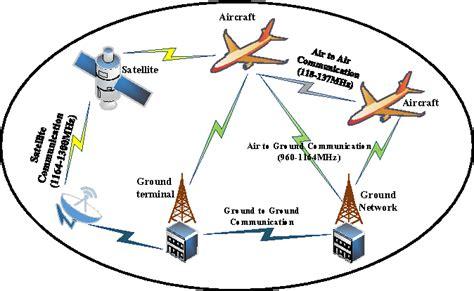
Frequency coupling is a technique used in air-ground voice communication that employs multiple frequencies. In this system, stations operating on one frequency can still receive messages sent on other frequencies. This approach becomes essential in certain situations, such as when a single ATS sector needs to utilize more than one frequency at the same time.
For example, temporary control sectors may collapse due to sector closures. When this happens, the airspace of a closed sector gets absorbed by an adjacent one. The neighboring sectors and units are then informed that air traffic services will now be provided on a new frequency. Another scenario occurs when a tower combines with an approach unit during quieter hours. Additionally, some aircraft may have different communication capabilities. While 8.33 kHz channel spacing is standard for ATS communications, not all aircraft are equipped with such radios. Some general aviation aircraft only use 25 kHz channel spacing, while certain state aircraft may only operate on UHF.
Using two frequencies simultaneously offers significant advantages. It eliminates the need for pilots to switch frequencies in these scenarios, thereby reducing communication workload. Furthermore, it minimizes the risk of losing communication, which often happens when pilots change frequencies.
There are two main methods for using multiple frequencies at once. The first is separate use. In this method, the controller activates two or more frequencies, allowing all aircraft on any of these frequencies to receive transmissions. When a pilot transmits, the controller hears the message and knows which frequency it came from. However, pilots on a different frequency will miss that message, which can lead to reduced situational awareness and increased chances of overlapping transmissions.
The second method is frequency coupling. Here, the controller switches between frequencies and uses the VCS to perform the coupling function. If a message is received on one frequency, it is automatically re-transmitted on the others by the ground station. This means that all pilots hear every communication, effectively eliminating the downsides of the separate use method. Most modern VCSs include this useful function.