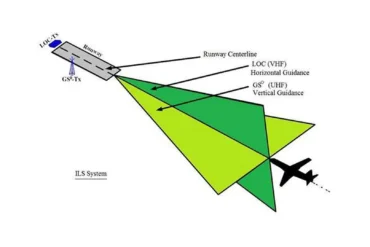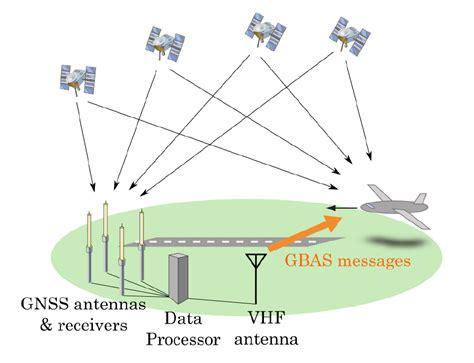
The GBAS Landing System, or GLS, is an advanced alternative to the traditional Instrument Landing System (ILS). It relies on a Global Navigation Satellite System to provide precise navigation data. A single GBAS ground station sends corrected GNSS data to aircraft equipped for this technology. This setup allows pilots to conduct flexible and precise approaches, adapting to various flight conditions.
From the cockpit perspective, pilots benefit from familiar displays. The GBAS avionics integrate with the Multi-Mode Receiver (MMR), ensuring that no extra training is necessary. The main difference for pilots lies in selecting a five-digit Channel Number instead of an ILS frequency. To verify they are following the correct procedure, pilots can cross-check the Reference Path Indicator (RPI) shown on their displays with the approach ID chart. In some cases, audio identification via Morse code is also available.
GBAS capabilities come standard on Boeing 747-8 and Boeing 787 aircraft, while options are available for Boeing 737NG and several Airbus models, including A320, A330, and A380. When pilots choose GLS, their ILS display seamlessly transforms into a GLS display using data from the aircraft’s GBAS receiver. Current GBAS base stations can support between 26 to 48 simultaneous precision approaches. If two airports are near each other, they can share the same GBAS base station.
The International Civil Aviation Organisation (ICAO) has outlined requirements for GLS Category I in Annex 10 Volume 1. Work is ongoing to develop corresponding procedures for Category II and III. Presently, GBAS is operational at over 100 airports worldwide, including Bremen (EDDW), Malaga (LEMG), Frankfurt (EDDF), Zurich (LSZH), Newark (KEWR), Houston’s George Bush (KIAH), Moses Lake (KMWH), Charleston (KCHS), Sydney (YSSY), Chennai (VOMM), and Saint Helena (FHSH).