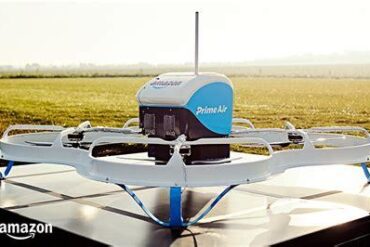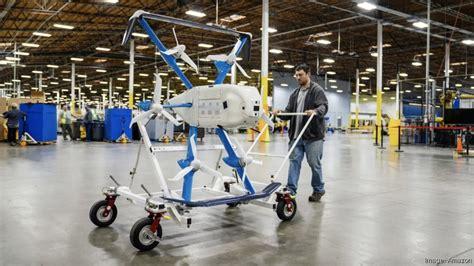
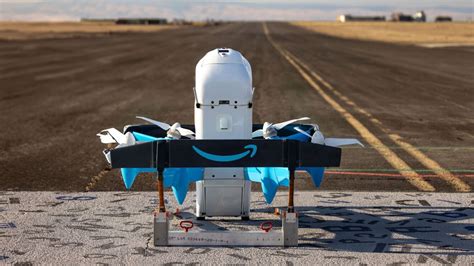
Amazon Prime Air has revolutionized package delivery with its cutting-edge MK30 drone, which promises to redefine how packages are delivered in the near future. Launched in the West Valley Phoenix Metro Area of Arizona and College Station, Texas, in November, this advanced drone is designed to increase the speed, safety, and efficiency of deliveries. With its remarkable capabilities, the MK30 is setting the stage for an era of drone-powered logistics that could ultimately change the face of e-commerce worldwide.
Design and Development of the MK30
The MK30 drone is not just another iteration in Amazon’s drone fleet. It represents a significant leap forward, designed from the ground up by engineers and aerospace experts at Amazon’s Prime Air division. This two-year development project was driven by rigorous safety and reliability standards, ensuring that the drone would meet aerospace-level regulations. One of the primary objectives was to create a delivery drone that was quieter, faster, and safer than its predecessors.
The MK30 is capable of traveling twice as far as previous models, expanding Amazon’s ability to deliver to more remote or difficult-to-reach locations. Additionally, it operates significantly more quietly, a feature that is vital for ensuring community acceptance of the drone technology. With its reduced noise profile, the MK30 is designed to seamlessly integrate into residential neighborhoods, reducing disturbances while in operation. This was achieved through extensive research and testing, where different propeller designs were analyzed to minimize the drone’s perceived sound volume by nearly 50%. As Stephen Wells, the chief project engineer for Prime Air, pointed out, the MK30 has been engineered to “disappear into the soundscape” when in flight, making it an unobtrusive part of the urban environment.
Key Features and Technological Advancements
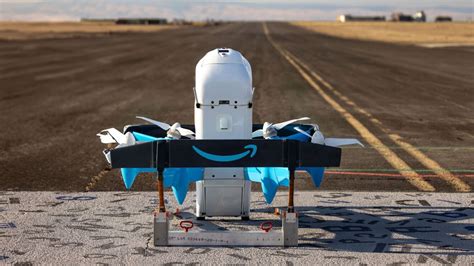
The MK30 is built to meet the needs of modern delivery logistics, blending advanced technology with practical functionality. Below are some of its key features:
- Improved Flight Range: The MK30 can travel up to twice the distance of previous Amazon drones, expanding its delivery capabilities.
- Noise Reduction: By experimenting with various propeller designs, engineers have reduced the drone’s noise by almost half, making it quieter during takeoff and flight.
- Advanced Perception System: The MK30 is equipped with cutting-edge sensors and machine learning algorithms that allow it to detect and navigate around obstacles, including trampolines and clotheslines. These sensors also enable it to avoid other aircraft in the sky, ensuring safe navigation during delivery.
- Weather Resistance: The MK30 has been designed to operate in light rain and adverse weather conditions. The drone underwent rigorous testing, including submerging spinning motors in water and subjecting it to water sprays at various angles and pressures to ensure reliable performance.
These features are critical for ensuring that the drone can operate safely and effectively, even in challenging environments.
Safety and Redundancy Features
Safety is a top priority in the design of the MK30, which is why the drone includes several redundancy and backup systems to ensure that it can always complete its mission safely. The drone features a fully redundant system for all critical flight functions, including a backup navigation computer that can take over in the event of any anomaly detected by the primary system.
One of the most impressive aspects of the MK30 is its ability to detect and avoid obstacles in real-time. Using its advanced perception system, the drone can identify objects such as humans, animals, and other airborne objects. This system is powered by sophisticated machine learning algorithms that continually improve as the drone accumulates more flight hours.
Moreover, the MK30 includes a health monitoring system that tracks the drone’s status during flight. If any issues arise, the monitoring system can immediately trigger a return-to-home function, ensuring that the drone returns safely to its starting point without any loss of control.
Testing and Regulatory Approval
Before the MK30 could be deployed in real-world delivery scenarios, it had to undergo extensive testing. The drone completed over 1,070 flight hours and more than 6,300 individual flights, including tethered, caged, and outdoor tests. These tests were conducted under the supervision of the Federal Aviation Administration (FAA) at Amazon’s drone testing site in Pendleton, Oregon, ensuring that the drone met all required safety standards.
The final phase of testing included 360 hours of certification flights, during which the MK30 demonstrated its ability to fly Beyond Visual Line of Sight (BVLOS) using its onboard detect-and-avoid system. This FAA certification was a major milestone, allowing Amazon to begin deploying the MK30 for customer deliveries as early as October.
Implications for Future Deliveries
The introduction of the MK30 marks a significant step toward Amazon’s ambitious goal of making drone deliveries a common method for shipping packages. By the end of the decade, Amazon aims to deliver up to 500 million packages globally using drones, and the MK30 is central to achieving this target.
The success of the MK30 will depend not only on its technical capabilities but also on its ability to gain public acceptance. As more people become familiar with drone technology and witness the safety and reliability of the MK30, it is expected that drone deliveries will become a routine part of daily life.
Conclusion: The Future of Package Delivery
Amazon’s MK30 drone represents a significant milestone in the evolution of delivery logistics. Its advanced technology, emphasis on safety and reliability, and impressive capabilities make it a key player in the future of package delivery. As the technology continues to improve and more drones take to the skies, we can expect to see a dramatic shift in how products are delivered worldwide.