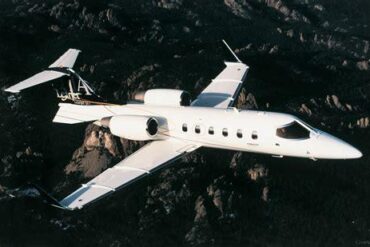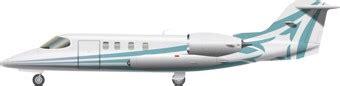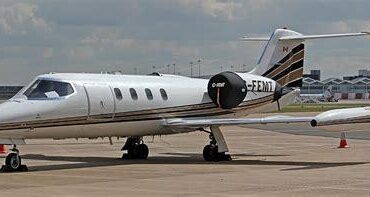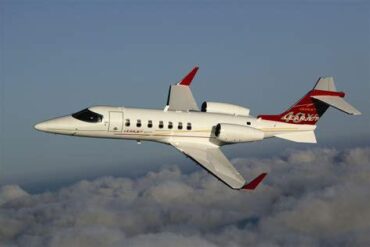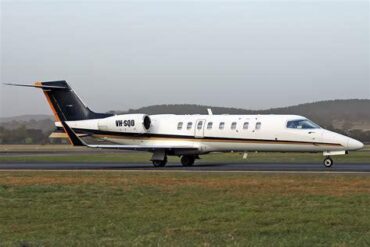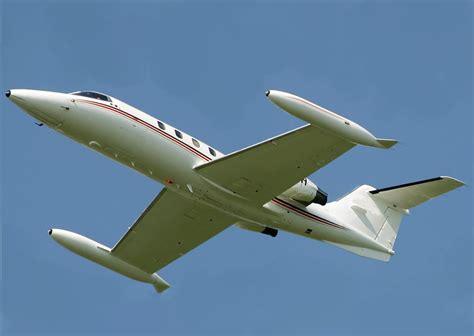
Learjet 25 stands as a hallmark of innovation in the realm of business aviation, engineered to offer speed, altitude, and executive comfort in a compact and agile form. Originally built in the United States as a development from the Learjet 24, this aircraft quickly established itself as a dominant force in the high-performance business jet sector. Designed to carry up to ten passengers, the Learjet 25 introduced enhancements in range, payload, and systems integration, setting a new benchmark for what light jets could achieve.
Developed during a period of intense aerospace innovation, the Learjet 25 had its first flight on August 12, 1966, and deliveries began in November 1967. The model’s stretched fuselage added valuable passenger capacity while retaining the remarkable agility and aerodynamic efficiency of its predecessor. Over time, the platform evolved into several refined variants, including the 25B, 25C, 25D, and 25G, each incorporating critical upgrades to engine performance, flight systems, and operational ceiling.
The Learjet 25 became synonymous with executive prestige, air ambulance services, and even military operations, revered for its speed, efficiency, and climb rate.
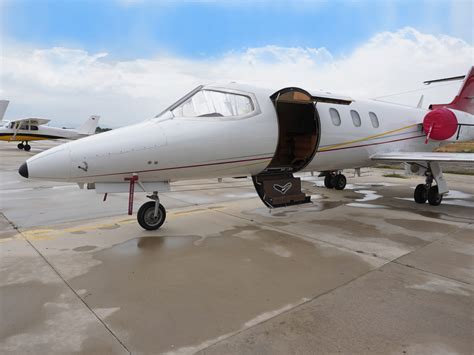
Evolution and Historical Context
The Learjet 25’s roots lie in the ambitious legacy of Bill Lear, the aviation pioneer whose vision was to create an affordable, high-speed jet for business travel. With the Learjet 24 establishing performance credibility, the 25 was conceived to address the limitations in passenger capacity while still meeting the demands for Mach 0.76 cruising speed and high-altitude operation.
The extension of the fuselage allowed for three additional seats, bringing the total passenger capacity to ten. This made the aircraft particularly attractive to corporate operators and charter services, where balancing speed and capacity is a key metric.
With each successive variant, Learjet addressed real-world feedback:
-
The Learjet 25B improved avionics and instrument layout.
-
The Learjet 25C added optimized environmental controls.
-
The Learjet 25D introduced CJ610-8A engines with better thrust and fuel efficiency.
-
The Learjet 25G focused on range and altitude, pushing the operational envelope beyond FL450.
Powerplant and Performance Systems
The Learjet 25 is propelled by two General Electric CJ610-6 turbojets, each delivering 2,950 pounds of thrust. These engines feature an eight-stage axial compressor and a two-stage turbine, supported by precision-engineered fuel control systems and RPM regulators, allowing sharp throttle response and reliable high-speed cruise.
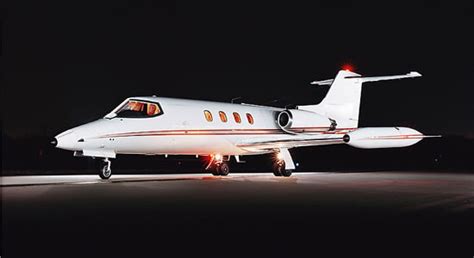
Its performance parameters place it in an elite class:
-
Cruise speed: Approximately Mach 0.76 (~500 mph)
-
Service ceiling: Up to FL450 (45,000 ft)
-
Stall speed: ~103 knots (with full flaps)
-
Range: 1,400 nautical miles with NBAA reserves
-
Rate of climb: Over 6,800 ft/min at MTOW
-
Glide ratio: An impressive 16:1, contributing to excellent emergency gliding characteristics
This engine setup, while delivering unmatched speed in its class, also required vigilant pilot workload, especially during hot-and-high operations or short field landings.
Advanced Flight Systems and Controls
In terms of control fidelity, the Learjet 25 features dual mechanical control wheels and rudder pedals, augmented by hydraulic assistance for critical surfaces. The aircraft includes fully functional flap systems, stall warning sensors, and autopilot trim overrides, giving pilots manual and automated precision during all phases of flight.
Landing is facilitated by a conventional tricycle gear system, with dual-wheel main gear, power-boosted disc brakes, and a responsive anti-skid mechanism. The nose wheel steering is electronically modulated, offering confident taxi and takeoff roll management.
Hydraulic systems maintain operational pressures between 1,250 and 1,550 psi, dedicated separately to flaps, spoilers, landing gear, and braking. Emergency shutoff valves and auxiliary hydraulic pumps increase redundancy, enhancing overall safety margins.
Fuel and Electrical Infrastructure
The Learjet 25 utilizes a five-tank configuration, including two wing tanks, a central fuselage tank, and two tip tanks. Fuel delivery is managed through boost pumps, crossflow mechanisms, and jet pumps, which allow optimal transfer and balancing during flight.
On the electrical side, the aircraft is equipped with dual AC/DC systems, powered by engine-driven starter-generators and solid-state inverters. Two batteries provide backup power, while optional auxiliary inverters offer scalability for added avionics or mission-specific needs.

Cabin Environment and Pressurization
The cabin of the Learjet 25, though compact by modern standards, offers pressurized and temperature-controlled comfort. Utilizing engine bleed air, cabin pressurization maintains a safe differential even at cruising altitudes near 45,000 feet. Air conditioning is supported via a heat exchanger system, and ground refrigeration is available during maintenance or refueling.
For in-flight emergencies, the aircraft is fitted with oxygen systems for both crew and passengers. The safety suite includes engine fire detection systems using thermal sensors and dual CF3BR fire extinguishing containers, ensuring immediate suppression capabilities.
Noise Compliance and Operational Mandates
As aviation noise regulations evolved, the Learjet 25 faced increasing pressure to modernize. By 2015, Stage 3 noise compliance became mandatory for continued operations in the United States. Aircraft that could not meet these regulations required hush kits or were restricted from operating in sensitive airspaces. Many aircraft were subsequently retired, modified, or exported to jurisdictions with more relaxed noise limits.
Accidents and Incidents
Despite its reliability, the Learjet 25 has been involved in several high-profile accidents:
-
In 1977, a Learjet 25 crashed in Yugoslavia due to inclement weather and navigational issues.
-
In 1983, a transatlantic flight ran out of fuel and ditched in the ocean, attributed to poor fuel planning.
-
The Brazilian band Mamonas Assassinas perished in a 1996 crash near São Paulo due to a controlled flight into terrain.
-
In 2012, Mexican singer Jenni Rivera died when her Learjet 25 lost control at altitude.
-
In 2017, a crash in Mexico killed all occupants, further prompting reviews into the age and service condition of remaining Learjet 25s.

Global Operators and Mission Profiles
The Learjet 25 has seen use beyond executive transport. Its speed, altitude capability, and compact frame have made it ideal for air ambulance missions, surveillance tasks, and military training roles. Countries across Latin America, the Middle East, and Asia have fielded Learjet 25s for both governmental and private-sector missions.
Today, surviving airframes are predominantly in private hands, often customized for VIP charter, cargo conversion, or aeromedical deployment.
Technical Specifications (Learjet 25D)
-
Crew: 2
-
Passenger Capacity: Up to 10
-
Length: 48 ft 8 in (14.83 m)
-
Wingspan: 35 ft 7 in (10.85 m)
-
Height: 12 ft 3 in (3.73 m)
-
Empty Weight: 7,285 lb (3,305 kg)
-
Max Takeoff Weight: 15,000 lb (6,804 kg)
-
Fuel Capacity: 931 gallons usable
-
Maximum Speed: Mach 0.82
-
Cruising Speed: Mach 0.76
-
Stall Speed: 103 knots (with full flaps)
-
Range: ~1,400 nautical miles
-
Service Ceiling: 45,000 ft
-
Rate of Climb: 6,800 ft/min

Frequently Asked Questions
How fast is the Learjet 25 compared to modern business jets?
While not as fast as modern long-range jets like the Gulfstream G700 or Bombardier Global 7500, the Learjet 25 still holds its own with a cruise speed around Mach 0.76, comparable to many current light jets.
Is the Learjet 25 still in active service?
Yes, but its numbers are dwindling. Most active Learjet 25s have either been exported, retired, or retrofitted for niche roles such as air ambulances or military training platforms.
Why was the Learjet 25 grounded in some regions?
Post-2015, any aircraft not compliant with Stage 3 noise regulations was subject to operating restrictions or outright bans in major airspaces like the U.S. and EU. The Learjet 25, unless modified, fell into this non-compliant category.