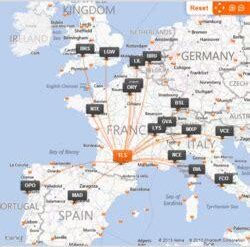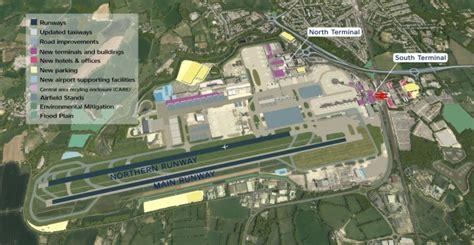
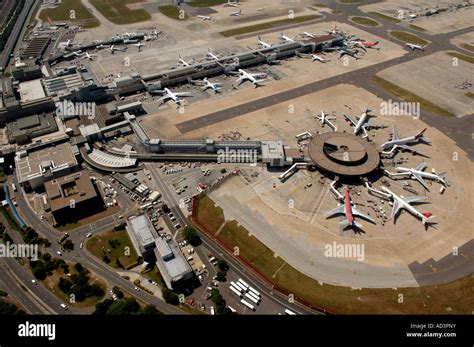
London’s aviation network has always been a fascinating machine—six major airports orbiting one of the world’s most influential cities. At the center of that ecosystem stands London Heathrow, the traditional giant. Yet just 28 miles to the south, London Gatwick Airport (LGW) has quietly evolved into a powerful secondary hub that now handles tens of millions of passengers annually.
In 2026, Gatwick enters one of the most significant expansion phases in its modern history, welcoming eight new airlines that will dramatically widen its international footprint. The new arrivals represent a mix of European network carriers, leisure specialists, and long-haul operators from Asia and the Middle East, turning Gatwick into an even more diverse gateway between the United Kingdom and the world.
The significance of this expansion extends far beyond simple route additions. New airlines bring competition, new aircraft, and fresh travel opportunities that reshape passenger flows and airline strategies across Europe.
By the end of 2026, Gatwick will host a broader airline portfolio than at any point in the past decade, reinforcing its role as the UK’s second-busiest airport and one of Europe’s most dynamic aviation hubs.
Jet2 Launches Major London Gatwick Base
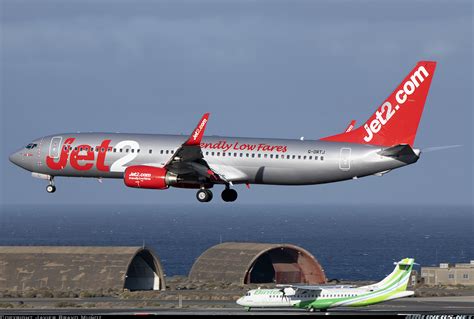
Perhaps the most talked-about addition in 2026 is Jet2, the popular British leisure airline known for its holiday-focused business model and strong customer loyalty. Although the airline has previously served Gatwick on charter flights for P&O Cruises, March 26 marks the beginning of a much larger commitment: Jet2’s first scheduled operations from the airport.
The airline is establishing a full base at Gatwick with six aircraft stationed at the airport, enabling an ambitious launch of 29 routes to holiday destinations across Europe. The strategy reflects a clear trend in the UK travel market—holiday flights remain one of the strongest growth sectors in aviation.
Spain dominates the new route map, accounting for 11 destinations, a reminder that British travelers maintain a long-standing love affair with Spanish beaches. From the Balearic Islands to mainland coastal cities, Jet2’s network is designed to feed the enormous demand for Mediterranean vacations.
The airline’s leadership has described the move as a turning point. The “Jet2 formula”—a mix of competitive fares, package holidays, and reliable service—has proven wildly successful in other UK cities, and bringing that approach to London’s second airport could dramatically reshape the leisure travel market.
German Airlines Strengthen Gatwick’s European Network
Germany emerges as another key contributor to Gatwick’s airline expansion in 2026. Two German carriers—Eurowings and Condor—are launching new routes that will strengthen links between the UK and Europe’s largest economy.
Eurowings, the low-cost subsidiary of the Lufthansa Group, will begin operations on March 29, launching 13 weekly flights to Cologne Bonn Airport (CGN). Shortly afterward, on April 13, the airline will add six weekly flights to Stuttgart (STR).
These routes serve more than just tourism. Cologne and Stuttgart are major business centers, home to global automotive, engineering, and technology industries. The additional connectivity provides a convenient corridor for both business travelers and leisure passengers moving between the UK and Germany.
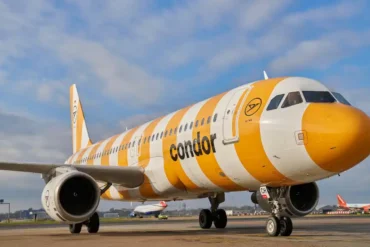
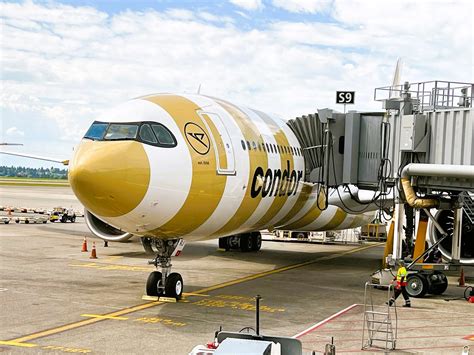
Meanwhile, leisure and long-haul specialist Condor will enter the Gatwick market on April 1 with three daily flights to Frankfurt (FRA). Frankfurt is one of Europe’s most important aviation gateways, offering extensive connections throughout Europe, Asia, and the Americas.
The arrival of Condor effectively strengthens Gatwick’s role as a secondary intercontinental connection point, allowing travelers to reach global destinations through Frankfurt’s massive hub network.
Air France Returns After 19 Years
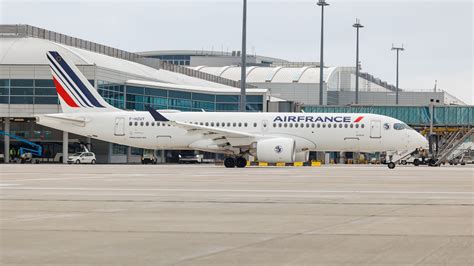
Among the most symbolic developments of Gatwick’s 2026 expansion is the return of Air France. The French flag carrier last operated from Gatwick in 2007, making its reappearance nearly two decades later a noteworthy moment in the airport’s history.
Starting March 29, Air France will launch twice-daily flights between London Gatwick and Paris Charles de Gaulle Airport (CDG)—one of Europe’s most powerful aviation hubs. The route will be operated using the airline’s 148-seat Airbus A220-300, a modern narrowbody aircraft celebrated for its fuel efficiency and passenger comfort.
The A220 represents a new generation of aircraft designed for medium-haul routes. Its quiet engines and spacious cabin configuration make it particularly suitable for high-frequency European flights.
Air France’s return also strengthens SkyTeam alliance connectivity for Gatwick passengers. From Paris, travelers can access a massive network of long-haul routes reaching North America, Africa, Asia, and beyond.
Romania’s Animawings Adds a Unique European Link
While several of Gatwick’s new airlines are globally recognized brands, one addition brings a more niche presence to the airport: Romanian carrier Animawings.
Beginning March 22, the airline will operate six weekly flights between London Gatwick and Bucharest Henri Coandă International Airport (OTP). Although smaller in scale compared with other European airlines, Animawings introduces an important connection between the UK and Romania, supporting both tourism and the sizable Romanian diaspora living in Britain.
The airline plans to operate the route using Airbus A220-300 aircraft configured with 125 economy seats and 12 business class seats, offering a balance of comfort and efficiency on the roughly three-hour flight.
This route highlights Gatwick’s growing importance as a gateway for Eastern European travel, a segment that has expanded steadily over the past decade.
Long-Haul Expansion From Asia and the Middle East
The most dramatic changes in Gatwick’s route network arrive with three long-haul airlines from outside Europe, extending the airport’s reach deep into Asia and the Middle East.
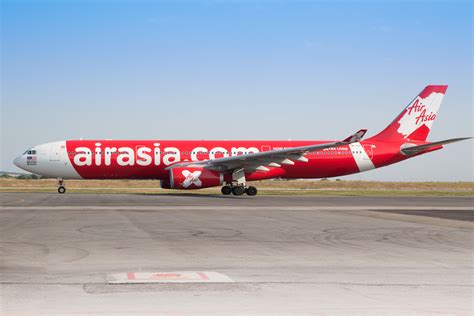
One of the most anticipated returns comes from AirAsia X, the Malaysian long-haul low-cost airline. The carrier previously served London between 2009 and 2012, initially flying to Stansted Airport before shifting to Gatwick. In 2026, the airline finally returns to the London market.
Starting June 27, AirAsia X will launch a daily service between Kuala Lumpur and London Gatwick, operating with Airbus A330 aircraft. The flight will include a stop in Bahrain, creating an intriguing multi-segment route linking Southeast Asia, the Middle East, and the UK.
China also joins the expansion with Beijing Capital Airlines, which will operate weekly flights from Qingdao Jiaodong International Airport. The service introduces another direct link between the UK and China’s rapidly growing aviation market.
Completing the trio is Air Arabia, the Middle East’s largest low-cost airline. Beginning March 29, the carrier will operate twice-daily flights between Sharjah and London Gatwick, using the Airbus A321LR. These flights, lasting up to 7 hours and 50 minutes, demonstrate how modern long-range narrowbody aircraft are redefining international travel.
A Turning Point for London Gatwick
Airports evolve in waves. Sometimes the change is slow—new routes trickle in over years. Other times, the shift arrives like a gust of jet exhaust. Gatwick’s 2026 airline expansion clearly belongs to the second category.
The arrival of eight new airlines in a single year signals strong confidence in the airport’s market position. More importantly, it reflects broader trends reshaping global aviation: the rise of long-range narrowbody aircraft, the continued expansion of low-cost long-haul carriers, and the growing demand for direct international connectivity outside traditional mega-hubs.
For travelers, the effect is simple but powerful—more routes, more competition, and more choices. For Gatwick, the transformation strengthens its identity not merely as Heathrow’s understudy but as a global gateway in its own right, connecting London to an ever-widening map of destinations.