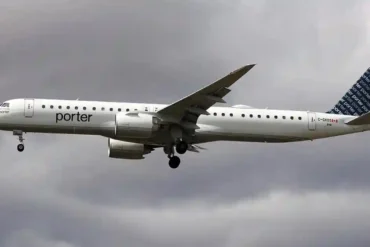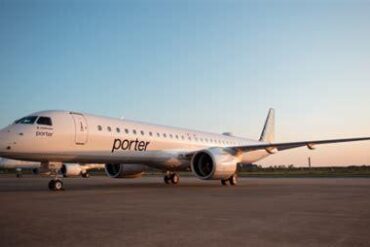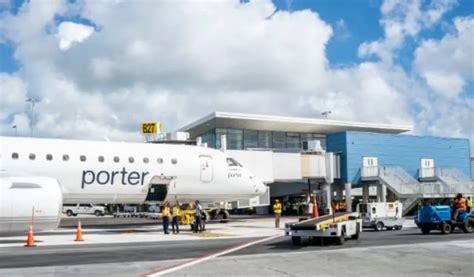
Nashville’s aviation story has entered a new chapter, and it arrives with a distinctly Canadian accent and a glass of wine already poured. Music City is gaining a new international airline this spring as Porter Airlines launches daily nonstop service to Toronto, adding a premium-leaning transborder option at a moment when Nashville International Airport (BNA) is growing faster than almost anyone predicted.
The new route is more than a schedule update. It signals Nashville’s evolution from a domestic powerhouse into a steadily diversifying international gateway. With passenger traffic surpassing 25.7 million travelers last year, a figure that represents 61% growth over pre-pandemic levels, airlines are no longer asking whether Nashville can support new routes. They are asking how quickly they can get in.
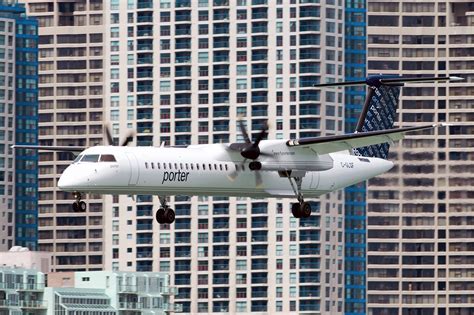
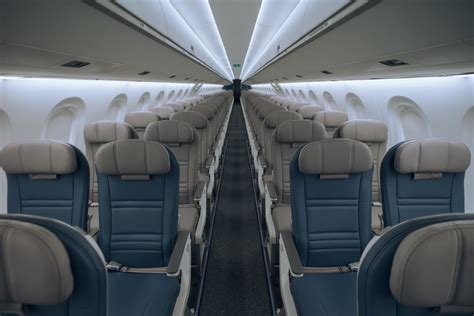
Porter’s arrival fits that momentum perfectly. Beginning May 11, 2026, the airline will operate daily nonstop flights between Nashville and Toronto using its 78-seat Bombardier Q400 turboprops. As on every Porter flight, passengers can expect no middle seats, complimentary beer and wine served in real glassware, and a selection of premium snacks—a civilized throwback in an industry often defined by austerity.
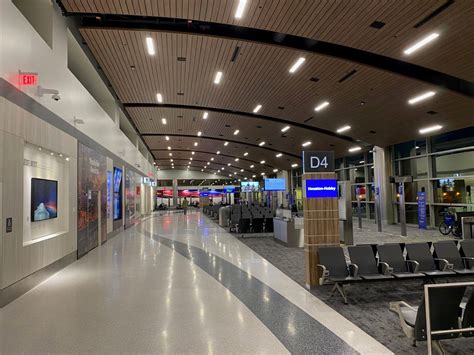
Nashville’s International Network Is Quietly Getting Serious
For years, Nashville’s international connectivity was modest. Prior to 2018, the airport’s overseas links were limited almost entirely to Canada, with Air Canada and seasonal services connecting BNA to Toronto and Montreal. That changed when British Airways introduced daily Boeing 787-9 flights to London Heathrow, proving that long-haul international demand from Middle Tennessee was not theoretical.
Since then, the pace has accelerated. Aer Lingus joined the roster last year with four-times-weekly Airbus A321XLR service to Dublin, and now Porter Airlines becomes Nashville’s seventh international carrier. Each addition is incremental, but together they reveal a clear trend: airlines increasingly view Nashville as a stable, year-round international market rather than a niche destination.
Porter’s Toronto service stands out not just because it is new, but because of where in Toronto it flies.
A Downtown-to-Downtown Advantage Travelers Will Notice
Unlike Air Canada and WestJet, which serve Nashville from Toronto Pearson International Airport (YYZ), Porter will operate its flights from Billy Bishop Toronto City Centre Airport (YTZ). Located on the Toronto Islands just minutes from downtown, YTZ is accessible via a pedestrian tunnel with moving walkways or a 90-second ferry ride. For business travelers and time-sensitive leisure passengers, that convenience is transformative.
This downtown-to-downtown pairing reshapes the value proposition of the route. A flight that might look similar on paper suddenly becomes far more efficient door to door. Porter’s choice of the Bombardier Q400, optimized for short-haul performance and quick turnarounds, reinforces that philosophy. The aircraft will feature 78 “elevated economy” seats, including six PorterReserve extra-legroom seats, maintaining the airline’s reputation for comfort without excess complexity.
Departure and arrival times are still to be finalized, but the airline has confirmed daily nonstop operations, positioning the route for both business commuters and long-weekend leisure traffic.
Why This Route Makes Strategic Sense for Porter Airlines
Porter’s expansion into Nashville is not an isolated move. It is part of a broader network growth of approximately 20%, currently the fastest expansion rate of any airline in North America. According to Andrew Pierce, Vice President of Network Planning at Porter Airlines, the match between Nashville’s growth curve and Porter’s ambitions is deliberate, reflecting strong demand from both leisure and corporate travelers.
The airline’s summer expansion includes eight additional new routes, launching between May 1 and May 15, 2026, spanning eastern, central, and western Canada as well as key U.S. markets. While Nashville is the headline-grabber for the American South, it sits alongside notable additions such as expanded service to Boston Logan International Airport and returning routes to Quebec City.
This aggressive schedule growth is made possible by Porter’s rapidly expanding fleet of Embraer E195-E2 jets. The airline recently accepted its 50th E195-E2, now operating 52 aircraft, with 75 firm orders and additional purchase rights that will extend deliveries into early 2027. While the Nashville route uses the Q400, the E2 fleet underpins Porter’s broader North American ambitions.
Nashville’s Airport Growth Is Fueling Airline Confidence
Nashville International Airport is no longer playing catch-up. The airport has invested heavily in terminal expansions, gate additions, and passenger amenities, creating capacity that airlines are now eager to fill. The Tennessean reports that Porter’s Toronto service is just one of nine new nonstop routes already scheduled to launch in 2026, with additional announcements expected.
This growth is not speculative. Nashville’s population boom, corporate relocations, and expanding tourism economy have combined to create consistent, year-round demand. For airlines, that stability matters more than hype. Routes survive when planes stay full in February, not just during festival season.
International carriers, in particular, tend to be conservative. Porter’s decision to enter the market signals confidence that Nashville can sustain premium-focused transborder traffic without relying on deep discounting.
Billy Bishop Airport’s Transformation Changes the Game
Porter Airlines is inseparable from Billy Bishop Toronto City Centre Airport. Founded in 2006, the airline helped transform the once-underutilized airport into a bustling downtown hub with over 60 daily departures and more than 2 million annual passengers. That symbiosis is about to become even more powerful.
In February, Billy Bishop is set to open a new U.S. Customs and Border Protection (CBP) preclearance facility, a $30 million project that allows passengers to complete all U.S. customs, immigration, and agriculture inspections before departure. This means travelers arrive in the United States as domestic passengers, bypassing customs queues entirely.
For Nashville-bound passengers, the benefit is straightforward: faster arrivals and smoother connections. For Porter, the implications are strategic. Preclearance enables service to U.S. airports and terminals that lack their own customs facilities, expanding the universe of viable routes from YTZ. While Air Canada will also begin U.S. flights from Billy Bishop following the facility’s opening, Porter retains a home-field advantage at the airport it helped build.

What Nashville Travelers Actually Get on Board
Beyond network strategy and airport economics, travelers care about the experience. Porter has built its brand around small but meaningful touches that resonate with frequent flyers tired of bare-bones service. On the Nashville–Toronto route, that means complimentary beer and wine, served in glassware, alongside premium snacks, even in economy.
There are no middle seats, a detail that sounds minor until it isn’t. Combined with attentive service and a cabin designed for short-haul comfort, the experience feels closer to a boutique airline than a regional operation. For Nashville travelers accustomed to crowded hubs and long walks at mega-airports, the contrast will be immediate.
A Small Route With Outsized Significance
On the surface, a single daily turboprop flight might seem modest. In reality, Porter Airlines’ entry into Nashville marks another step in the city’s steady international maturation. Each new carrier diversifies options, increases competition, and strengthens Nashville’s position on global route maps.
For Toronto travelers, the appeal is equally strong: direct access to one of America’s fastest-growing cities, paired with an airport experience that prioritizes speed and comfort. For Nashville, it is further evidence that the city’s growth is no longer just loud and flashy—it is strategic, sustainable, and increasingly international.