Founded in 1939 by the visionary engineer Jack Northrop, the Northrop Corporation emerged as a cornerstone of American aerospace innovation throughout the 20th century. From humble beginnings in Hawthorne, California, Northrop became a defining force in military aviation, celebrated for daring designs like the flying wing and for its pivotal contributions to the U.S. Air Force and Navy. The legacy of Northrop is not just etched in metal and jet fuel, but in the strategic air dominance it helped build.
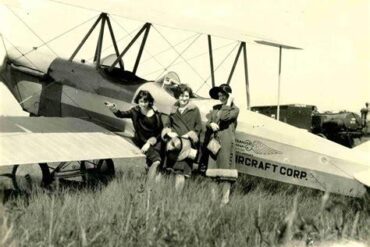
Northrop was established to fulfill a vision Jack Northrop had long harbored — to create aircraft that were not only efficient but also radically advanced. Before founding the iconic firm, Northrop had launched earlier ventures, including Avion Corporation in 1928 and another Northrop Corporation in the early 1930s, which eventually dissolved under Douglas Aircraft. In 1939, alongside Moye Stephens, Jack Northrop finally cemented his dream by establishing a new Northrop Corporation.
The War Years: Driving U.S. Supremacy in WWII
During World War II, Northrop quickly climbed the industrial ranks, delivering critical technologies to the U.S. military. By the war’s end, Northrop ranked 100th among U.S. corporations in the value of military contracts. It was during these years that the company designed and manufactured some of its most formidable creations, including the P-61 Black Widow, the first U.S. warplane designed as a night fighter. With twin engines and radar capabilities, the Black Widow earned a reputation for deadly precision in night operations.
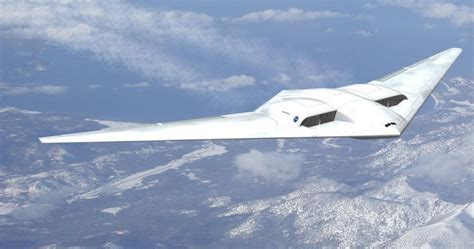
The war also provided a fertile ground for experimental designs. Northrop’s ventures into flying wing technology — a concept focused on eliminating the traditional fuselage and tail — led to the N-1M and later the YB-35 and YB-49 bombers. Though these designs were ahead of their time and met with mixed operational success, they laid the groundwork for one of Northrop’s most famous future aircraft.
Engineering Brilliance: The F-5 and Lightweight Fighter Evolution
In the post-war era, Northrop sought to create an aircraft that was not only advanced but also economically viable. The result was the F-5 Freedom Fighter, a supersonic jet that combined agility, low maintenance costs, and ease of operation. The F-5 saw widespread use, particularly by allied nations of the United States, and became a template for future designs.
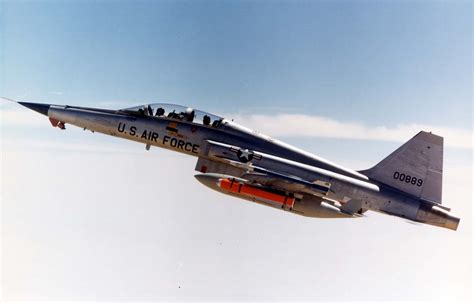
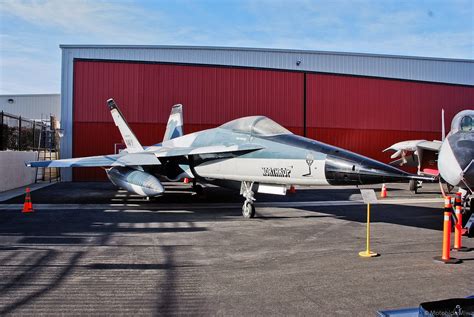
Northrop’s engineers continuously iterated on the F-5 platform, eventually developing the T-38 Talon — a supersonic jet trainer that remains in service to this day. By the 1970s, Northrop sought to replicate the F-5’s success through experimental prototypes such as the N-300, P-530, and P-600 — a lineage that culminated in the YF-17 Cobra. Although the YF-17 lost the Air Force’s Light Weight Fighter competition to the F-16 Fighting Falcon, it would be repurposed by McDonnell Douglas into the F/A-18 Hornet — a vital asset to the U.S. Navy.
The Legal Battles and the F-20 Tigershark
Despite co-developing the F/A-18, Northrop faced frustration when its proposed F-18L, a land-based variant of the Hornet, failed to attract buyers. A legal dispute ensued between Northrop and McDonnell Douglas over alleged contractual breaches, but it failed to salvage the commercial viability of the F-18L.
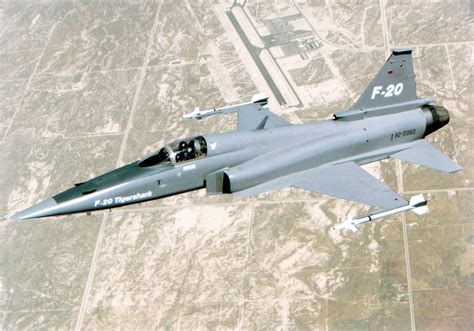
Undeterred, Northrop returned to its roots with the F-20 Tigershark, a direct evolution of the F-5. Incorporating cutting-edge avionics, radar, and a powerful engine, the F-20 was an impressive aircraft on paper. Yet, it was ultimately overshadowed by the availability of surplus F-16s supplied by the U.S. government to allied nations. As a result, the Tigershark program was discontinued, despite its superior cost-effectiveness and performance in some domains.
Stealth Revolution: The B-2 Spirit
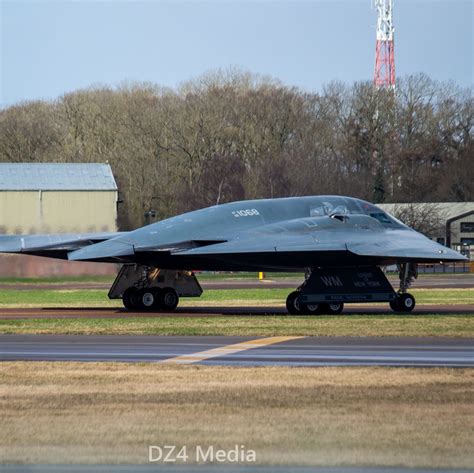
Northrop’s decades-long experimentation with flying wings finally bore fruit with the development of the B-2 Spirit stealth bomber. Combining low radar visibility, long-range capabilities, and nuclear payload delivery, the B-2 was the crown jewel of Northrop’s engineering efforts. First flown in 1989, the aircraft embodied the pinnacle of stealth technology and remains one of the most sophisticated and strategically critical assets in the U.S. Air Force arsenal.
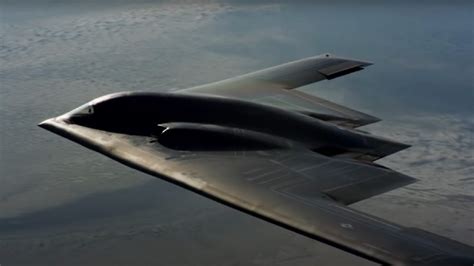
Only 21 units of the B-2 were built due to the program’s extraordinary cost, but their influence was undeniable. The Spirit was capable of penetrating the most sophisticated air-defense networks in the world, fulfilling missions that would have been impossible with earlier aircraft.
Pioneering UAVs and Experimental Programs
Northrop was also a trailblazer in the field of unmanned aerial vehicles (UAVs) and experimental aviation. Projects such as the AQM-35, AQM-38, and BQM-74 Chukar reflected the company’s forward-looking stance on remote warfare. Equally daring was the Tacit Blue, an experimental stealth surveillance aircraft designed to test radar-evading principles. Though never deployed, Tacit Blue contributed significantly to later stealth innovations.
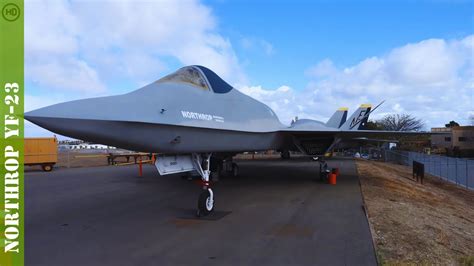
Among Northrop’s lesser-known achievements were its forays into VTOL (vertical takeoff and landing) aircraft, nuclear-powered bombers like the N-34, and the YF-23, a stealth fighter prototype developed for the Advanced Tactical Fighter competition. Despite losing to the Lockheed Martin F-22 Raptor, the YF-23 is still celebrated for its speed and stealth.
From Northrop to Northrop Grumman
In 1994, facing the realities of a post-Cold War defense landscape and reeling from the loss of key government contracts, Northrop merged with Grumman Corporation to form Northrop Grumman. The merger preserved Northrop’s legacy while expanding the company’s portfolio into naval and space systems, intelligence, and cybersecurity. Today, Northrop Grumman stands as one of the largest defense contractors in the world, carrying forward the DNA of Jack Northrop’s audacious vision.
Aircraft Legacy: A Roll Call of Innovation
The sheer range of aircraft developed by Northrop is a testament to its engineering prowess. Some of the most iconic include:
- P-61 Black Widow – Night fighter with radar-guided targeting
- F-89 Scorpion – All-weather interceptor of the Cold War era
- T-38 Talon – Supersonic jet trainer still in use
- F-5 Freedom Fighter – Lightweight multirole jet used globally
- YF-17 Cobra – Precursor to the F/A-18 Hornet
- F-20 Tigershark – Advanced light fighter that never saw production
- B-2 Spirit – Stealth strategic bomber and Cold War legacy platform
These aircraft not only defended nations but also advanced the boundaries of what was technologically possible at the time.
Leadership and Corporate Culture
The evolution of Northrop’s corporate structure saw a dynamic mix of visionary leaders and defense industry veterans. Figures like Thomas V. Jones, who served as president from 1959 to 1976, guided the company through its pivotal Cold War years. Under his leadership, Northrop became synonymous with innovation, risk-taking, and dedication to defense excellence.
Equally important were figures like Oliver P. Echols, whose strategic direction helped align Northrop with emerging Pentagon needs. Their stewardship ensured Northrop’s enduring influence on U.S. military doctrine and aerospace engineering.
Conclusion: Enduring Impact on Aerospace and Defense
The story of Northrop Corporation is one of bold vision, relentless innovation, and unmatched influence in the annals of aerospace history. From the first experimental flying wings to the majestic sweep of the B-2 Spirit, Northrop was more than an aircraft manufacturer — it was a vanguard of American defense ingenuity. The merger with Grumman did not mark an end, but a transformation, allowing the ideals and inventions born in Hawthorne to continue shaping the skies, battlefields, and outer space.
The legacy of Northrop is thus indelibly etched into the technological and strategic fabric of the United States, ensuring that its name — though no longer on the letterhead — soars forever above.