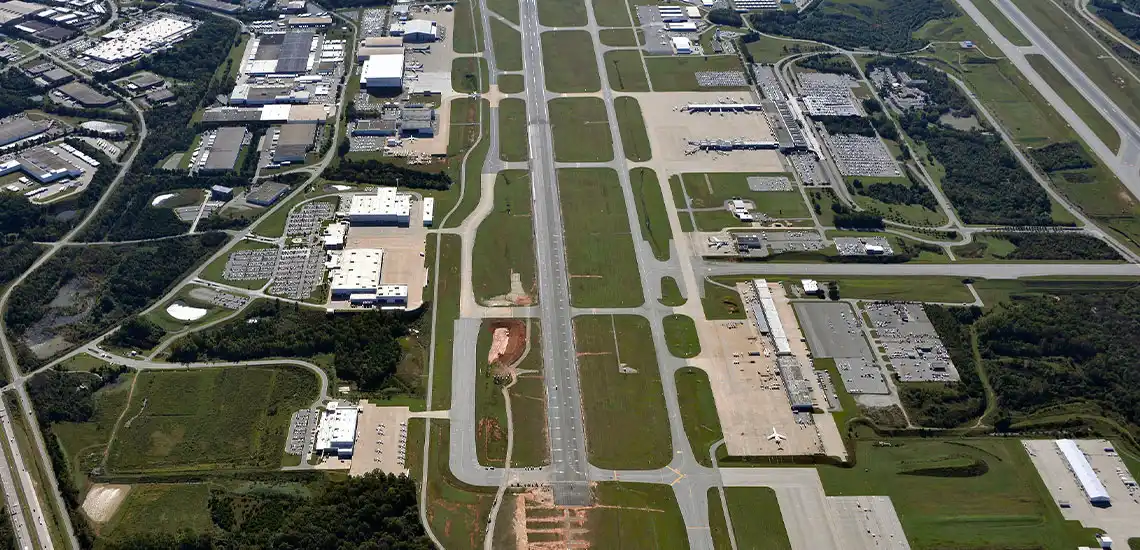
Piedmont Triad International Airport (IATA: GSO, ICAO: KGSO) is North Carolina’s premier mid-sized commercial and cargo airport, situated strategically in the Piedmont Triad region encompassing Greensboro, Winston-Salem, and High Point. Encompassing 3,770 acres and housing a state-of-the-art terminal complex, PTI has evolved into a critical player in regional connectivity, cargo logistics, and aerospace innovation. Its unique positioning and ongoing infrastructure developments ensure it remains a vital node in the southeastern United States’ air transportation network.
A Historic Legacy Rooted in Aviation
The airport traces its roots to 1919, originally established as Maynard Field, one of North Carolina’s earliest airfields. In 1927, the site transitioned to Lindley Field, named for the Lindley family, and quickly became a critical component of the New York–New Orleans airmail route. Notably, Charles Lindbergh visited the site in October 1927, lending historic weight to its early years. The first mail service began with Pitcairn Aviation in 1928, foreshadowing the airport’s long-standing role in both commercial and postal aviation.
By 1937, the field had been rejuvenated with all-weather runways, modern hangars, a weather bureau, and a radio tower. Its capabilities significantly expanded during World War II under the stewardship of the U.S. Army Air Corps, who brought in new infrastructure and operational expertise. This period laid the foundation for its post-war renaissance, culminating in the opening of a modern glass-paneled terminal in 1958.
Throughout the 1970s and 1980s, the airport underwent several identity and structural transformations, including a renaming to Greensboro–High Point–Winston-Salem Regional Airport and the opening of a new terminal in 1982. By 1987, it adopted its current name—Piedmont Triad International Airport—solidifying its role as a regional international gateway.
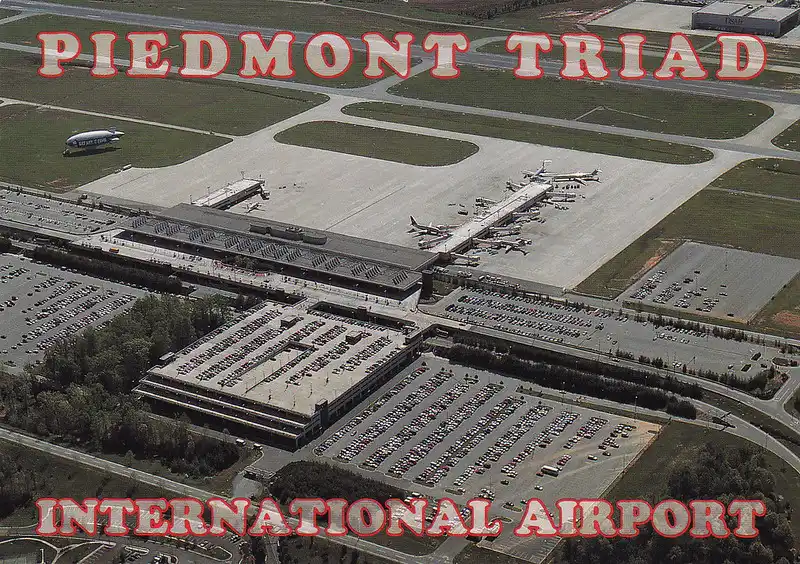
Modern Terminal Infrastructure and Operations
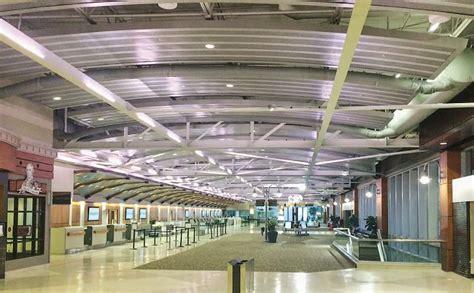
The terminal built in 1982 remains the airport’s central passenger facility and is structured for efficiency and flow. It consists of two parallel concourses—each with 14 gates to the north and 12 to the south. Ticketing, TSA security, and boarding operations occur on the upper level, while baggage claim and ground transport services are handled below. In 2006, PTI underwent a significant 40,000-square-foot expansion, establishing permanent security checkpoints to align with federal mandates and passenger expectations.
Though the Admirals Club shuttered in 2018, the terminal maintains modern amenities, and continuous renovations have kept it clean, accessible, and navigable. The airport averages 246 daily operations, with approximately 86 aircraft based on-site, ranging from regional jets to specialized aircraft, including the Samaritan’s Purse DC-8 and Boeing 757.

Extensive Runway System and Airside Capabilities
PTI features three robust runways, enabling simultaneous operations and providing flexibility for both commercial and cargo traffic:
- Runway 5R/23L: 10,001 feet
- Runway 5L/23R: 9,000 feet
- Runway 14/32: 6,380 feet
Situated at an elevation of 926 feet, the airport supports an annual operations count of over 93,000 movements, making it a top-tier facility for an airport of its size. Its expansive airfield and layout support parallel runway use and cargo ramp maneuvering, ensuring maximum operational throughput.
Cargo Operations and Economic Impact
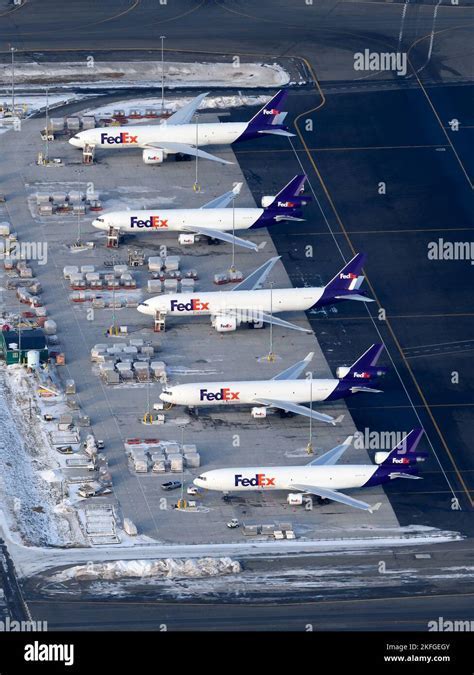
Piedmont Triad International Airport is a cargo powerhouse, moving over 191.7 million pounds of freight annually. It serves as a regional hub for FedEx, which constructed its Mid-Atlantic hub at the airport between 1998 and 2003. The cargo portfolio is bolstered by regular operations from:
- DHL Aviation via 21 Air
- UPS Airlines
- Asia Pacific Airlines
- Aeronaves TSM
- Quest Diagnostics Aviation (for medical logistics)
The synergy between passenger and cargo operations ensures round-the-clock activity and injects significant capital into the regional economy, reinforcing the airport’s strategic importance.
Passenger Airlines and Destinations
As of 2024, PTI provides direct service to 14 destinations, with service supplied by a combination of major legacy carriers and new-age low-cost airlines. The current schedule includes:
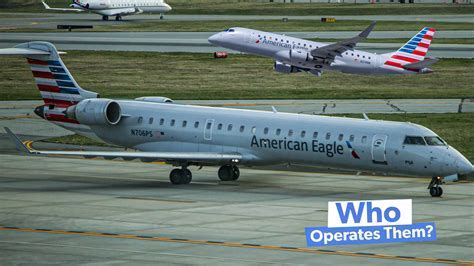
- American Airlines/American Eagle: Charlotte, Dallas/Fort Worth (seasonal), Chicago O’Hare, New York–LaGuardia, Miami, Philadelphia, Washington D.C.
- Delta/Delta Connection: Atlanta, Detroit, New York–LaGuardia
- United Express: Chicago O’Hare, Denver, Newark, Washington D.C.
- Allegiant Air (seasonal): Orlando–Sanford, St. Petersburg–Clearwater
- Spirit Airlines: Service since 2018
- Breeze Airways: Beginning June 6, 2025 (Orlando, Hartford)
These connections focus on East Coast and Midwest business centers, as well as popular leisure destinations, with an annual passenger throughput approaching 2 million travelers.
Strategic Location and Surface Connectivity
PTI’s location—just west of Greensboro and equidistant from High Point and Winston-Salem—affords it exceptional interstate access, linked by I-40, I-85, I-74, and I-73. These routes form a lattice of high-capacity roads feeding cargo, logistics, and passenger traffic to the airport with minimal congestion.
Planned infrastructure enhancements include improved intermodal access, a direct taxiway connection to I-73, and nine developable parcels ready for aviation and commercial tenants. These projects aim to enhance PTI’s role as a multi-modal transportation hub.
Aerospace and Innovation: HondaJet and Boom Supersonic
PTI is not just a transportation hub—it is a crucible for aerospace innovation. In 2006, Honda Aircraft Company established its world headquarters and production facility on-site, manufacturing the HA-420 HondaJet. This attracted skilled labor, suppliers, and global recognition to the region.
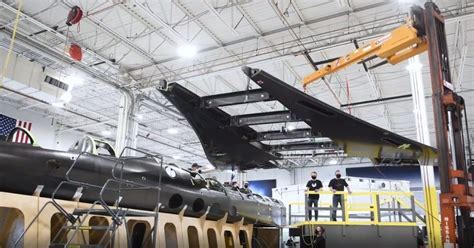
In a landmark development, Boom Supersonic broke ground in late 2022 on a 65-acre Superfactory dedicated to the production of the Overture supersonic airliner, set to enter service by 2030. The facility, due for completion by June 2024, is expected to create 1,750 permanent jobs, offer 200 internships, and generate an estimated $32.8 billion in economic activity over 20 years.
Safety and Incidents: A Strong Record with Key Lessons
While PTI has maintained a commendable safety record, it has seen several notable incidents that have shaped its safety protocols:
- Feb 4, 1962: A USAF C-47 crashed shortly after takeoff, resulting in seven fatalities.
- Aug 2, 1989: Piedmont Flight 1489 landed gear-up after a chock was left in the wheel well.
- Sep 26, 1989: A Canadian CL-44 cargo aircraft nearly struck the terminal during a missed approach.
- Dec 22, 1996: A test flight of an Airborne Express DC-8 ended in a fatal stall over Virginia, killing six crew members.
- May 8, 2008: An EF2 tornado damaged multiple parked aircraft, including two ATR-42s.
These events, while rare, underscore the importance of rigorous maintenance protocols, pilot training, and emergency preparedness, all of which PTI continues to emphasize.
Looking Ahead: Growth and Sustainability
The airport’s roadmap focuses on sustainable growth, tech integration, and economic contribution. The newly commissioned 180-foot air traffic control tower, with a 550-square-foot cab and 15,650-square-foot TRACON facility, is among the tallest structures in the area, enhancing regional ATC coverage. Continued investment in renewable energy, noise mitigation, and green building practices reflects the airport’s environmental responsibility.
As demand surges and the triad region expands, Piedmont Triad International Airport is primed to become a model of balanced commercial aviation, cargo logistics, and advanced aerospace manufacturing.
With its blend of history, innovation, and efficiency, PTI stands not only as a gateway to the Carolinas but as a blueprint for next-generation regional airports in the United States.