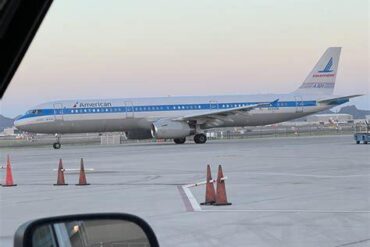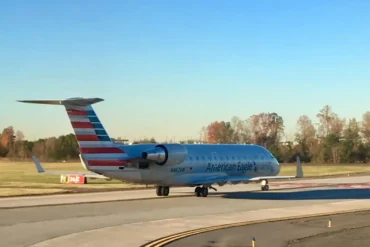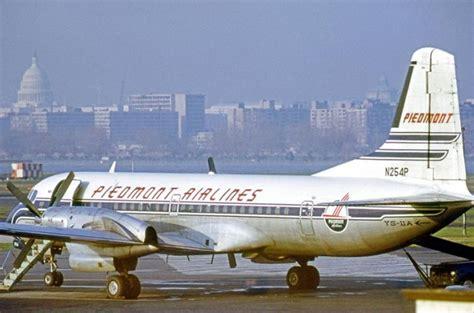
Founded in 1961, Piedmont Airlines represents a significant chapter in America’s regional aviation history. From its beginnings as Henson Airlines to its present-day role as a vital American Eagle operator, Piedmont’s evolution reflects the broader shifts in U.S. regional air transport. Headquartered at Salisbury Regional Airport in Maryland, Piedmont serves over 55 destinations with a fleet exclusively composed of Embraer ERJ 145 regional jets, forming a critical link in the American Airlines Group network.
The Birth of Henson Airlines and Regional Aviation Pioneering
Piedmont’s origins trace back to Richard A. Henson, a visionary in regional aviation who established Henson Aviation in 1961 as a fixed-base operator in Hagerstown, Maryland. By 1962, commercial operations commenced with scheduled flights to Washington National Airport, introducing small-town America to accessible air travel. The 1967 partnership with Allegheny Airlines was revolutionary, laying the groundwork for one of the world’s earliest code-sharing arrangements, a practice now standard in global aviation.
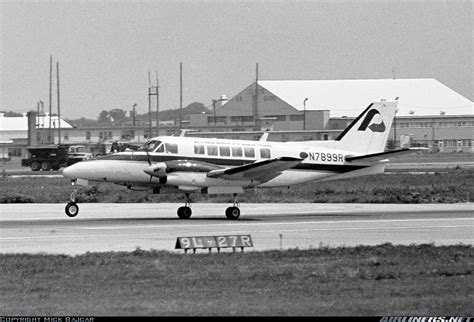
By 1968, Salisbury, Maryland became the operational headquarters, marking the beginning of Piedmont’s deep roots in the Mid-Atlantic region. The airline adopted the Allegheny Commuter branding, expanding with aircraft such as the Beechcraft 99, and progressively scaling its route structure to connect Baltimore, Philadelphia, and Washington D.C.
The Piedmont Aviation Acquisition and Fleet Modernization
In 1983, the acquisition by Piedmont Aviation led to significant transformations. Henson Airlines was rebranded as “Henson, The Piedmont Regional Airline,” leveraging Piedmont’s established brand reputation to expand deeper into the Florida market. This era witnessed the integration of modern turboprops like the de Havilland Canada Dash 7 and Short 330, enabling broader and more efficient regional services.
Following the purchase by the USAir Group in 1987, Piedmont and its assets became instrumental in supporting USAir Express services. Aircraft livery changed, and the route network was optimized to fit within the USAir system, particularly enhancing East Coast coverage. The pivotal rebranding in 1993 resurrected the Piedmont Airlines name under USAir’s ownership, effectively preserving a cherished American aviation legacy.
Modern-Day Piedmont Airlines: Operational Backbone of American Eagle
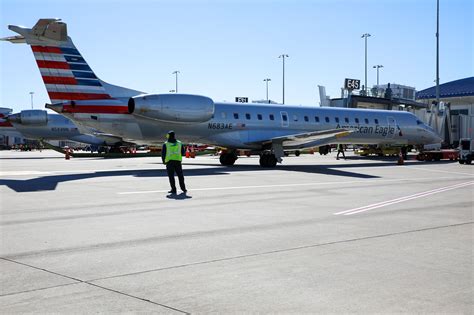
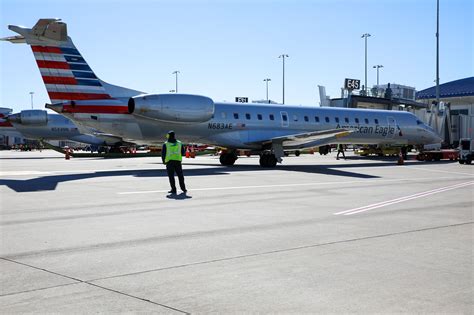
As of 2025, Piedmont Airlines operates as a wholly owned subsidiary of the American Airlines Group, performing vital feeder services under the American Eagle brand. Headquartered at Salisbury Regional Airport, the airline is a primary connector across the Northeast and Mid-Atlantic corridors, with strategic hubs in Philadelphia International Airport and Charlotte Douglas International Airport.
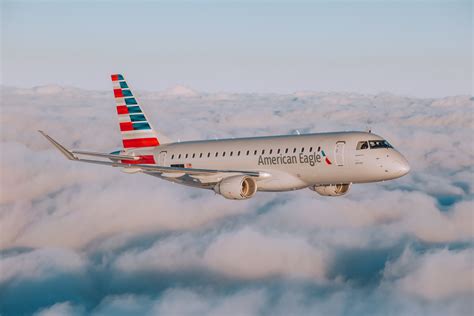
Operating a robust fleet of 68 Embraer ERJ 145 aircraft, Piedmont maintains a compact yet versatile fleet ideal for short-to-medium-haul regional flights. Its exclusive use of the ERJ 145 ensures streamlined maintenance, crew training, and operational efficiency. Notably, a significant expansion is on the horizon, with 45 Embraer E175 aircraft scheduled for delivery starting 2028, which will introduce two-class service configurations and expanded passenger capacities.
Key Operational Facts:
- Fleet Size: 68 ERJ 145 aircraft (as of June 2025)
- Destinations: Over 55 across the U.S.
- Daily Flights: Nearly 400
- Hubs: Philadelphia and Charlotte
- Maintenance Bases: Albany, Charlotte, Harrisburg, Philadelphia, Richmond, Roanoke, Salisbury
- Crew Bases: Charlotte, Harrisburg, Philadelphia
- Employees: 10,500 (2024)
Ground Services and Exclusive Airport Presence
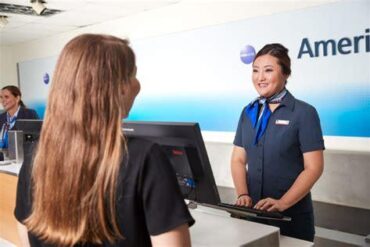
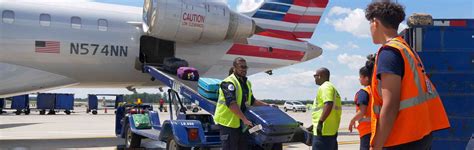
Beyond operating flights, Piedmont Airlines also plays a vital role in airport ground handling and customer service, especially in northeastern and western U.S. airports. As of 2024, Piedmont is the exclusive commercial operator at airports such as Pitt–Greenville Airport, Florence Regional Airport, Watertown International Airport, and Salisbury Regional Airport, reinforcing its dominance in niche regional markets where competition is minimal.
Safety Record and Notable Incidents
While Piedmont’s overall safety record aligns with industry norms, its history features several noteworthy incidents that have influenced operational safety policies:
- 1985: Henson Airlines Flight 1517 crashed near Grottoes, Virginia, resulting in the first fatality of a female U.S. commercial pilot, First Officer Zilda A. Spadaro-Wolan.
- 2008: US Airways Express Flight 4551, operated by Piedmont, made an emergency landing after landing gear issues.
- 2011: Flight 4352 unintentionally entered restricted airspace over Washington, D.C., triggering a temporary evacuation of the U.S. Capitol.
- 2013: A belly landing at Newark Liberty International Airport occurred due to landing gear failure, although all occupants evacuated safely.
- 2022: A tragic ground incident occurred when a Piedmont ground worker was fatally injured at Montgomery Regional Airport.
These events prompted fleet upgrades, standardized cockpit configurations, and stricter operational training.
The Fleet Evolution: From Turboprops to Regional Jets
From its earlier use of aircraft like the Beechcraft Model 99, Short 330, and various Dash 8 models, Piedmont’s transition to an all-jet fleet marks its adaptation to modern regional airline expectations. The Embraer ERJ 145 offers fuel efficiency, reduced maintenance complexity, and passenger comfort suitable for routes under 1,200 miles.
The anticipated E175 fleet promises to revolutionize Piedmont’s service capabilities, offering 76-seat configurations, improved range, and compatibility with American Airlines’ evolving route strategies.
Strategic Importance Within American Airlines Group
Piedmont Airlines fulfills a critical role in the American Airlines Group’s network by feeding traffic from smaller cities to major hubs, thus sustaining profitability on lower-density routes. Its operations enable American Airlines to maintain market presence in cities that cannot economically support mainline services. Through its AAdvantage program participation and Oneworld alliance affiliation, Piedmont ensures seamless connectivity and loyalty benefits for passengers.
Its dedicated workforce of over 10,500 employees, many of whom are based in regional towns, reflects Piedmont’s commitment to supporting local economies and maintaining American Airlines Group’s competitiveness in underserved regions.
The Road Ahead: Growth, Challenges, and Innovations
The impending introduction of Embraer E175 aircraft, set for 2028, signals Piedmont’s next phase of expansion. These jets will broaden Piedmont’s operational scope, enabling two-class service, greater fuel efficiency, and enhanced passenger experience. Additionally, increasing competition in regional aviation, regulatory changes, and pilot shortages pose challenges that Piedmont must strategically navigate.
As American Airlines continues to restructure its regional operations for cost-efficiency and performance, Piedmont’s streamlined operations and strategic airport presence position it as an indispensable component of the American Eagle system.
Conclusion
Piedmont Airlines stands today as a testament to the adaptability and resilience of regional carriers in the United States. With a rich history spanning over six decades, its role in shaping America’s regional air transport cannot be overstated. The combination of historical legacy, operational efficiency, and strategic growth initiatives ensures that Piedmont will remain a cornerstone of American Eagle’s success, connecting small-town America to the national and global air network for years to come.