From its birth in 2002 to its evolution into Australia’s second‑largest regional airline, Rex Airlines Pty Ltd has charted a remarkable course across the country’s skies. Founded through the bold merger of Hazelton and Kendell Airlines on 11 July 2002, Rex began operations just weeks later on 2 August 2002, establishing bases in Mascot, NSW, and building a network that would ultimately span 45 regional destinations. Over more than two decades, Rex has become synonymous with reliable turboprop service, community connectivity, and a fleet renowned for the world’s largest gathering of Saab 340 aircraft.
Yet the story of Rex is not one of uninterrupted ascent. Between March 2021 and July 2024, the airline dared to breach the metropolitan fortress by leasing six Boeing 737‑800s and launching jet services on Melbourne–Sydney, Adelaide, and Gold Coast routes. This ambitious expansion brought Rex national attention, even as it tested the airline’s operational resilience. In July 2024, the strategic gamble turned critical: on the night of 30 July, Rex ceased bookings on all capital‑city jet routes, suspended its Australian Securities Exchange listing, and entered voluntary administration under Ernst & Young. The ensuing months saw government bailouts, debt purchases, and pledges of full acquisition if no buyer emerged by February 2025.
Rex’s journey reflects both the promise and pitfalls of regional aviation in Australia. Its story encompasses pioneering growth, community service in remote towns, strategic missteps at the top, and a dramatic rescue effort by state and federal bodies.
History and Evolution: From Regional Roots to National Aspirations
The genesis of Regional Express Holdings in 2005 marked a major milestone: a rebranding and partial float on the ASX under the ticker REX. That year, Rex acquired Dubbo‑based Air Link, consolidating its regional footprint. By 2007, the airline had stretched into Queensland with Brisbane–Maryborough flights, but this rapid expansion triggered a pilot shortage so acute that Brisbane operations were suspended and a cadet‑pilot training program was launched.
Between 2015 and 2018, Rex systematically filled service gaps: resuming Snowy Mountains flights in March 2016 alongside the Snowy Mountains Airport Corporation, taking over regulated Western Australia routes from Perth to Albany and Esperance in February 2016, and extending these services to Carnarvon and Monkey Mia by July 2018. At its peak pre‑COVID, Rex offered roughly 1,500 weekly flights across 60 destinations, cementing its role as a lifeline for regional Australia.
Fleet and Destinations: The Power of the Saab 340
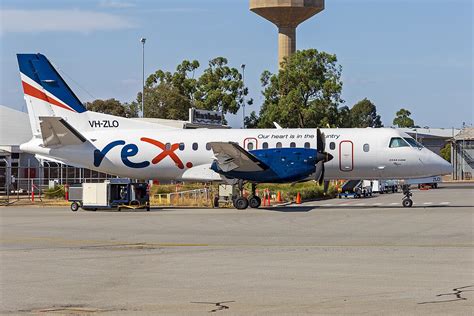
Central to Rex’s success has been its Saab 340 fleet—the largest in the world. As of July 2024, Rex operated 57 Saab 340s (with 23 parked), delivering efficient, cost‑effective service on thinner routes unsuited to jets. These 30‑ to 36‑seat turboprops connect 45 destinations from Adelaide to Wagga Wagga, Albury to Cairns, and beyond, providing vital links where road or rail alternatives are impractical.
The brief foray into jet operations saw Rex lease 10 Boeing 737‑800s between 2020 and 2024, though these aircraft were grounded when administration began. Rex’s turboprop network, however, continues under administration funding by PAG Asia and the Queensland government, ensuring remote communities remain connected even as capital‑city services lie dormant.
Operational Milestones and Strategic Initiatives
Rex’s operational playbook has balanced growth with ingenuity. The 2007 cadet‑pilot program addressed acute crew shortages by training talent in‑house, while the 2020 memorandum of understanding with ATR to explore ATR 42/72 replacements signaled a long‑term modernization plan for the Saab 340 fleet. The COVID‑19 pandemic forced a dramatic retrenchment in April 2020: Rex scaled back entirely to government‑subsidized routes in Queensland and Western Australia and a once‑weekly service to 54 communities.
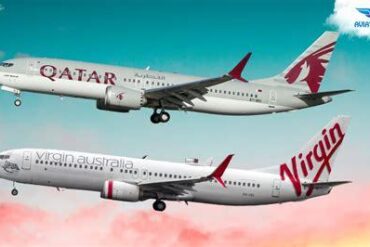
Amid Tigerair Australia’s collapse in mid‑2020, Rex saw opportunity and swiftly leased Boeing 737‑800s previously held by Virgin Australia. Jet operations launched on 1 March 2021, with Melbourne–Sydney as the inaugural route, followed by Adelaide and Gold Coast services in early April. Although short‑lived, this expansion underscored Rex’s willingness to challenge entrenched domestic carriers.
Voluntary Administration 2024: Collapse and Rescue Efforts
The summer of 2024 brought a crisis that reverberated through Australia’s aviation industry. On 29 July, Rex halted trading on the ASX. Within 24 hours, capital‑city bookings were suspended and all jet services ceased. Administrators from Ernst & Young were appointed on 31 July, and Virgin Australia agreed to accommodate Rex’s stranded passengers between 30 July and 14 August 2024.
Administrators attributed the collapse to a perfect storm of pilot shortages, supply‑chain disruptions, mounting staff entitlements, and low seat‑factor revenues. With 4,800 creditors—including ex‑staff, regional airports, and financiers—and an estimated 600 job losses, the stakes were high. Federal and Queensland governments intervened to guarantee continued regional turboprop services, while the Federal Court granted administration extensions first to 25 November 2024, then to 30 June 2025.
In January 2025, the federal government purchased $50 million of senior debt held by PAG, strengthening the airline’s balance sheet and signaling willingness to underwrite a sale. By 12 February 2025, government pledges escalated: if no private buyer emerged, the Commonwealth would acquire Rex outright, marking the first national airline ownership since Qantas’s 1997 privatization.
Controversies and Political Ties: Navigating Public Scrutiny
Despite its regional service mandate, Rex has courted controversy through close ties to the Coalition’s National Party. Deputy chairman John Sharp, a former National Party MP, has hosted party members on complimentary flights, while Rex was a top donor during election campaigns. In 2022, the airline dubbed one of its 737‑800s VH‑MFM in honor of former Deputy Prime Minister Michael McCormack—a move derided by critics as political favoritism.
Further public ire erupted in 2020 when Rex received more COVID‑19 relief funds than both Qantas and Virgin Australia combined, despite its smaller scale. Opposition figures decried perceived cronyism, suggesting that political connections—and free flights for MPs—favored Rex over flag‑carrier competitors.
Community Relations and Regional Councils: Conflict at the Local Level
Rex’s aggressive bargaining tactics with regional councils have sparked repeated disputes over airport fees, security costs, and alleged price gouging. The airline has threatened flight suspensions, blacklisted councillors, and in some instances executed service withdrawals without notice—leaving remote towns entirely cut off. While Rex argues these pressures are necessary to maintain route viability, local leaders view the tactics as heavy‑handed and harmful to community connectivity.
Legal Challenges and Lawsuits: From Aircraft Parts to Financial Misrepresentation
The airline’s legal troubles extend beyond its balance sheet. In September 2024, USA‑based Jet Midwest Group sued Rex for allegedly dismantling and profiting from parts of four Saab 340s stored in Arizona; the claim was later dropped amid administrator objections. In December 2024, ASIC launched proceedings against four former directors for misleading investors about Rex’s financial health—alleging baseless profit forecasts, a $35 million earnings downgrade, and contradictory statements regarding FY22 losses.
Safety Record and Incident Analysis: Upholding Operational Integrity
Rex’s comprehensive incident log demonstrates both the hazards of regional flying and the airline’s swift, effective responses. Notable events include a 21 February 2016 glider avoidance at Orange Airport, a 17 March 2017 propeller shear on VH‑NRX, and multiple engine‑failure and safety‑system events on Saab 340 aircraft through 2022. In each case, crews followed protocols, secured safe landings, and the Australian Transport Safety Bureau’s investigations led to maintenance improvements, reinforcing Rex’s commitment to passenger safety.
Australian Airline Pilot Academy: Investing in Future Aviators
Since founding the Civil Aviation Training Academy in 2007—renamed Australian Airline Pilot Academy (AAPA) after a full acquisition in 2008—Rex has invested in pilot training as a strategic asset. The Wagga Wagga campus, opened in 2010 by Infrastructure Minister Anthony Albanese, and the Ballarat expansion in 2019, together host Cessna 152 and 172S trainers, Piper PA‑28 Warriors and PA‑44 Seminoles, Beechcraft King Air C90GTi and Super King Air B200, plus a Saab 340 full‑motion simulator. Up for sale since November 2024, AAPA attracted over 40 expressions of interest, underscoring its industry value.
Future Outlook: Charting the Next Course
As Rex navigates administration and a potential government acquisition, its future hinges on balancing regional commitments with financial sustainability. The airline must restructure legacy turboprop operations, negotiate community partnerships with transparency, and rebuild trust among pilots, passengers, and investors. Whether through private sale or Commonwealth ownership, Rex’s resilience will depend on preserving the lifeline it provides to hundreds of remote communities, while forging a leaner, more agile operational model for Australia’s vast skies.