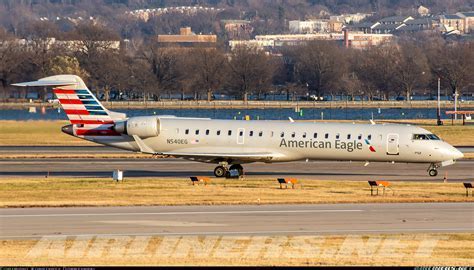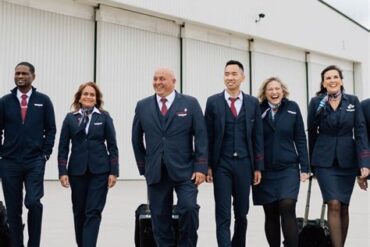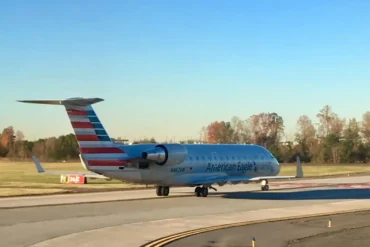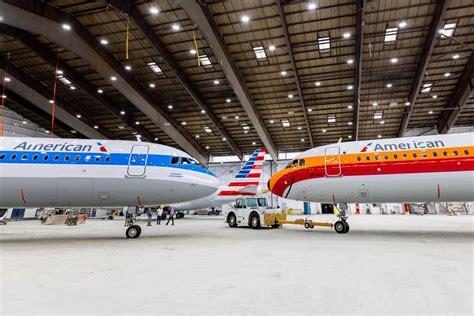
PSA Airlines stands as a critical regional carrier in the United States, functioning as a wholly owned subsidiary of American Airlines Group. Headquartered at Dayton International Airport, Ohio, PSA plays an indispensable role in the American Eagle network by operating short-haul and feeder flights across the country using a fleet of Bombardier CRJ-series regional jets. With over 5,000 employees, PSA operates nearly 800 daily departures and connects nearly 100 destinations, reinforcing its stature as a key player in U.S. regional aviation.
The airline’s name is not coincidental. It pays homage to Pacific Southwest Airlines, whose brand legacy is preserved under American Airlines’ broader network. Although PSA Airlines has no direct historical connection to the original PSA based in California, the reuse of the name protects valuable trademark rights.
A Legacy Rooted in Regional Aviation Pioneering
PSA’s story begins long before its current name, tracing its origins to Vee Neal Airlines, founded in 1979 by Vee Neal Frey in Latrobe, Pennsylvania. Initially established as a fixed-base operator, the company soon pivoted to scheduled passenger service. By 1980, it had launched a Latrobe–Pittsburgh route using a Cessna 402.
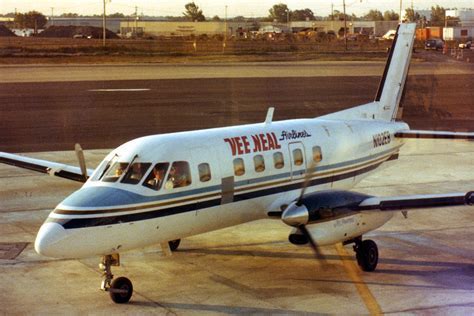
A significant pivot occurred in 1983 when USAir exited the Erie–Chicago market. This created a vacuum that Vee Neal was quick to exploit, raising local capital to acquire six BAe Jetstream 31s. These aircraft enabled expanded service to larger regional hubs, prompting a strategic transformation. By December 1983, the airline rebranded itself as Jetstream International Airlines (JIA) and relocated its headquarters and maintenance facilities to Erie, Pennsylvania.
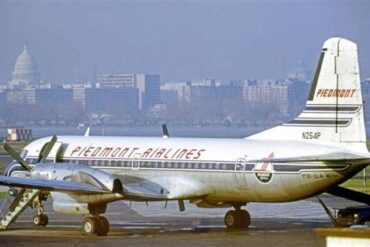
Throughout the 1980s, JIA steadily expanded its network to connect cities like Chicago, Cleveland, Detroit, Harrisburg, Newark, Philadelphia, Pittsburgh, and Washington, D.C. The expansion came with financial strain until Piedmont Airlines signed a commuter partnership in 1985. The partnership evolved into an acquisition in August 1986, after which JIA became a feeder carrier for Piedmont and moved its base to Dayton, Ohio, where it remains today.
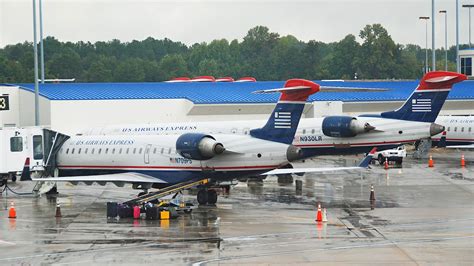
Following Piedmont’s merger into USAir in 1989, JIA operated under the USAir Express brand, strengthening its ties to the nation’s growing aviation network.
Rebirth as PSA Airlines and the Dornier 328 Era
The year 1995 marked a transformative milestone. USAir rebranded JIA as PSA Airlines, seeking a new identity that could carry a legacy while aligning with modern aspirations. The headquarters shifted again, this time to Vandalia, Ohio, reflecting the airline’s new regional ambitions. It also took delivery of 25 Dornier 328 aircraft, positioning PSA as the largest global operator of the type. By March 1996, the older Jetstream 31s were retired in favor of the more advanced, pressurized twin-turboprop Dorniers.
However, industry consolidation and financial turbulence during the early 2000s led PSA to adopt the Bombardier CRJ-200 and CRJ-700 series, phasing out the last Dornier 328 by September 2004. These jets aligned more closely with US Airways’ mainline feeder needs and offered better cost and fuel efficiency for short-haul routes.
Integration into the American Eagle Network
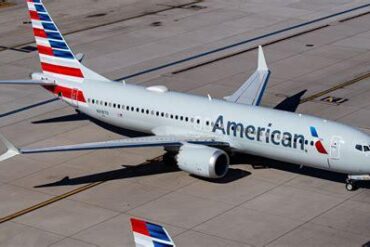
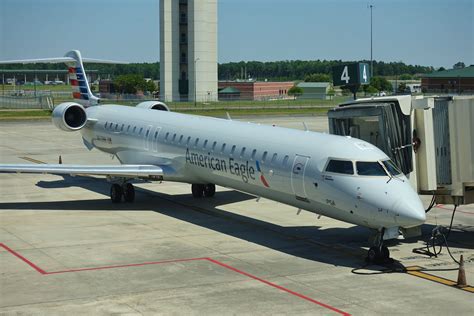
Following the reverse merger of US Airways with America West in 2005, PSA Airlines began realigning under the emerging American Airlines structure. It established a crew base in Charlotte and later reinstated operations in Philadelphia, underscoring its regional value. The most substantial change came after the full merger of American Airlines and US Airways in 2015, when PSA was integrated into the American Eagle brand.
This integration allowed PSA to expand aggressively. It opened new maintenance bases at Cincinnati/Northern Kentucky in 2015 and Greenville-Spartanburg in 2016. PSA’s growth reflected American Airlines’ increasing reliance on regional jets to feed its hub-and-spoke network efficiently.
In January 2025, PSA announced another major development: the relocation of its corporate headquarters to Charlotte, North Carolina, by January 2026, bringing 400 employees to the new location while retaining 550 personnel in Dayton to manage maintenance and crew operations. This move aligns PSA’s corporate presence more closely with its operational footprint.
Fleet Composition and Modernization Strategy
As of January 2025, PSA Airlines operates an all-CRJ fleet consisting of the following:
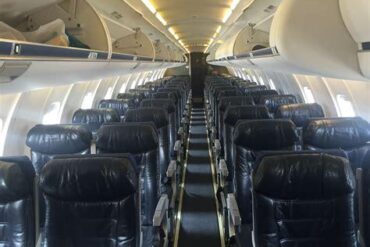
- 60 Bombardier CRJ700 (9 First, 12 Business, 44 Economy)
- 80 Bombardier CRJ900 (+14 on order; 12 First, 24 Business, 40 Economy)
This brings the total fleet size to 140 aircraft, with an additional 14 CRJ900s on firm order and 40 more as options. PSA retired its 35 CRJ200s during the COVID-19 pandemic, reflecting a strategic pivot toward more fuel-efficient and passenger-friendly aircraft.
The CRJ700 and CRJ900 models offer enhanced range, better fuel economy, and superior cabin comfort, all vital traits in today’s competitive regional airline environment. The aircraft are deployed across high-density short-haul routes and serve as vital connectors into American Airlines’ national and international network.
Crew and Maintenance Infrastructure
PSA’s operational integrity depends on a carefully distributed network of crew and maintenance bases. As of 2025, crew bases are established in:
- Charlotte Douglas International Airport (CLT)
- Dayton International Airport (DAY)
- Philadelphia International Airport (PHL)
- Reagan Washington National Airport (DCA)
- Dallas/Fort Worth International Airport (DFW)
Maintenance operations are even more expansive, with full base maintenance facilities in:
- Akron-Canton Regional Airport
- Charlotte Douglas International Airport
- Cincinnati/Northern Kentucky International Airport
- Dayton International Airport
- Norfolk International Airport
- Greenville-Spartanburg International Airport
- Pensacola International Airport
- Savannah/Hilton Head International Airport
- Dallas/Fort Worth International Airport
These bases form the backbone of PSA’s flight operations, allowing rapid turnarounds, reliable maintenance scheduling, and effective crew utilization.
Tragedy Over the Potomac: Flight 5342 Incident
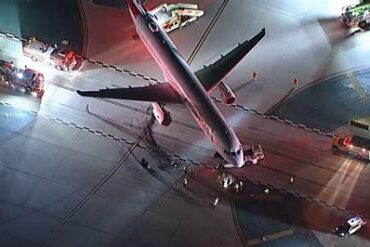
On January 29, 2025, PSA Airlines faced a devastating blow when American Eagle Flight 5342, a CRJ-701ER, collided midair with a U.S. Army Black Hawk helicopter on approach to Reagan National Airport. Both aircraft crashed into the Potomac River, resulting in the deaths of all 60 passengers and 4 crew members aboard the PSA flight, as well as 3 Army personnel on the helicopter.
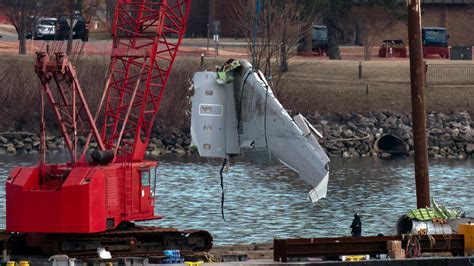
This accident marked the worst in PSA’s modern history and one of the deadliest involving regional jets in the United States. Investigations are ongoing, with focus on airspace coordination, radar protocols, and communication gaps between civil and military traffic. The tragedy raised pressing questions about congested airspace near major metropolitan airports.
The Future of PSA Airlines in American Aviation
Looking forward, PSA Airlines is well-positioned to remain a linchpin of American Airlines’ regional operations. Its ongoing fleet modernization, relocation to Charlotte, and expanded infrastructure support its strategic growth. The airline’s alignment with the American Eagle brand ensures continued access to resources and routes that maintain its relevance in the fiercely competitive U.S. market.
As demand for regional air travel rebounds, PSA’s dedicated CRJ fleet, disciplined cost structure, and well-distributed maintenance hubs make it a crucial player in post-pandemic aviation recovery. While the shadow of Flight 5342 still looms large, PSA’s legacy of adaptation, resilience, and operational precision signals a determined path forward.