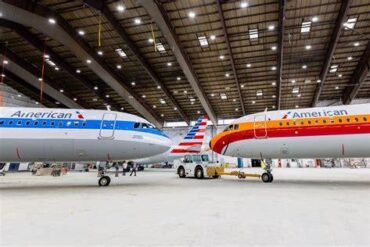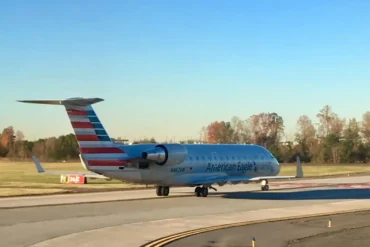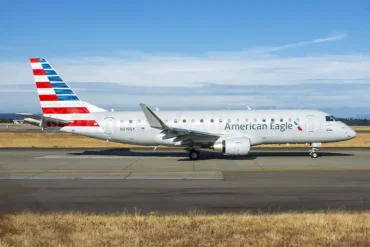
American Eagle is not an airline in the traditional sense—it is a strategic brand extension of American Airlines, designed to weave together smaller markets with the broader domestic and international network of its parent carrier. It plays a critical role in connecting passengers from rural and mid-sized cities to major hubs, acting as the indispensable circulatory system of the American Airlines ecosystem.
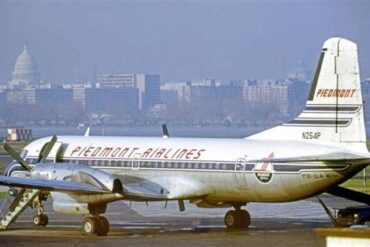
At the heart of American Eagle’s operations is a complex web of partnerships between American Airlines and various regional carriers, both wholly owned and contracted. These include Envoy Air, PSA Airlines, Piedmont Airlines, and contracted partners like Republic Airways and SkyWest Airlines. Each of these carriers operates aircraft that bear American’s livery, ensuring brand uniformity and customer experience consistency.
The system functions under capacity purchase agreements (CPAs), where American Airlines manages the route planning, pricing, ticketing, and scheduling, while paying the operating carriers fixed fees and covering variable costs such as fuel, insurance, and landing fees. This structure allows American to maintain high network flexibility while focusing on its core long-haul and mainline operations.
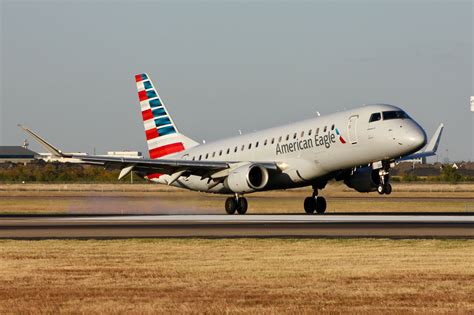
The Modern American Eagle Fleet in 2025
As of January 2025, American Eagle operates a formidable regional fleet of 544 aircraft, with another 50 on firm order and 90 Embraer 175s pending assignment. This vast fleet comprises nearly all regional jets, reflecting the industry-wide shift away from turboprops. The breakdown is both operationally diverse and strategically tailored to each carrier’s route structure.
Envoy Air, the largest of the wholly owned subsidiaries, flies:
- 43 Embraer 170s (with one seat blocked for pitch consistency)
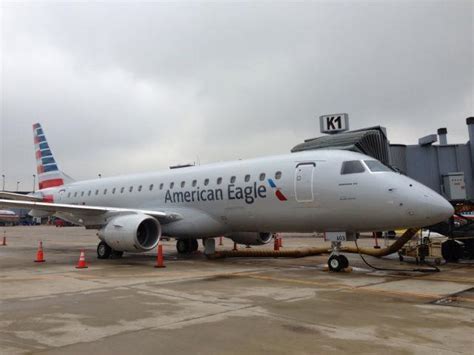
- 124 Embraer 175s
Piedmont Airlines operates 67 Embraer ERJ-145s, continuing to support shorter-haul and lower-demand routes where jet speed is still essential but larger capacity isn’t warranted.
PSA Airlines, another wholly owned subsidiary, flies:
- 60 Bombardier CRJ700s
- 80 CRJ900s (35 with one seat blocked for operational balance)
Contract partners fill important gaps:
- Republic Airways operates 76 Embraer 175s and a transitional trio of E170s en route to Envoy
- SkyWest Airlines adds 71 CRJ700s and 20 Embraer 175s to the network
This strategic mix ensures that American Eagle can optimize aircraft size for demand, manage pilot utilization, and align operational efficiency with market dynamics.
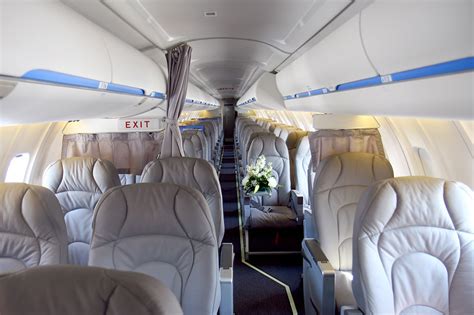
The Origins: A Brand Born of Deregulation
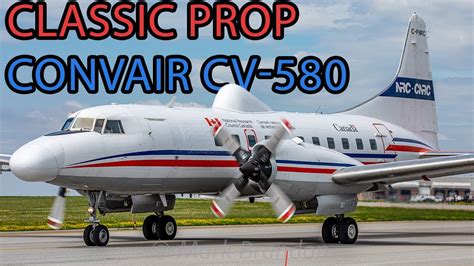
American Eagle’s origins trace back to November 1, 1984, when Metroflight Airlines inaugurated service using a Convair 580 between Fayetteville and Dallas/Fort Worth. This humble beginning was quickly expanded, with Chaparral Airlines joining a month later. Through the remainder of the 1980s, several carriers—including Air Midwest, AVAir, Command Airways, Simmons Airlines, and Wings West—were brought into the fold, each operating under the American Eagle brand.
In the post-deregulation era, these regional links were crucial for airlines like American to maintain relevance in smaller markets. But with fragmentation came inefficiency. From 1986 to 1993, AMR Corporation, American’s parent company, consolidated ownership of these regionals. It acquired Executive Airlines (1986), Simmons Airlines (1987), and ultimately rolled up the group into a smaller number of entities by 1993.
On May 15, 1998, American Eagle Airlines emerged as a single operating certificate under Simmons Airlines, absorbing Flagship Airlines and Wings West. This simplification allowed for unified branding and more streamlined operations.
Strategic Expansion and Contraction in the 21st Century
Throughout the 2000s and 2010s, American Eagle adjusted rapidly to industry shifts. The acquisition of Trans World Airlines in 2001 brought new carriers into the network via AmericanConnection, a parallel brand used until 2014. Carriers like Chautauqua Airlines, Trans States Airlines, and Corporate Airlines operated under this branding.
Following American’s bankruptcy restructuring, new CPAs were signed. SkyWest Airlines and ExpressJet began operations in 2012, followed by Republic Airways in 2013, which introduced the Embraer 175 to American Eagle’s fleet under a landmark 12-year agreement.
The era also brought branding consolidation. By August 19, 2014, all regional operations were merged into a unified American Eagle identity, dissolving AmericanConnection. Notably, the legacy American Eagle Airlines was renamed Envoy Air on April 15, 2014, to avoid confusion with the umbrella brand.
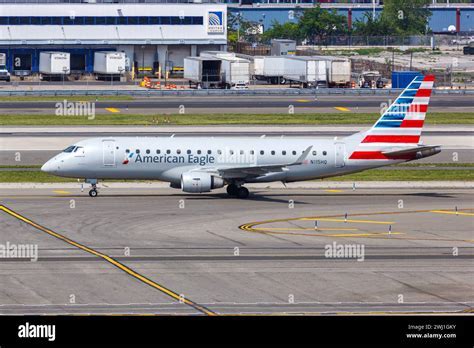
Operational Adjustments and Fleet Rationalization
The regional market is notoriously volatile, and American Eagle has weathered numerous partnership changes. Compass Airlines briefly operated from the Los Angeles hub with 20 Embraer 175s from 2015 until its closure in April 2020. Air Wisconsin departed in March 2018 but continued limited codeshare relations until its final American Eagle flight with the CRJ-200 on January 10, 2025.
Similarly, ExpressJet and Trans States Airlines ended American Eagle operations in 2019, driven by industry consolidation and shifting pilot supply dynamics.
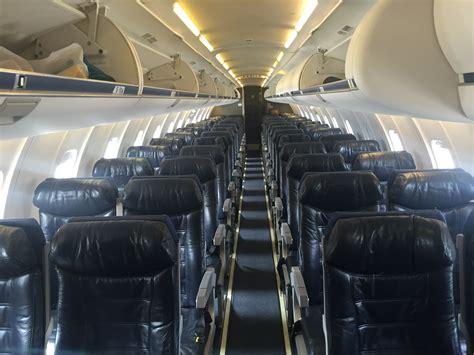
The push toward a single-type fleet per operator and the end of turboprop use reflect broader goals: simplification, improved maintenance economies, and better passenger experience through consistent cabin layouts and jet-only service.
A Glimpse at the Historic Fleet
American Eagle once operated an eclectic fleet of regional jets and turboprops that mirrored the evolutionary path of short-haul aviation.
Among jets, its legacy included:
- 142 Bombardier CRJ200s
- 40 Embraer ERJ-135s
- 59 ERJ-140s
- Dozens of ERJ-145s still in use today
On the turboprop side, past aircraft types included:
- ATR 42 and ATR 72
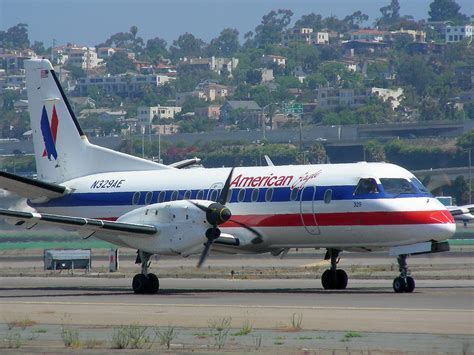
- Saab 340 and Fairchild Metroliner
- BAe Jetstream 31/32 and Short 360
- Bombardier Dash 8-100/300
- Beechcraft 99, EMB 120 Brasilia, and others
These models served smaller communities across the U.S., Canada, the Caribbean, and even Mexico, often flying into airfields unequipped for larger jets.
Incidents and Safety Legacy
Given its scale and duration, American Eagle has experienced several notable safety incidents, each shaping policy and training in lasting ways.
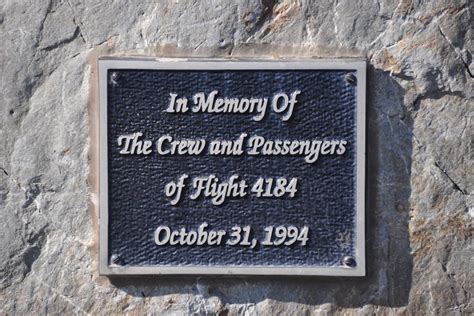
The deadliest occurred on October 31, 1994, when Flight 4184—a Simmons Airlines ATR 72—crashed near Roselawn, Indiana. The cause: ice-induced aileron reversal, a phenomenon that spurred sweeping changes in icing certification and flight procedures. All 68 on board perished.
Other major incidents include:
- Flight 3379: A Flagship Airlines Jetstream 31 crashed in December 1994, killing 15 near RDU.
- Flight 5342: In January 2025, a PSA CRJ701ER collided with a military helicopter on approach to DCA, causing 64 fatalities.
- Multiple weather-related accidents in the Caribbean and mainland U.S. throughout the 1980s and 1990s.
Each tragedy prompted incremental improvements in regional aviation oversight, contributing to today’s stronger training, dispatch, and maintenance standards across regional fleets.
American Eagle’s Role in the Future of U.S. Aviation
As American Airlines looks toward the next era of regional aviation, the role of American Eagle remains vital. The ongoing expansion of Embraer 175 deployments, the phasing out of older CRJ platforms, and the centralization of operations under high-performing partners like Envoy and Republic signify a strategic realignment.
New pilot contracts, rising labor costs, and a stronger emphasis on passenger experience are driving regional carriers to prioritize fuel-efficient, higher-capacity aircraft. In this context, the Embraer 175—with its balance of comfort, economics, and performance—has emerged as the backbone of American Eagle’s future.
With nearly half of American Eagle passengers connecting to mainline flights, this regional framework is not just a feeder—it is an essential component of the airline’s long-term competitiveness.
As the landscape continues to evolve, American Eagle stands as a case study in adaptive network strategy, regional partnership integration, and brand cohesion in one of the world’s most competitive airline markets.