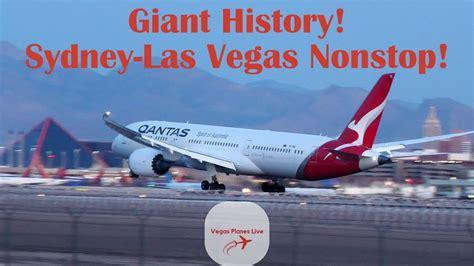
Australia’s flag carrier is rewriting its own transpacific playbook. In a year when some airlines are recalibrating international capacity, Qantas is doing the opposite—deepening its commitment to the United States with a bold new nonstop link that elevates its American footprint to unprecedented levels. The launch of direct flights between Sydney Kingsford Smith Airport and Las Vegas Harry Reid International Airport will mark the airline’s sixth US gateway, the most in its history.
The seasonal service, beginning December 29, 2026, is more than a new dot on the route map. It represents a strategic expansion into a high-yield leisure corridor that has quietly matured for years. By converting what was previously an occasional charter market into a scheduled long-haul operation, Qantas is sending a clear signal: demand between Australia and the American Southwest is no longer niche—it is durable, profitable, and ready for prime time.
Las Vegas may be globally synonymous with neon skylines and entertainment megastructures, but behind the spectacle lies a data-driven opportunity. Australia consistently ranks as one of the city’s largest overseas source markets, yet until now, travelers faced one-stop journeys via Los Angeles or San Francisco. That friction disappears with the arrival of a nonstop option, reshaping travel behavior almost instantly.
A Record Sixth US Destination: Why Las Vegas Matters
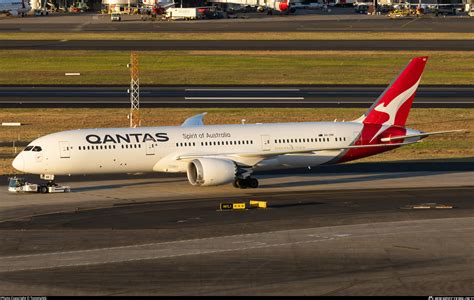
The Sydney–Las Vegas route will operate three times weekly—Tuesdays, Thursdays, and Sundays—using the Boeing 787-9 Dreamliner, a long-haul twinjet engineered for efficiency and passenger comfort on ultra-long sectors. The westbound flight, QF55, will depart Sydney at 9:00 pm and arrive in Las Vegas at 3:55 pm local time after 13 hours and 55 minutes. The return leg, QF56, leaves Las Vegas at 8:20 pm, landing in Sydney at 6:35 am two days later following a 15-hour and 15-minute crossing.
Those block times underscore the geographic audacity of the Pacific. Crossing nearly half the planet without refueling demands aircraft optimized for fuel burn and range. The 787-9’s composite structure and advanced aerodynamics allow Qantas to serve Las Vegas efficiently without deploying larger aircraft such as the Airbus A380. This precision in aircraft selection reflects a network strategy calibrated to match capacity with demand rather than simply chasing scale.
Return fares starting at AU $1,099 from Australia position the service squarely within reach of the leisure market. For a city that thrives on conventions, concerts, sporting events, and experiential tourism, direct access from Sydney strengthens inbound visitor flows while also enticing Australians with simplified planning and reduced travel fatigue.
Sydney: The Transpacific Command Center
Every one of Qantas’ six US destinations will be served from Sydney, reinforcing its status as the airline’s primary long-haul launch point. The city’s geographic positioning, premium demand base, and slot infrastructure combine to create an ideal platform for sustained transpacific growth.
The most heavily served American gateways from Sydney remain Los Angeles International Airport and Dallas/Fort Worth International Airport. Both routes operate daily and serve as critical connective tissue within the broader oneworld alliance ecosystem. With American Airlines maintaining dominant hub operations at these airports, Qantas passengers gain seamless onward access to dozens of domestic US destinations.
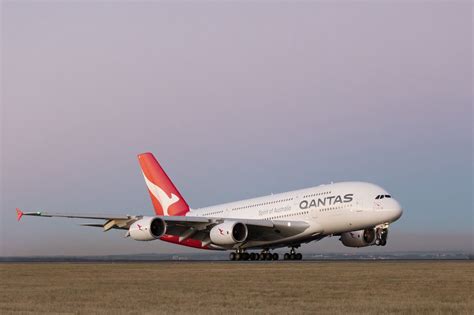
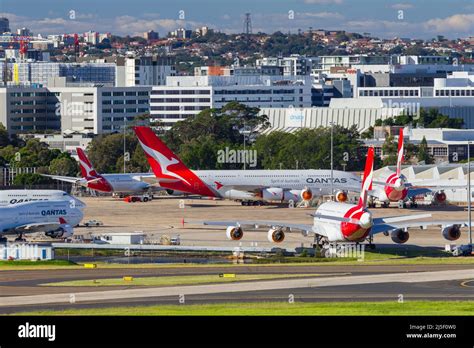
The Airbus A380—the largest aircraft in Qantas’ fleet—continues to anchor these flagship routes. Configured to accommodate 485 passengers across four cabins, the double-deck aircraft underscores the scale of demand between Australia and key US hubs. Deploying the A380 on Los Angeles and Dallas/Fort Worth not only maximizes seat supply but also reinforces Qantas’ premium positioning, particularly in First and Business Class.
Honolulu, San Francisco, and New York: Strategic Balance
Beyond its daily heavyweights, Qantas maintains diversified American exposure. Honolulu International Airport receives six weekly services from Sydney, typically operated by the Airbus A330. Hawaii’s enduring popularity among Australian travelers makes it a stable, high-frequency leisure corridor.
Meanwhile, three weekly nonstop flights connect Sydney with San Francisco International Airport via the Boeing 787-9. San Francisco offers technology-driven corporate demand and serves as a key West Coast gateway for onward connections. The Dreamliner’s range and economics make it particularly suited for these high-profile yet slightly lower-density routes.
New York presents a different operational profile. Five weekly services link Sydney to John F. Kennedy International Airport, routed via Auckland Airport. This tag-flight approach balances ultra-long-haul ambitions with operational flexibility, allowing Qantas to maintain a presence in the US Northeast without dedicating aircraft exclusively to the world’s longest commercial sectors year-round.
Brisbane and Melbourne: Expanding the Transpacific Web
Sydney may dominate Qantas’ American network, but it is not alone. Brisbane Airport sustains daily Dreamliner service to Los Angeles, giving Queensland travelers nonstop access to Southern California without routing south first. This decentralization strengthens Qantas’ domestic feed and reduces dependency on a single gateway.
Melbourne Airport adds further resilience with two US routes. Daily flights to Los Angeles operate using either the Airbus A380 or the 787-9, while three weekly services connect Melbourne to Dallas/Fort Worth. These operations diversify revenue streams and distribute long-haul capacity across multiple Australian population centers.
Collectively, these corridors form a mesh rather than a spoke. Instead of relying solely on Sydney, Qantas has engineered a distributed transpacific architecture that captures demand across Australia’s eastern seaboard.
Network Strategy in a Shifting Global Climate
Launching a new US destination during a period of geopolitical uncertainty requires confidence grounded in data. International travel patterns can fluctuate with economic sentiment, currency movements, and diplomatic tensions. Yet Qantas’ expansion suggests that Australia–US travel retains structural strength.
Las Vegas, in particular, reflects a leisure-led thesis. Unlike purely corporate hubs, it draws visitors through entertainment, sporting events, conventions, and hospitality infrastructure that operate year-round. The city’s ability to generate inbound traffic from Australia has been consistent, with more than 250,000 Australians visiting annually. Converting that traffic into nonstop capacity is a logical progression.
From a competitive standpoint, the addition of Las Vegas also enhances Qantas’ brand narrative. It reinforces the airline’s image as a global connector capable of linking Australia directly with diverse American regions—not just coastal megacities. Each new gateway expands the perception of accessibility.
The Dreamliner as the Enabler of Expansion
None of this growth would be feasible without the Boeing 787-9. The aircraft’s operational flexibility has allowed Qantas to experiment with thinner long-haul markets that previously required larger, less efficient jets. Lower fuel burn, optimized cabin pressurization, and extended range capabilities combine to make routes like Sydney–Las Vegas commercially viable.
The Dreamliner’s cabin environment—higher humidity levels, larger windows, and reduced cabin altitude—also plays a subtle yet powerful role. On flights exceeding 14 hours, passenger comfort translates into repeat demand. That experiential factor becomes part of the competitive equation, particularly in leisure markets where travelers associate the journey with the vacation itself.
A Transpacific Milestone
By the close of 2026, Qantas will serve six US destinations via nine distinct routes, a configuration unmatched in its history. The Sydney–Las Vegas nonstop is not simply an addition; it is a declaration that the airline’s transpacific ambitions remain expansive.
The Pacific Ocean has always been both barrier and bridge. With this latest expansion, Qantas reinforces its role as one of the primary architects of that bridge, connecting Australia to the United States with scale, strategy, and increasing geographic precision. In doing so, it transforms Las Vegas from a connecting afterthought into a direct gateway—an evolution that speaks volumes about the enduring strength of the Australia–US aviation corridor.