Qatar Airways has emerged from the 2025/26 financial year with one of the strongest performances in global aviation, reporting a remarkable QAR 7.08 billion ($1.94 billion) post-tax profit while simultaneously committing to the largest widebody aircraft order in Boeing’s history. The Doha-based carrier continues to strengthen its position as one of the world’s most influential long-haul airlines, balancing aggressive expansion with the operational realities of rising geopolitical instability across the Middle East.
The airline’s latest results reflect a year defined by exceptional passenger demand, booming cargo operations, and disciplined operational efficiency. Even as regional tensions disrupted flight paths and increased fuel costs, Qatar Airways managed to deliver record operating profits and reinforce its status as a dominant force in premium international travel.
The financial success arrives at a critical moment for the aviation industry. Airlines worldwide are still navigating supply chain constraints, aircraft delivery delays, fluctuating oil prices, and fragile geopolitical conditions. Yet Qatar Airways has chosen not to slow down. Instead, it is accelerating into a new era of growth with an ambitious fleet modernization strategy centered around Boeing’s newest generation of widebody aircraft.
The airline’s expansion plan signals far more than a simple fleet renewal. It represents a calculated move to secure future market share, dominate high-yield intercontinental routes, and preserve Qatar Airways’ reputation as one of the leading premium carriers connecting Europe, Asia, Africa, and the Americas through Doha’s Hamad International Airport.
Qatar Airways Delivers Record Operating Profit
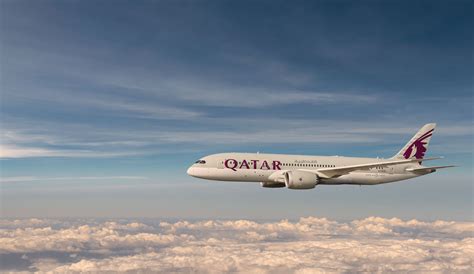
The centerpiece of Qatar Airways’ annual results was its QAR 15.2 billion ($4.1 billion) operating profit, the highest in the group’s history. The performance underscores how effectively the airline has capitalized on the global rebound in long-haul travel, particularly in premium cabins where demand remains exceptionally resilient.
During the financial year running from April 1, 2025, to March 31, 2026, Qatar Airways carried 41.8 million passengers across its expanding international network. The airline currently serves more than 160 destinations worldwide using a fleet of approximately 270 aircraft, heavily focused on long-range widebodies.
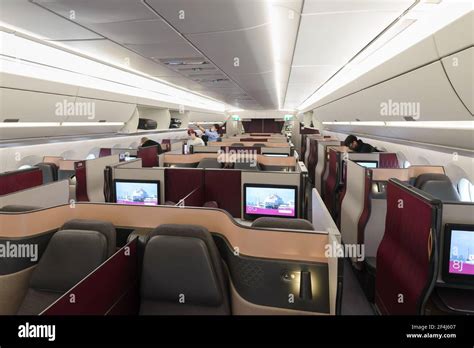
Strong premium demand played a major role in boosting yields. Qatar Airways has long positioned itself as a luxury-focused global airline, and its business class product continues to command significant pricing power in key long-haul markets. Routes linking Europe with Asia-Pacific destinations, along with traffic flows between North America and the Indian subcontinent, remained especially important revenue generators.
Cargo operations also delivered substantial gains. Qatar Airways Cargo transported more than 1.43 million tons of chargeable freight, helping the company maintain its place as the world’s largest air freight carrier with roughly 12% global market share. The continued strength of air cargo demand, particularly for e-commerce, pharmaceuticals, and high-value manufacturing goods, provided an additional financial buffer against rising operating expenses.
Chief Executive Officer Hamad Al-Khater described the year as one that tested both the resilience and capability of the airline group. His comments reflected the broader reality facing Gulf carriers, which have had to balance commercial growth against escalating regional instability.
Boeing Lands Historic 210-Aircraft Widebody Deal
Perhaps the most consequential development was Qatar Airways’ decision to commit to up to 210 new Boeing widebody aircraft, marking the largest widebody order in Boeing’s corporate history.
The deal includes:
- 130 Boeing 787 Dreamliners
- 30 Boeing 777-9 aircraft
- Options for an additional 50 aircraft across both families
The order also establishes a new record for the Boeing 787 program, becoming the largest Dreamliner purchase ever placed by a single airline.
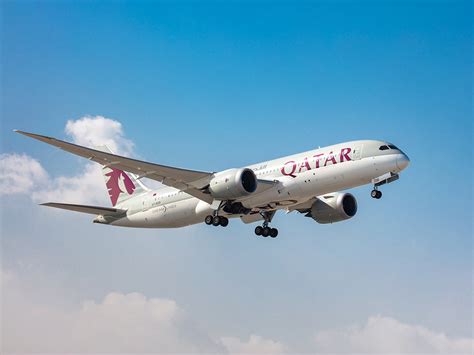
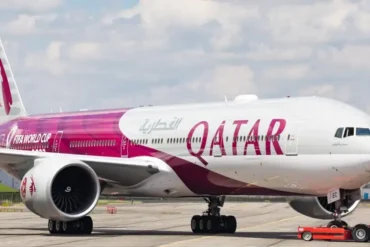
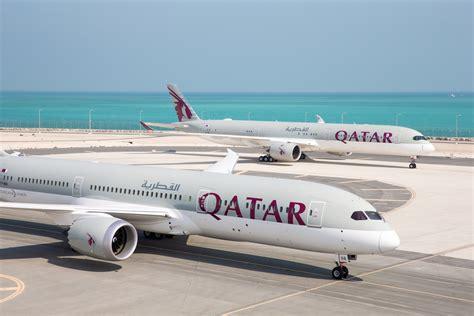
This acquisition dramatically reshapes Qatar Airways’ long-term fleet strategy. The carrier already operates one of the world’s youngest and most technologically advanced widebody fleets, including Airbus A350-900s, A350-1000s, Boeing 777s, and Boeing 787 Dreamliners. The incoming aircraft will further modernize operations while supporting major network expansion over the next decade.
Securing aircraft delivery slots has become increasingly important across the aviation sector. Demand for next-generation widebody aircraft has surged as airlines seek more fuel-efficient replacements for aging four-engine jets and older twinjets. Manufacturers continue facing production bottlenecks, making early commitments strategically valuable.
The Boeing 787 family offers substantial efficiency advantages through reduced fuel burn, lighter composite structures, and lower maintenance requirements. Meanwhile, the Boeing 777-9 is expected to become one of the highest-capacity and longest-range twin-engine aircraft in commercial aviation, ideal for ultra-long-haul routes connecting Doha with major global hubs.
Qatar Airways’ investment demonstrates confidence in sustained long-haul demand growth, particularly as international travel patterns continue normalizing after years of disruption.
Fleet Modernization Intensifies Gulf Airline Competition
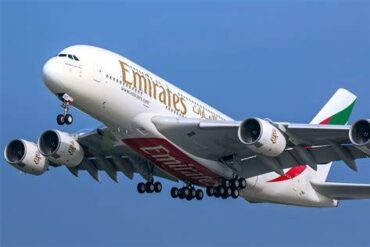
The Boeing order also intensifies the competitive rivalry between the Gulf’s three major network airlines: Qatar Airways, Emirates, and Etihad Airways.
Each carrier is pursuing aggressive modernization programs aimed at strengthening global connectivity through their respective hub airports. Qatar Airways has increasingly emphasized operational efficiency and premium service differentiation to compete against Emirates’ enormous scale and Etihad’s ongoing restructuring efforts.
Twin-engine widebody aircraft now sit at the center of that strategy. Airlines worldwide are steadily moving away from four-engine aircraft like the Airbus A380 because of higher operating costs and less flexibility. Qatar Airways still retains several A380s, though many remain grounded as the airline prioritizes more efficient alternatives.
With an average fleet age of roughly 10 years, the arrival of hundreds of new Boeing aircraft will significantly lower that figure while improving fuel efficiency and environmental performance. Lower emissions have become increasingly important not only for regulatory compliance but also for attracting environmentally conscious corporate customers.
The expansion could also allow Qatar Airways to deepen its presence in underserved long-haul markets. The airline recently attracted attention with its Bogota-Caracas triangle route, highlighting its willingness to pursue unconventional international connections that competitors often avoid.
Iran Conflict Creates Operational and Financial Pressure
Despite the airline’s strong results, the final months of the financial year revealed mounting operational challenges linked to tensions involving Iran and the wider Middle East.
Regional airspace disruptions forced airlines throughout the Gulf to reroute aircraft around restricted or closed corridors. For Qatar Airways, whose network depends heavily on geographically efficient connections between Europe and Asia, these diversions created significant operational complications.
Flights were increasingly redirected through Central Asia, the Mediterranean, or longer Arabian Sea routings. In some cases, journey times reportedly increased by as much as four hours. Even shorter diversions added substantial fuel consumption and crew scheduling complexity.
The financial consequences were equally serious. Brent crude oil prices climbed sharply during periods of heightened regional tension, with jet fuel representing between 15% and 20% of an airline’s total operating expenses. For a long-haul operator conducting thousands of widebody flights every month, even modest increases in fuel costs can rapidly affect profitability.
Operational disruptions also generated additional expenses through delays, aircraft repositioning requirements, maintenance adjustments, and passenger compensation obligations. Yet despite these pressures, Qatar Airways still managed to produce record profits, highlighting the strength of its underlying business model.
Qatar Airways Positions Itself for Long-Term Global Dominance
Qatar Airways’ latest financial performance reflects more than short-term profitability. It signals the airline’s determination to remain one of the defining players in international aviation for decades to come.
The combination of strong passenger demand, dominant cargo operations, and historic fleet investment places the airline in a powerful strategic position. While geopolitical instability continues threatening operational reliability across the Middle East, Qatar Airways appears willing to absorb near-term turbulence in pursuit of long-term expansion.
Its massive Boeing order ensures future growth capacity at a time when many competitors remain constrained by limited aircraft availability. At the same time, continued investment in fuel-efficient aircraft strengthens the airline’s ability to manage operating costs in an environment where energy prices remain highly volatile.
For the global aviation industry, Qatar Airways’ performance sends a clear message: premium long-haul travel demand remains robust, cargo markets continue generating enormous value, and the battle for dominance among Gulf super-connectors is entering an even more aggressive phase.