Saudia, the national airline of Saudi Arabia, has made a bold move by proposing a new route from Jeddah (JED) to Detroit Metropolitan Wayne County Airport (DTW), a significant step that underscores the airline’s commitment to expanding its footprint in the U.S. midwestern travel market. This proposal is part of the Winter 2025 Airport Coordination List (ACL) and reflects Saudia’s strategic intentions to enhance connectivity between Saudi Arabia and key U.S. destinations.
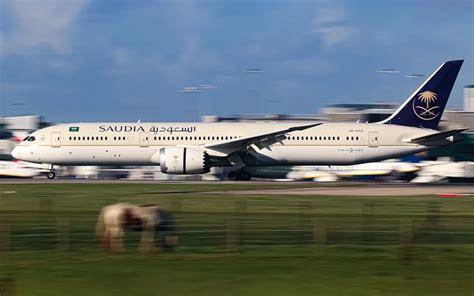
The potential introduction of this route marks an exciting chapter for Saudia, as it would be the airline’s inaugural entry into Detroit, a major hub in the American aviation landscape. The service is expected to be operated using the Boeing 787-9 Dreamliner, a state-of-the-art, fuel-efficient aircraft that forms the backbone of Saudia’s fleet. The 787-9 is renowned for its long-range capabilities, offering a seating capacity of 298 passengers in a two-class layout and capable of flying over 7,500 nautical miles, making it well-suited for the Jeddah–Detroit connection.
While the prospect of this route is promising, it is crucial to approach it with a measure of caution. Airlines often file for slots as part of their future planning processes, and such requests do not guarantee that flights will materialize. Saudia has previously expressed interest in launching services to other U.S. cities, including Atlanta (ATL) and Miami (MIA), but those plans have not come to fruition. Therefore, while the Jeddah–Detroit route is an intriguing proposition, its actual launch remains uncertain pending further developments.
Detroit is an attractive destination for Saudia for several compelling reasons. Firstly, the city serves as a significant gateway to the United States and boasts a substantial Arab-American population. The nearby city of Dearborn is particularly notable, as it is home to one of the largest communities of individuals with Middle Eastern ancestry in the U.S. This demographic connection could potentially drive a consistent flow of travelers between the two regions, making the route economically viable.
Moreover, Detroit is a crucial hub for Delta Air Lines, a key member of the SkyTeam alliance, of which Saudia is also a part. This partnership creates opportunities for seamless domestic connections across the U.S. for passengers traveling on the Jeddah–Detroit route. By tapping into Delta’s extensive network, Saudia can provide travelers with enhanced connectivity to various U.S. destinations, thereby increasing the attractiveness of this proposed service.
In alignment with Saudi Arabia’s Vision 2030 initiative, Saudia is undergoing a transformative journey aimed at establishing the Kingdom as a global aviation hub. This initiative involves modernizing its fleet and expanding its network to cater to the evolving needs of passengers worldwide. As of mid-2025, Saudia operates over 50 Boeing 787 Dreamliners, including both the -9 and -10 models, signifying its commitment to maintaining a modern and efficient fleet.
The focus on enhancing its international presence has been a priority for Saudia, particularly in regions such as North America, Europe, and Asia. The airline currently operates flights to prominent U.S. destinations, including New York (JFK), Washington D.C. (IAD), and Los Angeles (LAX), alongside services to Toronto (YYZ) in Canada. The addition of a service to Detroit would significantly bolster Saudia’s North American network, offering more options for travelers seeking to connect between the U.S. and Saudi Arabia.
Despite the encouraging nature of the filing for the Jeddah–Detroit route, it’s essential to remain cautious. The speculative nature of slot filings means that without formal announcements or the initiation of ticket sales, the route remains a prospective addition rather than a confirmed one. The strategic rationale behind the Detroit proposal is evident, given the strong community ties and the potential for smooth connections via Delta Air Lines.
However, Saudia’s plans may be influenced by the complex global operating environment. Geopolitical tensions in the Middle East, particularly involving Iran and Israel, have led to disruptions in air traffic, prompting some airlines to adjust flight paths and face increased operational costs. Airspace closures or other restrictions could impact the feasibility of new routes, including the Jeddah–Detroit connection, which would necessitate optimal routing across Europe or the Atlantic.
In conclusion, the potential for a Jeddah–Detroit service is promising, reflecting Saudia’s ongoing efforts to expand its presence in North America. The airline’s official announcements regarding its winter schedule will provide further clarity on whether this route will come to fruition. Should the route receive the necessary approvals, it would represent a significant milestone in Saudia’s growth strategy and a valuable addition to the airline’s international offerings. Until then, the Jeddah–Detroit route remains an intriguing possibility, embodying the airline’s aspirations for future growth in the competitive aviation landscape.