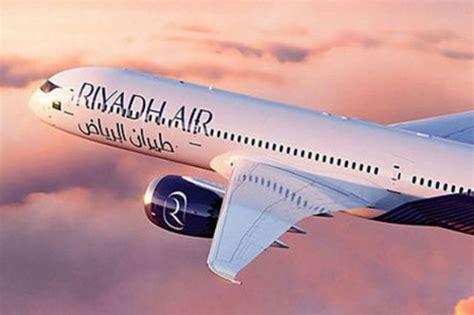
Riyadh Air is steadily transforming from a high-profile concept into a tangible aviation contender, unveiling three new nonstop routes that sharpen its emerging global footprint. The Saudi startup carrier has now officially named Jeddah, Madrid, and Manchester as part of its growing network, doubling its disclosed destinations to six and signaling a more assertive push toward full-scale operations. The expansion reflects a deliberate strategy: blend domestic strength, regional connectivity, and long-haul European reach into a unified hub model centered on Riyadh.
This latest announcement follows earlier confirmations of routes to London Heathrow, Dubai, and Cairo, creating a diverse but still largely pre-operational route map. While the ambition is unmistakable, the airline’s current reality is more restrained. Only the London route is technically active—and even that remains limited to internal travelers, underscoring a gap between network vision and fleet readiness.
The tension between bold expansion and limited aircraft availability is now the defining narrative. Riyadh Air is building a network faster than it can physically operate it, a gamble that hinges on the timely arrival of its Boeing 787-9 Dreamliners.
A Rapidly Expanding Route Map with Strategic Intent
With the addition of Madrid, Manchester, and Jeddah, Riyadh Air’s route portfolio now spans Europe, the Middle East, and domestic Saudi Arabia. Each destination serves a distinct strategic role, revealing a network design that is anything but random.
London remains the flagship long-haul route, acting as a proof-of-concept for international operations. Dubai and Cairo offer high-demand regional connectivity, while the newly introduced routes deepen both European penetration and domestic integration. Madrid and Manchester, in particular, stand out because they are not merely competitive entries—they are market-creating routes.
Unlike many airline expansions that pile into already saturated corridors, Riyadh Air is identifying underserved city pairs. Both Madrid and Manchester currently lack nonstop service to Riyadh, giving the airline a rare opportunity to establish first-mover advantage. This is not just expansion—it is network shaping, where the airline defines demand rather than reacts to it.
Madrid and Manchester: Calculated European Breakthroughs
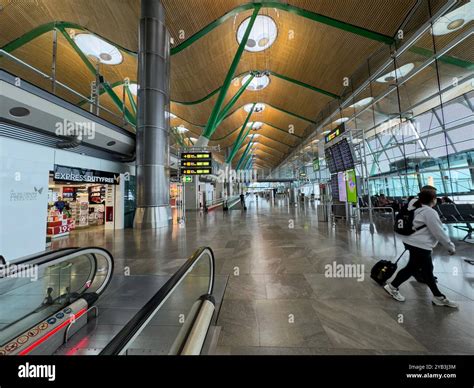
The decision to include Madrid Barajas Airport and Manchester Airport is a calculated move that elevates Riyadh Air’s strategic profile. These routes are not just about adding dots on a map; they are about creating new air bridges between Saudi Arabia and key European markets.
Madrid offers access to Southern Europe and Latin American connectivity, while Manchester provides a gateway to Northern England’s vast catchment area. Both cities represent high-value, underlinked markets, aligning perfectly with Riyadh Air’s ambition to position Riyadh as a global transit hub.
What makes these routes particularly compelling is their rarity. In a landscape where most major cities are already interconnected, launching entirely new nonstop links is increasingly uncommon. Riyadh Air is effectively stepping into a white space, where competition is minimal and brand identity can be built from scratch.
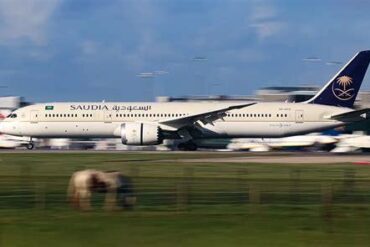
That said, competition is not entirely absent. Saudi Arabia’s flag carrier, Saudia, already connects both cities to Jeddah. However, Riyadh Air’s focus on the capital introduces a different dynamic, emphasizing hub centralization rather than secondary city routing.
Jeddah: A High-Stakes Domestic Battlefield
If Madrid and Manchester represent opportunity, Jeddah represents necessity. The Riyadh–Jeddah corridor is one of the busiest domestic routes in the world, handling nearly 10 million seats annually and growing at a remarkable pace. For Riyadh Air, entering this market is less about innovation and more about relevance.
The scale of competition is staggering. Established players like Saudia, Flynas, and Flyadeal collectively operate over 140 daily flights, creating a hyper-competitive environment defined by frequency, pricing pressure, and operational efficiency.
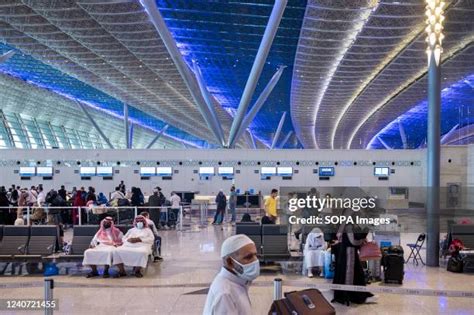
Yet avoiding Jeddah is not an option. Any airline aiming to build Riyadh into a global hub must ensure seamless connectivity to one of the Kingdom’s most important cities. Jeddah is not only a commercial center but also a major gateway for religious tourism, making it a critical node in Saudi Arabia’s aviation ecosystem.
Riyadh Air’s challenge will be differentiation. Competing purely on frequency or price is a losing game in such a saturated market. Instead, the airline will need to leverage service quality, scheduling precision, and network integration to carve out its share.
Fleet Constraints: The Bottleneck Behind the Vision
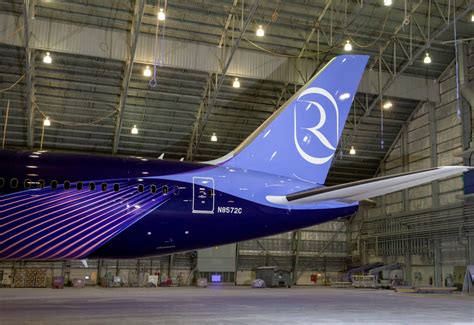
For all its ambitious route announcements, Riyadh Air’s progress ultimately depends on a single factor: aircraft delivery. The airline has placed orders for 39 Boeing 787-9 Dreamliners, with options for 33 more, positioning itself for long-term growth. However, the present reality is far more limited—only one aircraft is currently in operation, and even that is a leased unit from Oman Air.
This limited fleet explains why the London route remains restricted and why newly announced routes lack firm launch dates. The airline is effectively building a network in anticipation, betting that aircraft deliveries will arrive in time to support its expansion timeline.
Encouragingly, progress is visible. Several Dreamliners are in advanced stages of production and testing, with initial units undergoing final fittings and flight trials. These developments suggest that Riyadh Air is on the cusp of transitioning from planning to execution.
From Branding Exercise to Operational Reality
Not long ago, Riyadh Air was primarily a branding exercise—an airline defined by its sleek livery, bold announcements, and ambitious rhetoric. Today, the narrative is shifting. The growing list of routes, combined with imminent aircraft deliveries, signals a move toward operational credibility.
This transition is critical. In aviation, credibility is built not on announcements but on consistent, reliable service. Riyadh Air’s ability to convert its planned routes into functioning operations will determine whether it becomes a genuine competitor or remains an aspirational project.
What Comes Next for Riyadh Air’s Network Launch
The immediate future hinges on the arrival of the first batch of Dreamliners. Once operational capacity increases, the airline is expected to open ticket sales to the public, starting with London and gradually expanding to regional and European routes.
The sequencing will likely prioritize lower-risk markets, allowing the airline to refine its operations before tackling more complex, high-demand routes like Jeddah. This phased approach is standard in aviation but carries added importance for a startup seeking to establish trust quickly.
What is already clear is that Riyadh Air’s route map is no longer theoretical. The destinations are defined, the strategy is visible, and the infrastructure is taking shape. The only missing piece is time—and a few dozen aircraft.
In the world of aviation, timing can make or break even the most ambitious ventures. Riyadh Air is betting that its aircraft will arrive just in time to turn a bold network blueprint into a fully realized global operation.