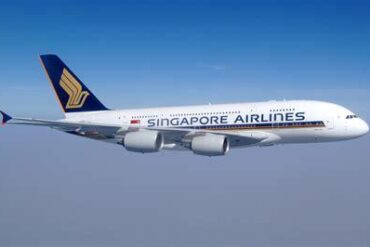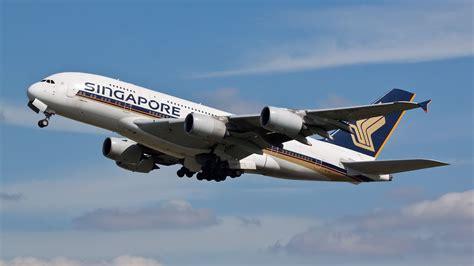
Singapore Airlines has quietly made a move that speaks loudly about confidence, capacity, and competition. The carrier has confirmed that its flagship Airbus A380 will now operate the Singapore–Dubai route all year round, abandoning earlier plans to rotate back to smaller aircraft after the peak summer season. For passengers, especially those loyal to premium cabins, this is more than a scheduling tweak—it is a clear statement of intent.
The Singapore–Dubai corridor has long been one of Asia–Middle East aviation’s most commercially important routes. Business travelers, long-haul connectors, and high-yield leisure passengers converge on this city pair, making aircraft choice a strategic decision rather than a cosmetic one. By locking in the A380 permanently, Singapore Airlines is aligning capacity with demand in a way that few airlines can execute confidently.
This change also elevates Dubai into rare company. Alongside London Heathrow and Sydney, Dubai now becomes one of only three destinations served by Singapore Airlines’ A380 throughout the year. That short list reflects routes where scale, yield, and brand presence intersect—and where retreating to smaller aircraft would leave revenue on the table.
A Strategic Shift From Seasonal to Permanent Deployment
Initial schedules suggested that Singapore Airlines would deploy the A380 on the Dubai route only during the IATA Summer 2026 season, starting in late March, before reverting to the Boeing 777-300ER in October. Updated data published by Cirium tells a different story. The superjumbo is now scheduled daily on the route through March 2027, confirming a year-round commitment.
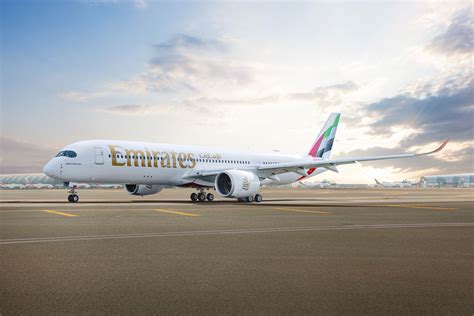
From March onward, the route will see four daily A380 flights between Singapore Changi Airport (SIN) and Dubai International Airport (DXB). Singapore Airlines will operate one daily A380 service, directly competing with Emirates’ three daily A380 flights and an additional Boeing 777-300ER service. This concentration of very large aircraft on a single city pair underscores just how dense and lucrative the market has become.
The competitive dynamic here is impossible to ignore. Emirates has long dominated the Dubai–Singapore market with sheer scale. Singapore Airlines’ decision to bring its largest aircraft into the fight year-round suggests that the airline sees sustained demand strong enough to justify matching capacity rather than ceding ground.
Capacity Math That Favors the Superjumbo
The business case becomes clearer when looking at the numbers. Singapore Airlines’ Boeing 777-300ERs currently operating the route seat 264 passengers, including four first class and 48 business class seats. The Airbus A380, by contrast, accommodates 471 passengers, representing a 78.4% increase in total capacity.
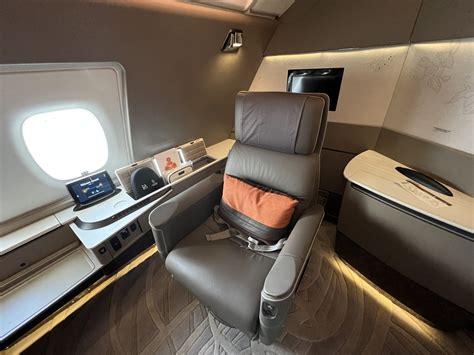
Premium cabins tell an even more compelling story. The A380 features six first class seats, a 50% increase, and 78 business class seats, up 62.5% compared with the 777-300ER. On a route where premium demand is consistently strong, that additional high-yield real estate matters far more than raw economy numbers.
In practical terms, this allows Singapore Airlines to sell more top-tier seats without adding frequencies, keeping slot usage efficient while maximizing revenue per departure. For passengers, it means better availability in the airline’s most sought-after cabins, including the iconic A380 Suites.
Singapore Changi’s Unique A380 Ecosystem
Singapore Changi Airport occupies a special place in the global A380 network. While Singapore Airlines is the home carrier with a fleet of 12 active A380s, it is far from the only operator bringing the superjumbo into Changi on a regular basis.
In addition to Singapore Airlines and Emirates, Etihad Airways operates daily A380 flights from Abu Dhabi, Qantas flies the aircraft daily from Sydney, and Qatar Airways deploys the A380 on select services from Doha during parts of the year. Very few airports worldwide host such a diverse mix of A380 operators, reinforcing Singapore’s status as a premium long-haul hub.
This density of superjumbo traffic is not accidental. It reflects sustained demand for high-capacity, premium-heavy aircraft serving long-haul routes where passengers are willing to pay for comfort, connectivity, and brand experience.
The A380’s Enduring Role at Singapore Airlines
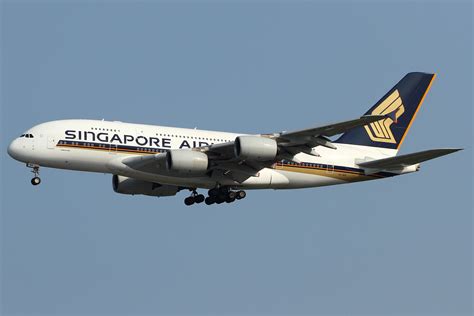
Singapore Airlines’ relationship with the A380 is deeply woven into its modern history. The airline was the launch customer for the aircraft in 2007 and ultimately took delivery of 24 A380s, becoming the second-largest operator after Emirates. In a twist of industry irony, it was also the first airline to retire an A380, withdrawing its earliest example in 2017 after just a decade of service.
Today, the fleet stands at 12 aircraft, smaller but carefully deployed. Post-pandemic, Singapore Airlines was among the first carriers to bring the A380 back into regular service, signaling confidence in the aircraft’s economics when used on the right routes. Limited numbers mean selectivity, and Dubai’s promotion to year-round A380 status places it firmly among the airline’s most valuable markets.
Beyond Dubai, London, and Sydney, the A380 continues to appear on seasonal high-demand routes such as Delhi, Mumbai, Frankfurt, Auckland, Shanghai, and Hong Kong, where traffic peaks justify the aircraft’s scale.
What This Means for Passengers and the Market
For travelers, the message is simple and welcome. More A380 flights mean more premium seats, a quieter cabin experience, and access to one of the most refined onboard products in commercial aviation. For the market, it signals confidence—confidence that demand between Southeast Asia and the Gulf is not only strong, but durable.
Singapore Airlines is not merely filling seats. It is placing its most prestigious aircraft on a route where brand, comfort, and yield converge. In doing so, it reinforces the idea that the Airbus A380, far from fading quietly into retirement, still has a powerful role to play when the market is right and the strategy is precise.