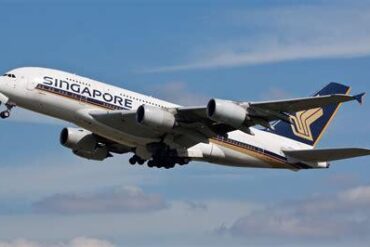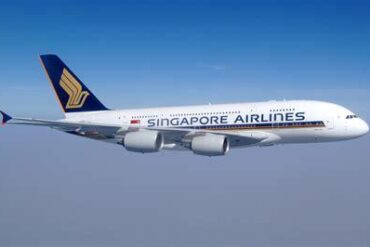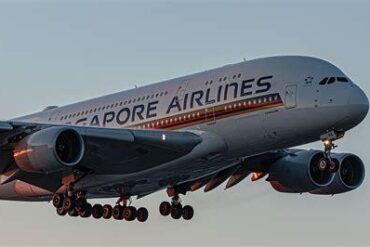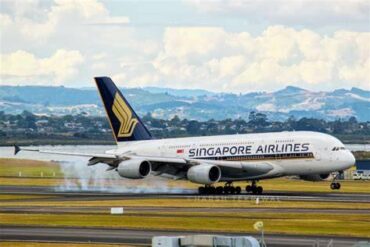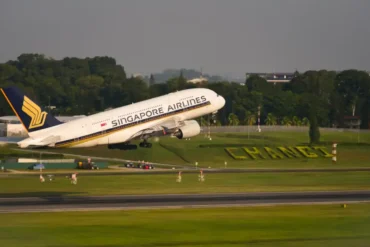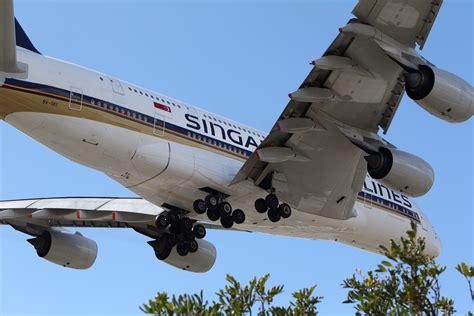
In a strategic and capacity-defining move, Singapore Airlines has confirmed it will deploy its flagship Airbus A380 on the high-demand Singapore-Dubai route starting March 29 through October 24, 2026. This marks a massive boost in capacity and service refinement on a route that has traditionally seen smaller widebody jets.
The A380’s return to Dubai isn’t a seasonal fluke or experimental run. It is now scheduled for daily service throughout the entire IATA Northern Summer season, replacing the previously scheduled Boeing 777-300ER. With this shift, Singapore Airlines not only upgrades passenger experience but significantly increases available seat capacity by 78% per flight.
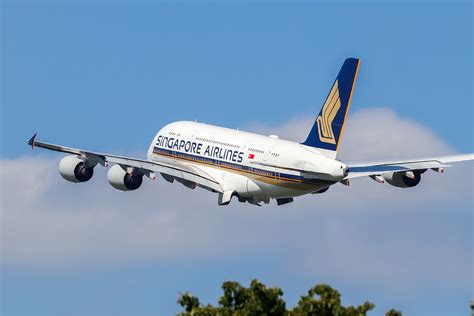
A380 Resurgence: Why Now, Why Dubai?
The move to deploy the world’s largest passenger aircraft on the Singapore–Dubai route is both ambitious and calculated. While summer in Dubai brings scorching temperatures, it is also a prime season for outbound and transit travel. Singapore Airlines is responding to a clear opportunity: capitalize on strong demand across business, premium, and economy classes, while making a bold fleet utilization decision that reaffirms the airline’s trust in the A380’s draw.
This route had previously only seen the A380 briefly in April 2024—just two round-trips. The new deployment is not a limited appearance. It’s a full-season commitment, signaling both operational readiness and confidence in passenger volume.
Fleet Flex: Retasking the Superjumbo
Singapore Airlines, the original launch customer of the A380, currently holds 12 Airbus A380s in its fleet. While not all are actively flying, the airline has maintained the superjumbo’s prestige on routes such as London, Sydney, and Frankfurt. The aircraft being pressed into Dubai service include some of the world’s oldest actively flying A380s, such as the 15.5-year-old 9V-SKM, originally the 65th A380 off the line.
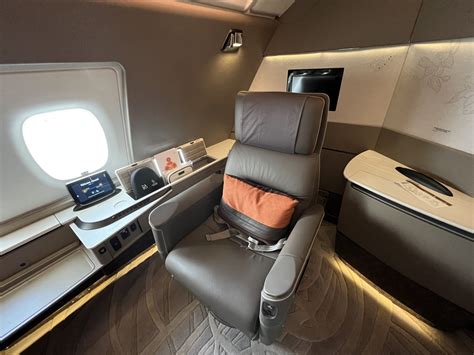
Each A380 carries 471 passengers, distributed across four cabins:
- 6 fully enclosed suites (upper deck) featuring convertible double beds
- 78 business class seats in a 1-2-1 layout
- 44 premium economy seats (2-4-2 layout with 38” pitch)
- 343 economy seats (3-4-3 configuration with 32” pitch)
This aircraft isn’t just about size—it’s about experience. Its upper deck suites and ultra-quiet cabin offer unmatched comfort, while the massive economy cabin absorbs demand with graceful efficiency.
Capacity Surge: An Eye-Watering +78% Increase
Since May 2025, Singapore Airlines had relied exclusively on the 264-seat Boeing 777-300ER for its Dubai services. The shift to the 471-seat A380 reflects:
- +207 seats per flight, translating to a 78% boost in capacity
- +159 seats in economy class (+86%)—ideal for high-volume leisure and connecting travelers
- +30 seats in business class (+63%)—serving premium demand on a premium route
- +16 seats in premium economy (+57%)—bridging comfort and affordability
This adjustment comes with schedule changes as well. The A380’s larger ground footprint and longer turnaround time necessitated operational revisions:
- Singapore to Dubai: 2:40 pm – 6:00 pm (local time)
- Dubai to Singapore: 7:45 pm – 7:30 am (next day)
With a 1 hour 45 minute ground time in Dubai (up from 1 hour 15 minutes with the 777), the airline is taking steps to ensure on-time performance and crew efficiency.
A Battle of Titans: Four Daily A380 Flights Between Singapore and Dubai
This route has now transformed into an ultra-premium corridor, as Emirates continues to operate three daily A380 flights on the same city pair. Add Singapore Airlines’ daily A380, and you get a rare market scenario: four daily A380 flights linking the same two cities.
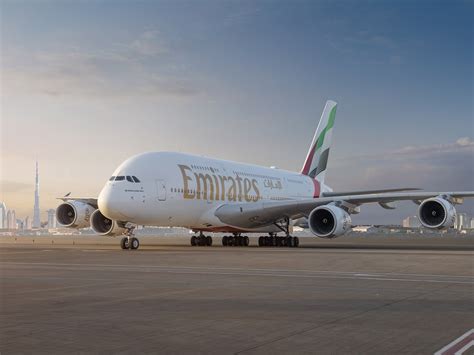
Flight timings (April example):
- Emirates: 12:50 am, 10:35 am, and 9:00 pm
- Singapore Airlines: 6:00 pm (departure from Singapore)
This immense capacity reflects not just point-to-point demand, but the power of connecting traffic through both Changi Airport and Dubai International—two of the most efficient and well-connected global hubs.
Historical Context: A Route of Strategic Importance
Singapore Airlines has had a long-standing relationship with Dubai. Historically, the route has been linked to multi-stop services extending to Cairo, Istanbul, Jeddah, and Moscow Domodedovo. However, such fifth-freedom extensions ceased in 2016.
Over the past 20 years, Singapore Airlines has rotated multiple aircraft on this route, including:
- Airbus A330-300, A350-900, A380 (briefly)
- Boeing 747-400 (2005, 2007)
- Boeing 777-200ER, 777-300, and 777-300ER
The return of the A380 not only elevates passenger comfort but underscores the route’s growing profitability and strategic significance within the airline’s global network.
Passenger Demand: A Market With Deep Volume
According to booking data, the direct market between Dubai and Singapore saw approximately 375,000 passengers in the 12 months leading to October 2025. This figure excludes the millions more who connect via these gateways en route to Europe, Asia, Oceania, and Africa.
For context, London Heathrow to Islamabad recorded 235,000 passengers in the same period—with no nonstop carrier at present. The comparison highlights just how mature and lucrative the Singapore–Dubai route has become.
Regional Implications: Middle East-Singapore Superjumbo Surge
The Singapore-Dubai capacity jump is not an isolated event. It’s part of a broader resurgence of the A380 in the Gulf–Southeast Asia corridor. Here’s the current status:
- Qatar Airways: Confirmed A380 services between Doha and Singapore in 2026
- Etihad Airways: Active A380 operations on Abu Dhabi–Singapore since early 2025
By summer 2026, Singapore will see six daily A380 departures to the Middle East, the highest in history, up from five previously. This surge showcases the renewed relevance of the A380 in post-pandemic aviation, especially in high-density, high-yield markets.
Conclusion: A High-Stakes, High-Capacity Play
Singapore Airlines’ decision to deploy the A380 daily on its Singapore-Dubai route reflects not just confidence in passenger demand, but an astute understanding of market dynamics. The move is bold, calculated, and laced with prestige. With unprecedented capacity, a superior onboard product, and a record-setting four daily A380 flights, this corridor has become one of the most competitive and premium-rich air routes globally.
The summer of 2026 promises to be a season of superjumbos, and Singapore Airlines is making sure it flies at the center of it all.