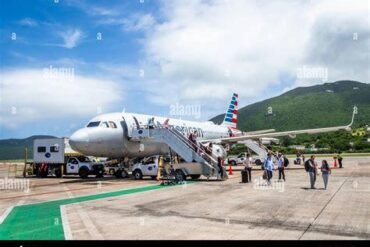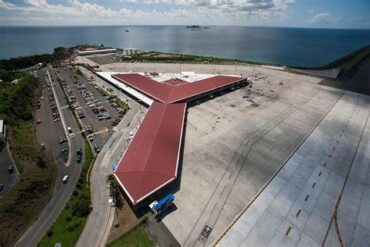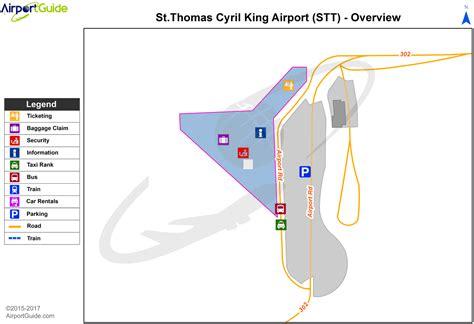
Travelers departing from Cyril E. King Airport (STT) quickly learn that this airport follows its own rhythm, shaped by geography, customs procedures, tourism flows, and the unique operational realities of the U.S. Virgin Islands. When airlines urge passengers to arrive three hours before departure, the recommendation is not a generic caution—it reflects the layered, mandatory steps every traveler must follow before reaching the gate. These steps differ significantly from the streamlined departures found throughout the continental United States. At STT, the sequence includes airline check-in, baggage handling, immigration and customs procedures, USDA agricultural screening, TSA screening, and final bag drop. Each step can expand or contract depending on seasonality, staffing, traveler volume, and even weather patterns.
Visitors sometimes question whether arriving three hours early is excessive. There are days when the airport is calm, lines are short, and the journey from curbside to the gate takes under thirty minutes. Yet on peak Saturdays, holiday weeks, storm-impacted travel days, or mornings following ferry and barge delays, the airport can swell into long queues that test even seasoned travelers. The goal of this guide is to present a clear, comprehensive, and accurate picture of STT airport arrival times, reinforced with firsthand accounts and operational insights that mirror experiences shared within the r_virginislands community.
Why STT Requires Earlier Arrivals Than Mainland Airports
The three-hour guidance exists because STT functions both as a domestic and quasi-international airport checkpoint. Although travelers are flying to the mainland United States, the U.S. Virgin Islands operate outside the formal U.S. customs zone, which means every departing passenger—regardless of citizenship—must complete the customs and immigration process. This requirement alone introduces significant variability in processing times.
In addition, STT lacks features many major airports rely on to keep lines moving efficiently, such as abundant automated kiosks, streamlined baggage infrastructure, and expansive terminal space. Even minor disruptions—such as a malfunctioning kiosk system, a temporary slowdown in agriculture screening, or a staffing shortage—can ripple across the terminal and create delays measured in hours instead of minutes.
The airport’s unpredictable nature is well-documented. Some travelers glide through in record time; others endure bottlenecks that stretch longer than their flights. When taken together, these fluctuating variables validate the three-hour window, not as an arbitrary rule but as a safeguard against missing a flight due to factors outside any traveler’s control.
Airline Check-In and Baggage Processing Delays
Airline counters at STT can be slow, and baggage check often becomes the first major obstacle of the departure sequence. During peak travel periods, or during rare operational disruptions such as airline computer outages or staffing shortages, the check-in process alone can exceed half an hour. During the widely discussed Delta baggage system slowdown of July 2024, travelers reported two-hour waits at the counter, causing many to miss flights despite arriving early.
Even under normal conditions, baggage processing functions differently at STT. Instead of dropping checked bags directly at the airline counter, travelers must carry those bags through immigration, customs, USDA screening, and a final baggage drop area. This adds manual movement, multiple queues, and additional handling steps that would not exist at a typical mainland airport.
Travelers who rely on kiosk check-in may experience additional delays because the kiosks are not always fully operational. When the system requires manual verification, the line expands quickly. Because airlines will not check bags with fewer than 90 minutes before departure, late arrivals risk missing cutoff times even if they are physically present at the airport.
Immigration and Customs Procedures: A Unique Bottleneck
The immigration and customs checkpoint is the centerpiece of the STT departure experience, and it remains the most unpredictable step. Because the U.S. Virgin Islands lie outside the U.S. customs territory, travelers must pass through the same screening and documentation process they would expect when arriving from an international destination.
On light days, the line moves steadily and clears in 30 minutes. On heavy travel days—particularly Saturdays in high season, holiday weeks, or days following weather disruptions—the wait can balloon to 90 minutes or longer. Government shutdowns or limited staffing intensify the slowdown, as seen in several recent seasons when travelers experienced extended queues despite early arrival.
Travelers without a passport or Real ID may undergo extended identity interviews, which add time and slow the line for others. The process is designed to verify citizenship, assess potential duty obligations, and confirm compliance with U.S. border and customs rules. While passports expedite the process slightly, even passport holders can face lengthy delays during peak flows.
Customs Allowances and Duty Requirements
Customs clearance includes evaluating whether travelers exceed the $1,600 personal exemption and the five-liter duty-free alcohol allowance granted to U.S. Virgin Islands visitors. When travelers exceed limits or need to clarify declarations, additional processing time may be required. While most people clear quickly, even a small number of duty assessments can stall the line when congestion is high.
The customs process is strict because the U.S. Virgin Islands operate as a free port. Goods entering the territory do not automatically incur duty, meaning goods leaving the territory must be evaluated to ensure proper tax compliance when appropriate. Even travelers who ship items ahead of a trip may unknowingly incur duty obligations, especially when items exceed de minimis exemptions.
USDA Agricultural Screening: A New and Time-Consuming Step
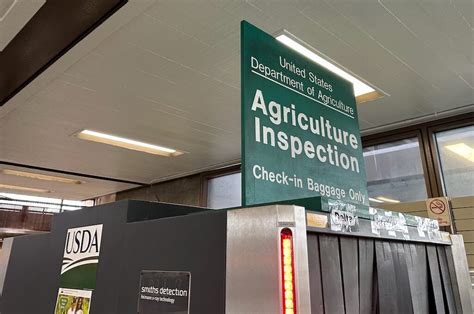
The USDA agricultural checkpoint is a newer addition to the STT departure flow and has become a notable bottleneck. Every traveler must run all personal items—carry-ons, purses, backpacks, and checked baggage—through agricultural scanners. The process aims to prevent the transport of restricted items, such as:
- Pork products, including sandwiches and prepared foods.
- Undried herbs, like bay leaves.
- Shells, sand, and other biological materials.
Travelers unfamiliar with these rules frequently arrive at the scanner unprepared, slowing the line as USDA agents inspect, remove prohibited items, or repack bags. When a flagged item requires additional inspection, the process takes longer, pushing delays across all nearby travelers.
Final Baggage Drop: The Last Handling Step
After clearing immigration, customs, and USDA screening, travelers must complete one more step uncommon in most mainland airports: the final checked baggage drop. This can take an additional 15–30 minutes, depending on crowding. Because every traveler funnels through the same staged process, a bottleneck in any upstream step quickly pushes congestion to the final drop zone.
This extra handling requirement adds unpredictability to departure timing. Even when the earlier steps move smoothly, final drop delays can still appear abruptly if a sudden influx of passengers arrives from ferry schedules or if a large group disembarks from a charter bus simultaneously.
TSA Security Screening: Familiar but Not Always Fast
Once baggage is dropped, travelers proceed to TSA screening—the one step that resembles mainland procedures. The wait can range from a swift 10 minutes to a much longer 30 minutes depending on the availability of TSA lanes, the presence of TSA PreCheck, and general traffic volume.
Although TSA PreCheck is available, it is not always implemented in a dedicated lane. On certain days, travelers receive a slip permitting them to remain in the standard line with limited expedited benefits. These inconsistencies mean travelers who expect a quick transit may still face delays.
Total Time: The Case for the Three-Hour Rule
When combining maximum wait times for each stage, travelers can easily exceed three hours. The chain looks like this:
- Airline check-in and initial baggage handling: 30+ minutes
- Immigration and customs: 30–90 minutes
- USDA agricultural screening: 5–15 minutes
- Final baggage drop: 15–30 minutes
- TSA screening: 15–30 minutes
On the worst days—particularly Saturdays in peak winter travel—the cumulative time surpasses three hours. This is why airlines insist on the three-hour guidance. It minimizes risk for both the traveler and the airline, which would otherwise need to manage missed connections, rebooking costs, and onboard empty seats on time-sensitive flights.
When Arriving Early Becomes Essential
Travelers departing early from St. John (STJ) face additional constraints because the first ferry to Red Hook arrives at approximately 6 AM, the earliest practical arrival time at the airport. Those with flights before 9 AM generally stay in St. Thomas the night before. This ensures a predictable, timely arrival without relying on ferry schedules that could be delayed by weather or mechanical issues.
Storms, especially during hurricane season, introduce another reason to arrive early. Airlines sometimes accelerate departure times to beat incoming weather systems. Travelers who arrive early have boarded flights that left significantly ahead of schedule, while others arriving closer to departure were simply unable to board.
Global Entry and TSA PreCheck Advantages
For travelers with Global Entry, the experience changes dramatically. Global Entry allows expedited entry through immigration and customs and automatically grants TSA PreCheck. At STT, the Global Entry lane bypasses the long standard line and feeds into agents who clear travelers in minutes.
However, Global Entry at STT requires the physical Global Entry card. Without it, the system cannot validate traveler status through facial recognition or fingerprints, and standard processing becomes the default. Travelers attempting to access Global Entry without the card may be redirected to the back of the regular line.
Those who travel often find Global Entry invaluable, especially during crowded holiday weeks or peak Saturday departures. Nonetheless, even Global Entry travelers have reported variability, with some still taking nearly an hour during periods of reduced staffing.
Red Cap Porters: Speed Through the First Hurdles
Travelers seeking a swifter entry through curbside operations sometimes hire Red Cap porters. These porters assist with baggage and help maneuver travelers to the front of certain lines, shaving valuable minutes from the early stages of the process. The customary tip is $3 per bag, $3 per person, with a $20 minimum.
While porters do not accelerate immigration or customs, their assistance can significantly reduce check-in delays during peak times.
Variability and the Need for Flexibility
The greatest challenge at STT is its inconsistency. Conditions change from one day to the next, and travelers frequently report dramatically different experiences even when flying at the same time on consecutive weeks. Operations may shift locations with little notice, and configurations such as the Global Entry lane, TSA PreCheck access, and USDA scanner availability fluctuate.
This variability makes the three-hour rule a practical safety net rather than an arbitrary standard.
Final Thoughts
The STT airport experience requires a blend of preparedness, patience, and strategic timing. While the three-hour recommendation may seem excessive, the complex departure sequence—shaped by customs, agricultural rules, unpredictable demand patterns, and limited terminal infrastructure—makes the guideline highly practical. Travelers who understand each step of the process navigate the airport more confidently and reduce the likelihood of last-minute disruptions.
The departure journey from the U.S. Virgin Islands is as much a part of the travel landscape as its beaches, ferries, and island rhythms. Understanding how STT operates ensures a smooth transition from island life to the mainland and helps align expectations with the realities of one of the Caribbean’s busiest departure points.