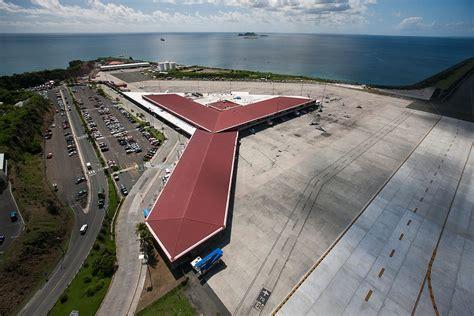
Cyril E. King Airport (IATA: STT, ICAO: TIST) stands as the primary air transportation hub for St. Thomas and the wider U.S. Virgin Islands. Nestled just two miles west of Charlotte Amalie, this public airport plays a pivotal role in connecting travelers to the vibrant Caribbean, facilitating tourism, commerce, and local connectivity. In 2024 alone, it served an impressive 1.63 million passengers, reinforcing its status as one of the busiest airports in the Eastern Caribbean.
Its single 7,000 x 150-foot asphalt runway (10/28) and 11-gate terminal serve a diverse array of domestic and international flights. At a modest elevation of 24 feet, the airport covers 280 acres of well-utilized terrain. Despite its relatively compact footprint, it supports a full range of operations, from commercial and general aviation to military and air taxi services.
A Rich Legacy: From Military Roots to Modern Gateway
The airport’s story begins in 1927, when it was first established as Mosquito Bay Airstrip. This humble landing field transformed into Bourne Field in 1935, when the U.S. government acquired it for military use. During World War II, it played a strategic role in anti-submarine operations in the Caribbean. The U.S. Navy extended and paved its runways, making it suitable for various military aircraft such as the J2F-A Duck, SBD Dauntless, and OS2N Kingfisher.
After its decommissioning in 1946, the military hangars were repurposed into a civilian terminal, known then as the Truman Terminal. The facility transitioned through several phases of governance until it officially became Cyril E. King Airport in 1984, named after the second elected governor of the U.S. Virgin Islands.

Jet Age and the Evolution of Commercial Flights
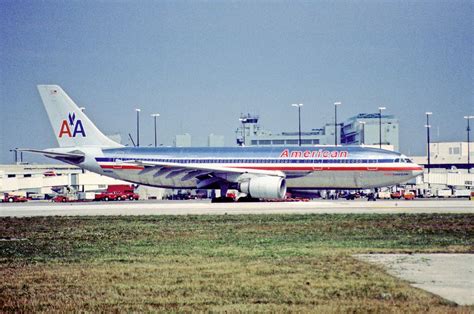
The late 1960s marked the dawn of jet-powered service at STT. Carriers such as Caribair and Pan American World Airways (Pan Am) introduced aircraft like the DC-9 and Boeing 727, providing regular service to and from the mainland United States. By the 1970s and 1980s, the airport saw a proliferation of activity from Eastern Airlines, American Airlines, and Trans Caribbean Airways.
American Airlines became a dominant presence, launching operations in 1970 and gradually expanding its footprint. By the 1990s, wide-body aircraft such as the Airbus A300-600R and Boeing 757 were regularly touching down in St. Thomas, alongside flights operated by Continental, Delta, USAir, and niche charter services.
Notably, the airport also welcomed dignitaries and VIPs, with Air Force One and Two having landed there under the tenures of Clinton, Gore, and Biden.
Terminal Layout and Passenger Amenities
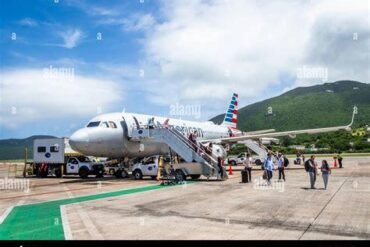
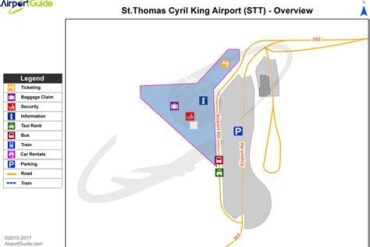
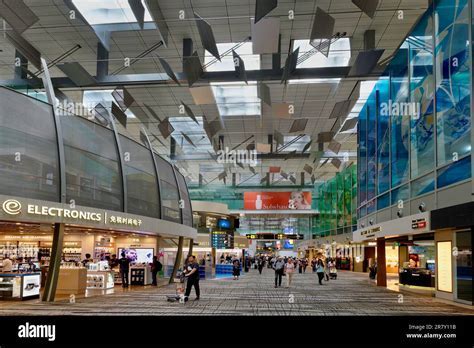
The terminal complex is a two-story facility featuring 11 gates. Its main concourse, dedicated to U.S. mainland and Puerto Rico flights, offers essential traveler comforts such as a restaurant, bar, gift shop, and duty-free retail. The airport also provides an exceptional Caribbean welcome with free samples of Cruzan Rum for arriving passengers aged 18 and above.
The international section of the terminal includes three dedicated lounges for flights to St. Croix and nearby Caribbean islands. While boarding typically occurs via open tarmac, modernization efforts are underway to install jet bridges and a second-floor lounge.
Operational Details and Private Aviation
In 2017, the airport recorded 61,255 aircraft movements, divided among commercial (14%), air taxi (58%), general aviation (27%), and a small percentage of military flights (1%). The airport supports 98 based aircraft and is home to Ace Flight Center, a flight training institution, as well as private aviation services through Execujet and St. Thomas Jet Center.
Due to surrounding terrain, Runway 28 includes a displaced threshold affecting roughly one-third of its length. This presents unique operational considerations, particularly during landings in easterly wind conditions.
Expansion and Modernization Efforts
Recognizing the growing demands of tourism and logistics, the Virgin Islands Port Authority (VIPA) launched a bold modernization strategy. In June 2018, VIPA announced a $230 million redevelopment plan featuring a pedestrian bridge, expanded terminal, and integrated ferry services.
Phase 1 broke ground on May 26, 2021, and is part of a five-phase infrastructure project that also includes extensive taxiway rehabilitation, funded in part by USDOT grants totaling $14.2 million (issued in 2019 and 2023).
As of FY2020, VIPA allocated $175 million to upgrades, which will redefine both passenger experience and airfield efficiency. The vision is to transform the airport into a Caribbean aviation model, capable of handling increasing aircraft sizes, higher passenger volumes, and faster international transit.

Route Network and Airline Operators
The airport hosts a wide range of passenger carriers connecting St. Thomas with the mainland U.S. and regional Caribbean destinations:
- American Airlines: Miami, Charlotte, JFK, Philadelphia, DFW, seasonal Chicago
- Delta Air Lines: Atlanta, seasonal JFK and Boston
- JetBlue: San Juan, seasonal Boston
- United Airlines: IAD, seasonal EWR, IAH, ORD
- Spirit Airlines: Fort Lauderdale, Orlando
- Frontier, Silver, Cape Air, VI Airlink, Tradewind Aviation: Serving regional Caribbean destinations
Cargo operations are also robust, with FedEx, DHL, Air Sunshine, and Air Cargo Carriers handling freight logistics for the territory.
Seaborne Connectivity: Water Taxi Integration
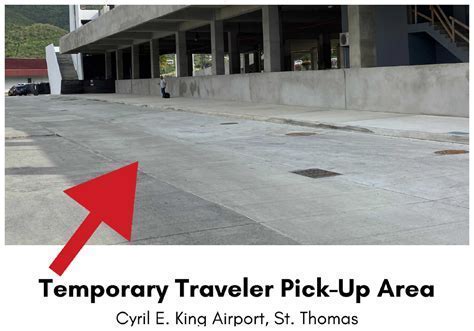
In a region defined by its islands, seamless land-to-sea transfer is vital. Recognizing this, Dolphin Water Taxi opened a dedicated airport desk in February 2020, allowing passengers to transition smoothly from plane to boat. In May 2023, Last Mile Water Taxi introduced baggage-claim-side pickup, streamlining direct transfers to St. John and the British Virgin Islands (BVI).
This initiative reduces travel friction and enhances the airport’s role as a regional multi-modal hub.
Market Demand and Route Popularity
Between October 2023 and September 2024, the airport maintained steady traffic, with notable route popularity:
- Miami: 138,350 passengers
- Atlanta: 110,100 passengers
- San Juan: 98,320 passengers
- New York City: 75,930 passengers
- Charlotte: 73,790 passengers
American Airlines leads market share with 33.6%, followed by Delta (19.2%), Spirit (16.6%), and United (10.8%). These figures underscore the strategic importance of STT as a Caribbean access point for East Coast and Midwest U.S. travelers.
Accidents, Resilience, and Safety Improvements
Over its long history, the airport has seen several notable incidents, each of which led to improved safety protocols:
- 1970: A Trans Caribbean 727 made a hard landing, resulting in 2 fatalities.
- 1976: An American Airlines 727 overran the runway, killing 37 people; this prompted a temporary switch to Convair 440 operations until infrastructure was upgraded.
- 2003 & 2006: Tol-Air DC-3 incidents, including a ditching event where all occupants survived.
- 2015: A ground service vehicle collided with an AA 757, damaging an engine.
Natural disasters also tested the airport’s durability. Hurricane Hugo (1989) and Hurricane Irma (2017) inflicted severe damage on infrastructure and aircraft, but resilient recovery ensured uninterrupted long-term operations.
Conclusion: A Critical Nexus for the Caribbean
As one of the Caribbean’s busiest airfields, Cyril E. King Airport is far more than a transit hub—it’s an economic engine, a gateway to paradise, and a critical infrastructural asset for both U.S. Virgin Islands residents and international visitors. With comprehensive modernization plans underway, the airport is set to solidify its role as a premier aviation facility, offering state-of-the-art amenities while preserving its historic and strategic legacy.
The future of travel in the Virgin Islands begins—and often ends—at Cyril E. King Airport, where each flight carries the promise of discovery, commerce, and connection across land, sea, and sky.