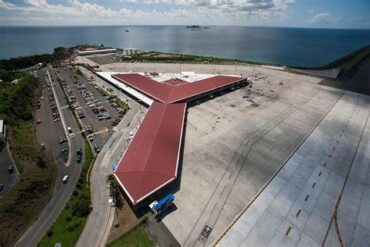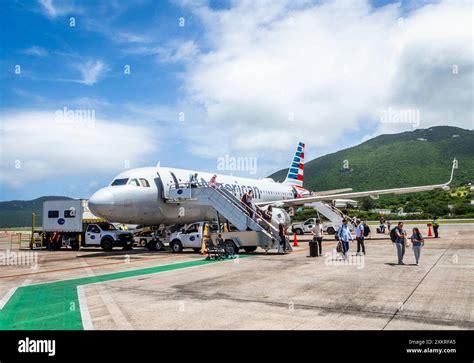
Nestled just two miles west of Charlotte Amalie on the island of St. Thomas, Cyril E. King Airport (STT) stands as the principal aviation hub for the U.S. Virgin Islands, balancing the demands of a vibrant tourism economy with the legacy of its storied past. With a strategic Atlantic location and robust infrastructure, the airport is a crucial node in Caribbean-American air travel, having welcomed over 1.6 million passengers in 2024 alone.
Historical Significance and Evolution
Originally established in 1927 as the Mosquito Bay airstrip, the site has undergone significant transformation. Acquired by the U.S. government in 1935, it was renamed Bourne Field in honor of Arthur Bourne, an early American aviator. During World War II, this airfield became a key training and operational base for the U.S. Navy and Marine Corps. Aircraft such as the J2F Duck, SU-2 Corsair, OS2N Kingfisher, and SBD Dauntless operated from here under VMS-3 for anti-submarine patrols across the Caribbean.
Following the decommissioning in 1946, the base transitioned to civilian use under the Department of the Interior. Its hangar, once military-grade, was repurposed into the Harry S. Truman terminal, serving civil aviation. In 1984, the airport received its current name to commemorate Governor Cyril E. King, the first elected governor of the U.S. Virgin Islands, reflecting its enduring public significance.
The airport’s legal ownership was solidified in the early 1950s following complex lease disputes, which led to the transfer of control to the U.S. Virgin Islands Corporation. From this foundation, the airport evolved into a full-fledged international gateway. It hosted major American carriers through the Jet Age, including Pan Am, Eastern Airlines, Air Florida, and Trans Caribbean Airways, laying the groundwork for long-term connectivity with mainland U.S. cities.
Terminal Infrastructure and Modern Passenger Experience
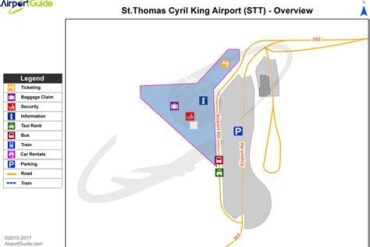
The terminal at Cyril E. King Airport is a two-story complex encompassing 11 gates, efficiently split between U.S./Puerto Rico-bound and international/St. Croix operations. Its design caters not only to function but also to the island’s cultural ambiance, offering passengers retail experiences, a duty-free shop, a lively bar, and island cuisine in its restaurant. Passengers arriving from domestic U.S. destinations are welcomed with a uniquely Virgin Island touch: complimentary samples of Cruzan Rum.
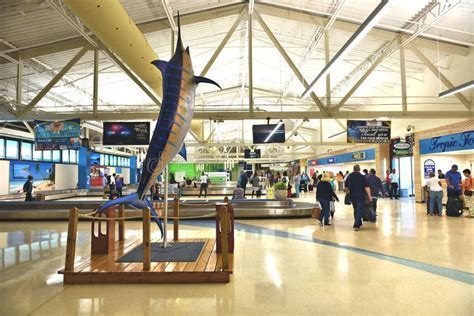
Terminal lounges for international and regional inter-island flights maintain a quieter atmosphere, befitting their lower traffic volume. These areas, while compact, provide efficient service for passengers heading to and from St. Croix or nearby island nations. Modernization efforts are ongoing, ensuring that even these smaller spaces match global travel standards.
Runway and Airside Facilities
The airport covers approximately 280 acres, centered around a single asphalt runway (10/28) measuring 7,000 feet long and 150 feet wide. This facility supports 61,255 aircraft operations annually (as of 2017), broken down into 58% air taxi, 27% general aviation, 14% scheduled commercial, and 1% military activity. A third of Runway 28 includes a displaced threshold due to terrain, a critical detail for pilots navigating St. Thomas’ mountainous surroundings.
The airport’s based aircraft profile is diverse: 59% multi-engine, 35% single-engine, 3% helicopters, 2% jets, and 1% ultralights, reflecting a mixture of tourism, executive travel, and local utility aviation.
Ground services are robust, with three fixed-base operators (FBOs) ensuring seamless handling: Ace Flight Center, Execujet, and St. Thomas Jet Center. These facilities cater to private aircraft, executive jets, and medevac operations with a level of service that enhances the airport’s prestige.
Airlines and Destinations: A Diverse Connectivity Web
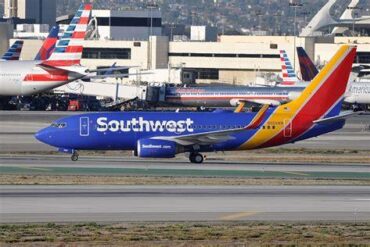
Cyril E. King Airport supports a blend of legacy, low-cost, and regional carriers, ensuring that passengers from across the United States and nearby Caribbean islands can access St. Thomas with convenience. Major domestic routes in 2024 included:
- Miami (138,350 passengers)
- Atlanta (110,100)
- San Juan (98,320)
- New York-JFK (75,930)
- Charlotte (73,790)
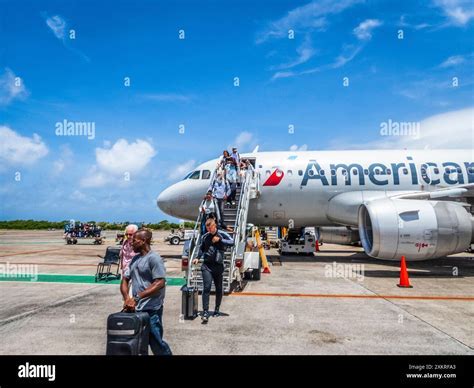
The largest carriers by market share over the October 2023–September 2024 period were:
- American Airlines: 33.6%
- Delta Airlines: 19.2%
- Spirit Airlines: 16.6%
- United Airlines: 10.8%
- JetBlue Airways: 7.8%
Seasonal services bolster tourism during peak months, with flights to cities such as Boston, Chicago-O’Hare, Houston, and Minneapolis-St. Paul.
On the regional front, Cape Air, Silver Airways, Tradewind Aviation, VI Airlink, and Fly the Whale ensure high-frequency service to nearby islands. The San Juan connection, in particular, serves as a crucial hub for onward travel across the Caribbean.
Modernization and Infrastructure Investments
Responding to increasing traffic and modern aviation demands, the Virgin Islands Port Authority (VIPA) launched an ambitious $230 million modernization plan in June 2018. Aimed at transforming the passenger experience, this initiative includes:
- Construction of a second-floor departure lounge
- Installation of jet bridges
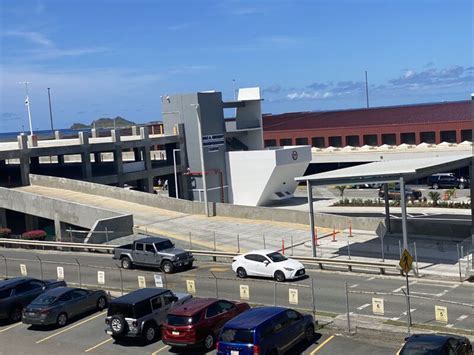
- Development of a pedestrian bridge connecting parking and terminal areas
- A dedicated ferry terminal to integrate marine-air passenger flow
Of this, $175 million was approved for fiscal year 2020, supplemented by multiple USDOT grants between 2019 and 2021 for critical infrastructure updates such as apron redesigns and runway lighting. In 2021, Phase 1 of the project broke ground, signaling the airport’s forward-looking trajectory.
Most recently, in 2023, the FAA awarded $12.2 million for the multi-phase rehabilitation of Taxiway A, further enhancing operational safety and efficiency.

Cargo Operations and Intermodal Access
Beyond passenger service, STT is also a strategic cargo hub. Operators like Air Sunshine, DHL, FedEx, and Dominica Air Cargo ensure timely logistics for business, medical supplies, and island commerce.
In the realm of ferry integration, innovation continues to shine. In February 2020, Dolphin Water Taxi opened a terminal at the airport, streamlining transitions between air and sea. By May 2023, Last Mile Water Taxi introduced direct pickup services at baggage claim, facilitating seamless transfers to St. John and the British Virgin Islands.
Safety and Incident Record
Cyril E. King Airport’s history includes a series of notable incidents, each contributing to ongoing improvements in operational standards:
- Trans Caribbean Flight 505 (Dec 28, 1970): Hard landing resulted in 2 fatalities.
- American Airlines Flight 625 (Apr 27, 1976): Runway overrun led to 37 fatalities, sparking reevaluations of landing procedures.
- Island Traders C-53 (Mar 25, 1977): Sustained damage during a heavy landing.
- Hurricane Hugo (Sep 17, 1989): Destroyed multiple DC-3s on the apron.
- Tol-Air DC-3 incidents: One gear collapse (Dec 30, 2003), one ocean ditching (Jul 19, 2006), both without casualties.
- Convair C-131: Suffered a runway excursion (date unknown).
- Piper Aztec (Oct 13, 2012): Crashed off St. Croix, with one survivor.
- American 757 ground collision (Jun 17, 2015): No injuries reported.
- Hurricane Irma (Sep 6, 2017): Caused structural damage to the terminal but no injuries.
Each of these events has reinforced safety protocols, infrastructure resilience, and the airport’s commitment to passenger welfare.
Conclusion: A Strategic and Cultural Landmark
Cyril E. King Airport is more than a transport facility—it is an economic engine, cultural ambassador, and historical monument rolled into one. With increasing traffic, strategic upgrades, and seamless integration with land and sea transport, STT is poised to play an even greater role in Caribbean aviation. As the U.S. Virgin Islands continue to expand their global appeal, this airport remains the gateway—both literal and symbolic—to everything the islands offer.