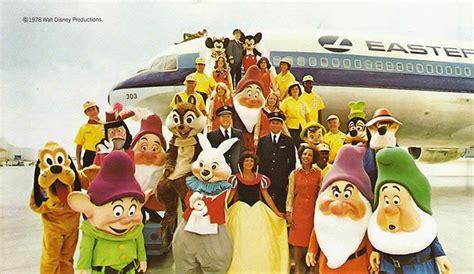
For more than two decades, one airline carried not just passengers, but the promise of pixie dust. Before online fare alerts and algorithm-driven bookings reshaped the way families planned vacations, Eastern Airlines stood as the official airline of Walt Disney World, woven directly into the fabric of the resort’s identity. Its logo appeared in brochures, travel catalogs, and glossy magazine spreads. Its planes funneled millions of eager guests into Orlando at the precise moment when a swamp in Central Florida was transforming into the most ambitious entertainment project on Earth.
The partnership felt inevitable. Walt Disney World Resort opened on October 1, 1971, and Eastern Airlines had begun serving Orlando that very same year. Timing in business can be everything, and this was symphonic timing. As Disney built a kingdom, Eastern built the air bridge that made it accessible.
For years, choosing Eastern wasn’t simply a travel decision. It was part of the Disney experience itself.
Official Airline From Day One: A Strategic Monopoly in the Making
In the early 1970s, booking air travel required a conversation with a travel agent, a phone call, or a printed timetable. There were no comparison engines, no digital marketplaces. Visibility was power. Disney’s decision to designate Eastern Airlines as its official carrier effectively placed a crown on the airline’s head in the Orlando market.
The relationship was more than symbolic. Eastern’s branding appeared in Disney promotional materials distributed through travel agencies and publications such as National Geographic. Families planning a pilgrimage to the Magic Kingdom encountered Eastern at every turn. The airline became synonymous with the journey to Disney.
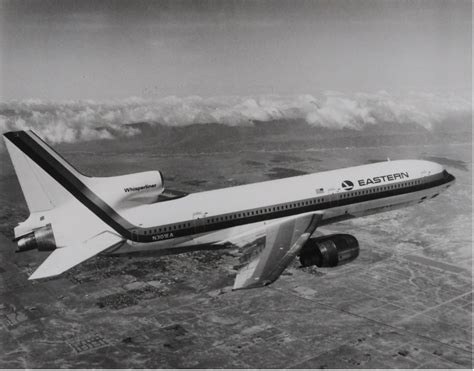
The result was something close to a soft monopoly. While other airlines did serve Florida, Eastern’s official status created psychological dominance. It was the “right” way to arrive. In a pre-internet world, perception often translated directly into market share.
Disney had partnered with airlines before. Trans World Airlines (TWA) supported the reimagining of Tomorrowland’s “Flight to the Moon,” and United Airlines sponsored the original “Enchanted Tiki Room.” But Eastern was unique. It held the formal title. It was not just a sponsor. It was the airline.
This distinction mattered. It signaled exclusivity and embedded aviation into Disney’s storytelling ecosystem in a way that blurred the boundary between transportation and imagination.
If You Had Wings: When an Airline Became a Ride
The partnership deepened in a way that still feels delightfully surreal. Disney and Eastern negotiated the sponsorship of a brand-new attraction in the Magic Kingdom: “If You Had Wings.”
Rather than retrofitting an existing ride, Disney built one from the ground up for an airline sponsor. The reported cost was $10 million in the 1970s, equivalent to roughly $70 million today. That investment signaled confidence—not only in Disney’s drawing power but in Eastern’s long-term stability.
“If You Had Wings” was a slow-moving, family-friendly dark ride. It transported guests through stylized scenes of destinations served by Eastern Airlines. Caribbean beaches shimmered. Urban skylines gleamed. A whimsical bird transformed into an airplane, a bit of visual alchemy that suggested flight itself was a kind of magic trick.
The attraction featured an original theme song repeating the invitation: if you had wings, you could go anywhere.

It was subtle advertising wrapped in spectacle. There were no aggressive sales pitches. Instead, there was aspiration. The ride didn’t sell tickets. It sold possibility.
When Eastern’s sponsorship ended in 1987, Disney renamed the attraction “If You Could Fly.” The bones remained the same. The branding vanished. That small change marked the quiet beginning of the end.
By January 1989, the ride closed—briefly, as it turned out. Delta Air Lines stepped in, rebranding the experience as “Delta Dreamflight.” The scenery evolved. The core ride system endured. After Delta’s sponsorship concluded in 1996, it became “Take Flight” before finally closing in 1998. The space would later house “Buzz Lightyear’s Space Ranger Spin,” an attraction that still uses elements of the original infrastructure, though with rotating vehicles and interactive laser gameplay.
The physical space survived. The airline that inspired it did not.
Eastern Airlines: From Aviation Pioneer to Financial Turbulence
To understand what happened to Disney World’s official airline, it’s necessary to zoom out. Eastern Airlines was not a minor regional carrier. It was once one of the giants of American aviation.
Founded in 1920 through the merger of early aviation ventures such as Florida Airways and Pitcairn Aviation, Eastern grew rapidly during the golden age of commercial flight. In 1938, it was purchased by World War I flying ace Eddie Rickenbacker, a figure whose life reads like pulp fiction—fighter pilot, racing driver, aviation executive.
Under Rickenbacker, Eastern became profitable and famously avoided federal subsidies. Yet his reluctance to embrace expensive jet aircraft cost him leadership in 1959. Aviation was entering the Jet Age. Sentimentality for piston engines would not keep pace with Boeing and Douglas.
Eastern adapted. It introduced the Douglas DC-8-21 in 1960, an aircraft capable of carrying 177 passengers over 4,000 nautical miles. With a wingspan of 142.4 feet and powered by four Pratt & Whitney JT4A engines, the DC-8 allowed Eastern to dominate trunk routes such as New York to Miami.
The airline later operated Boeing 720s, 727-100s, and eventually became the first U.S. airline to fly the Airbus A300. It also served as the launch customer for the Boeing 757. These were not timid decisions. Eastern often stood at the frontier of fleet modernization.
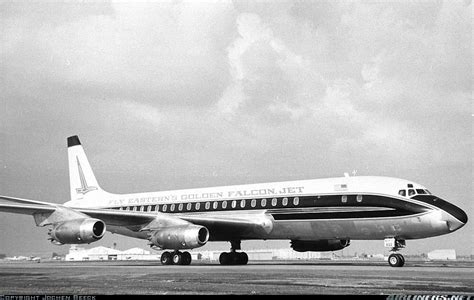
By the 1970s, the airline was powerful, innovative, and deeply entrenched in the East Coast market. Its partnership with Disney World was both profitable and symbolically potent.
Then came deregulation.
Deregulation, Labor Wars, and the Spiral Toward Collapse
The Airline Deregulation Act of 1978 reshaped American aviation. Routes and fares were no longer tightly controlled by the federal government. Competition intensified. Agile newcomers entered the market with leaner cost structures.
Eastern, built for a regulated environment, struggled to pivot. Low-cost carriers began targeting Orlando, recognizing the gravitational pull of Disney World. They offered stripped-down service at significantly lower prices. For families, the math became compelling.
Eastern’s once-comfortable dominance eroded.
Financial strain mounted. In 1986, facing heavy losses and a looming $9.5 million FAA fine for safety violations, Eastern was sold to Texas Air Corporation, led by Frank Lorenzo. Lorenzo had a reputation for aggressive cost-cutting. He sought wage concessions from mechanics and ramp workers. Labor relations deteriorated rapidly.
In March 1989, Lorenzo locked out employees represented by the International Association of Machinists and Aerospace Workers. In response, pilots and flight attendants organized sympathy strikes. Operations unraveled.
That same month, Eastern filed for bankruptcy protection. While the airline continued flying in a diminished capacity, the brand’s aura cracked. A company that had once symbolized stability now embodied chaos.
Frank Lorenzo departed in April 1990. The financial wounds remained. At midnight on January 19, 1991, Eastern Airlines ceased operations. Aircraft were grounded. Employees were dismissed. The official airline of Walt Disney World was gone.
Disney had already moved on. The formal partnership had faded before the final shutdown. But the symbolic rupture was unmistakable. An airline that had helped build the logistical backbone of Disney’s Florida empire disappeared in a single night.
The Eastern Airlines Revival: A Name Returns, a Legacy Transforms
Corporate names have curious afterlives. In 2018, Dynamic Airlines, a Phoenix-based carrier founded in 2010, rebranded as Eastern Airlines following bankruptcy restructuring and licensing agreements. The revival was legal and commercial, but not spiritual.
The modern Eastern operates a small fleet including Boeing 767-300ERs and 777-200ERs. It has conducted charter operations and, notably, deportation flights under contract with U.S. Immigration and Customs Enforcement. Since late 2023, it has not operated scheduled commercial service.
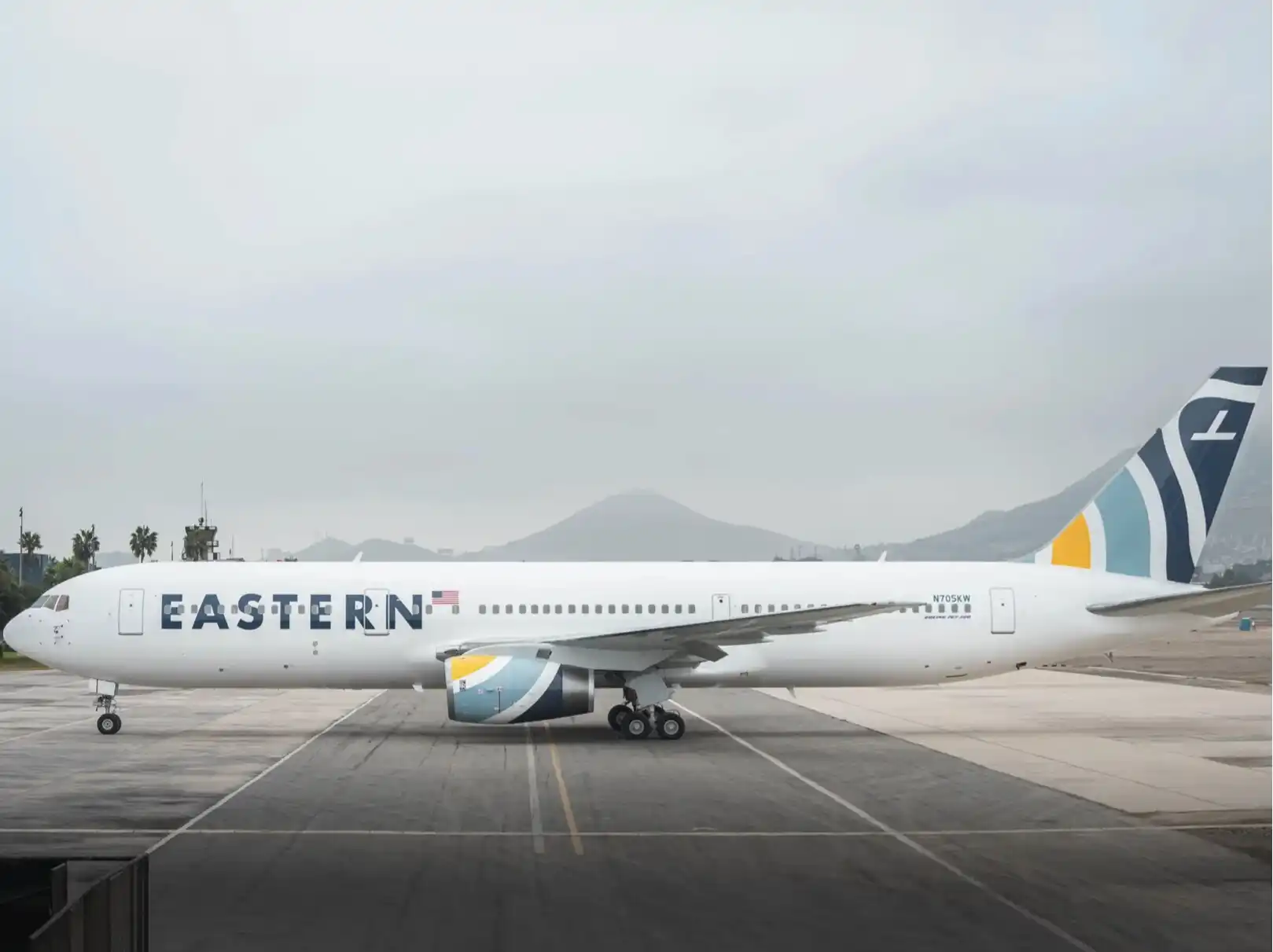
The name survives. The identity does not.
There is no ride in Orlando celebrating this iteration. No whimsical bird transforming into a widebody jet. The Disney connection exists only in archival photographs and the memories of guests who once hummed a theme song while gliding past painted beaches.
Reviving a brand does not resurrect its ecosystem. The Eastern of the 1970s thrived in a regulated market, intertwined with a cultural phenomenon at precisely the right historical moment. That confluence cannot be replicated by paperwork alone.
Could Disney Launch Its Own Airline?
The question lingers with a kind of entrepreneurial inevitability. Disney already controls hotels, cruise ships, retail districts, and vacation packages. Why not aircraft?
The idea is seductive. Disney possesses unparalleled data about its guests: where they live, how often they travel, how much they spend. It could theoretically design routes optimized for demand into Orlando, Anaheim, Paris, or Tokyo. It could bundle flights with park tickets and accommodations, creating fully integrated, “all-inclusive” journeys.
The branding potential is enormous. Aircraft interiors themed to beloved franchises. Character appearances at gates. Boarding music drawn from cinematic scores. A flight that feels less like transportation and more like prologue.
Yet aviation is brutally unforgiving. A single narrowbody jet such as a Boeing 737 MAX costs over $100 million at list price. Fuel volatility, labor contracts, maintenance complexity, and razor-thin margins define the industry. Airlines are not theme parks. They are capital-intensive logistical machines exposed to geopolitical shocks and economic cycles.
Disney’s genius lies in controlled environments. Airlines operate in open skies shaped by weather systems, labor negotiations, and fluctuating demand curves. The contrast is stark.
Still, history suggests that Disney is unafraid of ambitious integration. The partnership with Eastern proved that transportation can become narrative. The lesson may not be that Disney should own an airline, but that it understands the psychological journey begins long before the castle comes into view.
The End of an Era, and the Echo of a Song
Eastern Airlines’ collapse marked the end of a distinctive chapter in both aviation and theme park history. For twenty years, the airline was more than a carrier. It was a gateway woven into the mythology of a destination.
The story is not simply about bankruptcy or deregulation. It is about timing, strategic alignment, and the fragility of dominance. An airline that once enjoyed near-monopoly access to Orlando found itself outmaneuvered in a newly competitive landscape. Labor conflict accelerated decline. Financial instability sealed it.
Yet in the infrastructure of Magic Kingdom, traces remain. Beneath the interactive lasers of Buzz Lightyear’s Space Ranger Spin lies the ghost architecture of “If You Had Wings.” The melody may be gone, but the idea—that flight is aspiration, that travel is transformation—persists.
In the strange, overlapping histories of aviation and imagination, Eastern Airlines occupies a peculiar niche. It helped carry millions toward a kingdom built on storytelling. Then it became a story itself—one about innovation, overreach, conflict, and reinvention.
Airlines rise and fall with economic currents. Brands evolve. Rides are rethemed. What endures is the human impulse to go somewhere wondrous. For a generation of Disney guests, that journey began with a blue-and-white jet bearing the name Eastern.