The world of aviation has long been a battleground of ambition, scale, and engineering prowess. Nowhere is this more evident than in the evolution of the largest airplanes ever built. These mechanical leviathans are not only marvels of design but also critical players in military operations, global logistics, and intercontinental travel. Measured by Maximum Takeoff Weight (MTOW)—a comprehensive metric that includes an aircraft’s structure, fuel, payload, and passengers—these aircraft stand as towering testaments to human innovation in aerospace.
From Cold War bombers to airborne cargo behemoths, the top 10 largest airplanes reflect a diversity of function, origin, and design philosophy. Below, we explore these giants in detail, offering insights into their specifications, operational history, and cultural legacy.
What Makes an Airplane “Large”?
While size can be measured in wingspan, length, or fuselage volume, Maximum Takeoff Weight (MTOW) remains the most holistic benchmark. MTOW accounts for the fully loaded mass an aircraft can handle at departure—fuel, cargo, crew, passengers, and the aircraft itself. By focusing on MTOW, we acknowledge not only the physical bulk but also the true lifting capacity that defines the scale and function of an aircraft.
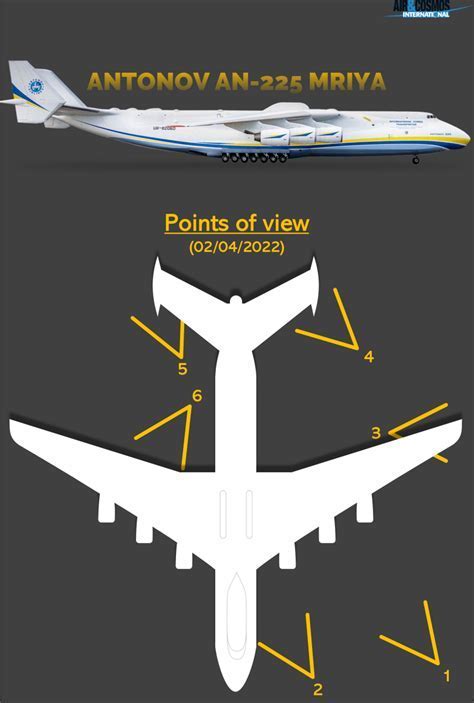
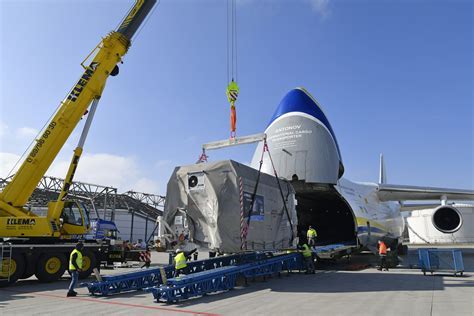
Antonov An-225 Mriya: The Soviet Colossus
The Antonov An-225 Mriya, meaning “dream” in Ukrainian, remains the undisputed king of the skies in terms of MTOW. With a staggering 640 tonnes (1.41 million pounds) MTOW, it was specifically designed in the 1980s to transport the Buran space shuttle.
Its 88.4-meter wingspan and 84-meter length allowed it to carry payloads exceeding any other aircraft, including oversized cargo such as generators, locomotives, and wind turbine blades. Tragically, the sole flying An-225 was destroyed during the 2022 Russian invasion of Ukraine, though reconstruction plans—estimated at $500 million—are underway.
Scaled Composites Stratolaunch: The Satellite Sling
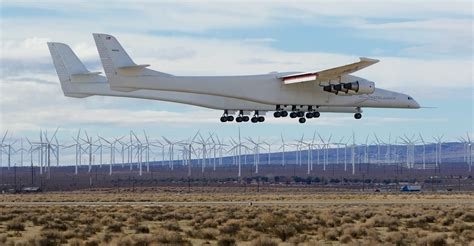
Boasting the largest wingspan in history at 117 meters (385 feet), the Stratolaunch was conceived as an airborne launchpad for orbital rockets. Its twin-fuselage design and six Boeing 747 engines allow it to carry a payload of 550,000 pounds, with an MTOW of 1.3 million pounds.
First flown in 2019, Stratolaunch experienced operational pauses before being revitalized under Cerberus Capital Management. As of April 2023, it has completed ten successful test flights and is poised to play a pivotal role in hypersonic testing missions.
Airbus A380-800: The Jumbo Among Jumbos
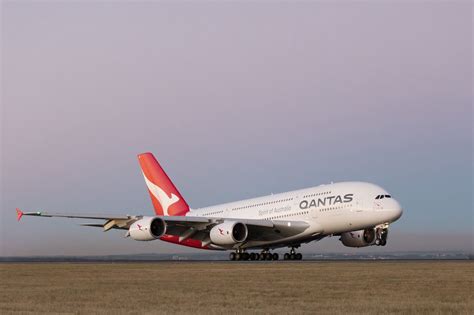
The Airbus A380-800 represents the pinnacle of commercial airliner engineering. Capable of seating up to 853 passengers in an all-economy configuration across two full-length decks, it weighs in with a MTOW of 1.2 million pounds.
Despite its revolutionary in-flight comfort and fuel efficiency for its size, the aircraft struggled with gate compatibility and rising fuel costs. Airbus ceased production in 2021 after only 251 units, though it continues to fly for major carriers like Emirates.
Lockheed C-5 Galaxy: The U.S. Military Hauler
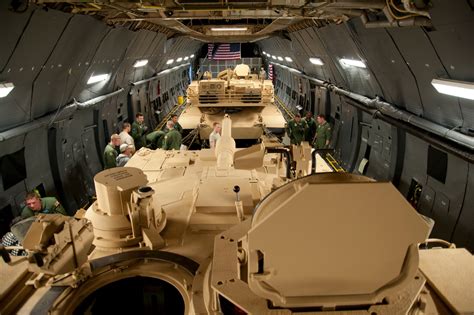
Entering service in the late 1960s, the Lockheed C-5 Galaxy remains a workhorse for U.S. Air Mobility Command. Its high-wing configuration, kneeling landing gear, and dual loading ramps enable the rapid deployment of cargo like Abrams tanks and Chinook helicopters.
With an MTOW of 840,000 pounds, the C-5 can carry nearly 122,000 pounds of cargo across intercontinental ranges. Enhanced versions like the C-5M Super Galaxy have modernized avionics and improved fuel efficiency for extended missions.
Antonov An-124 Ruslan: The Freight Titan
The Antonov An-124 Ruslan is essentially the mass-produced younger sibling of the An-225. Still in active commercial and military service, the An-124 can lift 150 tonnes and features both nose and tail cargo ramps, facilitating efficient roll-on/roll-off loading.
Its intercontinental range and rugged construction have made it a go-to for transporting everything from humanitarian aid to oil drilling equipment. With an MTOW of 892,000 pounds, the An-124 remains the world’s second-heaviest production aircraft.
Boeing 747: The Queen of the Skies
Introduced in 1970, the Boeing 747 revolutionized global air travel with its long range and iconic humpbacked upper deck. The most popular variant, the 747-400, has an MTOW of 875,000 pounds and typically seats 366 passengers in three classes.
Though the last 747 rolled off the production line in January 2023, its legacy lives on through freighter versions and modified variants like the VC-25 (Air Force One). A total of 1,574 units were built, many of which still operate today.

Boeing Dreamlifter: The Cargo Whale
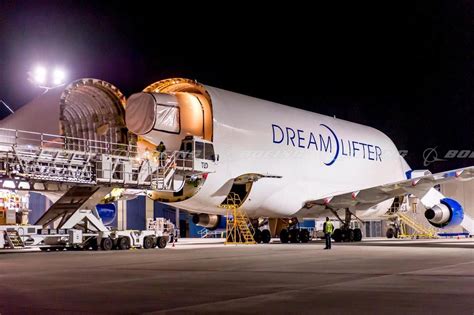
An engineering outlier, the Boeing Dreamlifter is a modified 747-400 with an extended fuselage and a swing-tail that opens the entire rear for loading massive items. Designed specifically to transport components of the Boeing 787 Dreamliner, it embodies function over form.
With an MTOW of 803,000 pounds, the Dreamlifter is one of the most voluminous aircraft flying today, albeit limited to internal Boeing logistics routes.
Antonov An-22 Antei: The Turboprop Beast
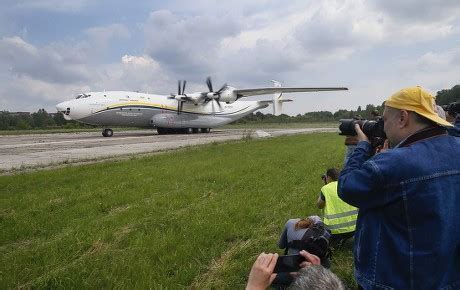
First flown in 1965, the Antonov An-22 Antei remains the largest turboprop aircraft ever built. Its four contra-rotating propellers generate immense thrust while allowing the aircraft to land on unpaved runways.
With an MTOW of 551,000 pounds, the An-22 was a cornerstone of Soviet airlift capability and still participates in humanitarian relief operations. Its rear cargo ramp and robust structure allow it to deliver supplies in remote regions.
North American XB-70 Valkyrie: The Supersonic Marvel
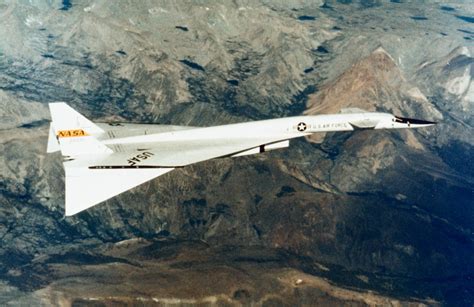
An artifact of Cold War ambitions, the XB-70 Valkyrie was a Mach 3-capable strategic bomber prototype. Its sharply tapered nose, folding wingtips, and six engines allowed it to fly at 70,000 feet at triple the speed of sound.
Only two units were built before the program was canceled due to missile advancements and rising costs. One was tragically lost in a 1966 mid-air collision; the surviving model is displayed at the National Museum of the U.S. Air Force in Ohio.
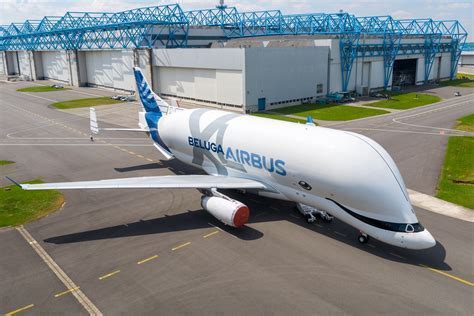
Airbus Beluga XL: The Logistic Whale
Derived from the Airbus A330-200F, the Beluga XL features a bulbous fuselage that grants 30% more capacity than its predecessor. This enables the seamless transport of aircraft wings, fuselage sections, and other oversized components across Airbus facilities in Europe.
Though its MTOW is lower than some other aircraft on this list, the Beluga XL’s unique role in internal logistics makes it indispensable in modern aerospace production.
Conclusion: The Limitless Ambition of Flight
From the Antonov An-225’s unmatched MTOW to the niche engineering of the Beluga XL, each of these giants serves a specific purpose shaped by geopolitical, economic, or logistical forces. These machines are more than technical achievements—they are ambassadors of human ambition, stretching the boundaries of what is possible in air travel and transport.
While the skies may seem conquered, each new requirement, material, and mission continues to inspire innovations that defy limits. In the world of aviation, bigger often means bolder, and these aircraft are proof that the sky is, indeed, just the beginning.