
The transatlantic corridor between North America and Italy is undergoing a remarkable transformation, defined by record capacity, new market entrants, and an unprecedented 70 scheduled routes for the peak months of 2026. The surge is driven by expanding leisure demand, booming inbound tourism, and a growing network of visiting-friends-and-relatives travel that continues to deepen across both sides of the Atlantic. As carriers diversify their strategies and introduce once-unthinkable city pairs, the US and Canada are positioned to become even stronger gateways for Italian travel in the years ahead.
The seasonal engine powering this growth is unmistakable. Italy now stands as the largest Southern European market for North American travelers, built on a foundation of rising cultural tourism, long-stay leisure trends, and a strong desire among travelers to explore beyond traditional European capitals. Cirium Diio data reveals that for Q3 2026, airlines will offer nearly 3.5 million round-trip seats, marking a 7% increase over the previous record and an astonishing 41% surge compared to 2019. As many as 72 flights per day will cross the Atlantic in each direction.
The depth of this demand has encouraged airlines to pursue unconventional ideas and niche routes that would have seemed speculative just a few years ago. Services such as Toronto–Ponta Delgada, operated by Air Canada and WestJet alongside Azores Airlines, reflect the broader willingness of carriers to push into thinner markets. While questions of long-term sustainability persist, the willingness to experiment has created new passenger opportunities across multiple continents.
Italy’s Expanding Network and the Rise of New Gateways
Italy’s prominence within the transatlantic ecosystem is reinforced by its expanding network. Major cities like Rome, Milan, Venice, and Naples remain dominant anchors, while secondary airports—including Bari, Catania, and Olbia—continue to benefit from escalating demand. These developments are supported not only by tourism but by strategic airline alliances and new code-sharing agreements.
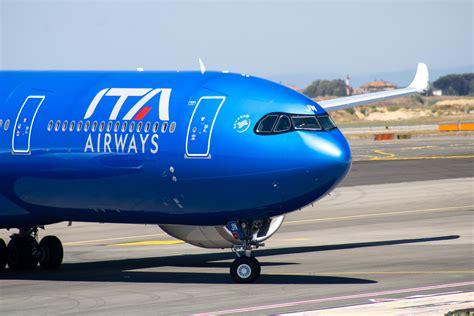
A striking example is ITA Airways’ new Rome–Houston service launched May 1, 2026. The route represents Houston’s first-ever nonstop connection to Italy and was made possible through ITA’s growing partnership with United Airlines and its imminent entry into Star Alliance. Before the route even launched, booking data for the 12 months ending September 2025 showed 55,000 round-trip passengers, underscoring substantial latent demand.
A Record 13 Airlines Shaping the US–Canada–Italy Market
For the summer peak of 2026, 13 airlines will operate between North America and Italy, setting an all-time high. These include legacy giants, leisure-focused players, and new entrants eager to capture niche pockets of demand. Among them are Air Canada, Air Transat, Alaska Airlines, American Airlines, Delta Air Lines, Emirates (operating a fifth-freedom flight via New York JFK), ITA Airways, JetBlue, La Compagnie, Neos, Norse Atlantic, United Airlines, and WestJet.
Delta stands as the market leader with 22% of all seats scheduled for Q3 2026, a testament to its deep Italian strategy and its strong presence in coastal leisure hubs such as Atlanta, Boston, New York, and Seattle.
The Growing Web of 70 Routes Across 50 Airport Pairs
The upcoming season features an intricate web of 70 nonstop routes, up from 64 in summer 2025, connecting 20 airports in the US and Canada to nine airports across Italy. Newly added North American gateways such as Houston and Seattle further expand transatlantic access, while Italy welcomes fresh connectivity through emerging destinations like Olbia.
Six new airport pairs debut in 2026, including Miami–Milan on American Airlines, Seattle–Rome from both Alaska Airlines and Delta, Newark–Bari on United, and Montreal–Catania from Air Canada. Each addition aligns with intensifying demand patterns and the willingness of carriers to chase underserved leisure markets.
Airline-by-Airline Breakdown of the Expanding Market
The diversity within the 70-route structure underscores how both full-service and low-cost carriers are strategically staking claims in key markets. Ultra-premium operator La Compagnie maintains a boutique presence with its Milan–Newark service, while low-cost long-haul carriers like Norse Atlantic pursue transatlantic efficiencies through targeted operations in Rome.
American Airlines leads the market with 13 routes, connecting Italy to major US hubs including Charlotte, Chicago, Dallas/Fort Worth, JFK, Miami, and Philadelphia. Delta follows closely with 15 routes, extending its reach across both the East and West Coasts. United remains a formidable player with 12 Italian routes, anchored by its Newark hub and strong presence in Chicago, San Francisco, and Washington Dulles.
Outlook: Sustained Growth and Intensifying Competition
The trajectory of the North America–Italy market suggests continued expansion, though competition will likely heighten as more carriers explore niche gateways and long-haul leisure demand stabilizes. The mix of legacy airlines and new entrants points toward a dynamic future where frequency, flexibility, and route experimentation will shape the next chapter of transatlantic travel.
As passenger appetite continues to rise and airlines refine their strategies, Italy’s position as the premier Southern European market for North American travelers is expected to strengthen even further, setting the stage for another cycle of innovation and growth across the Atlantic.