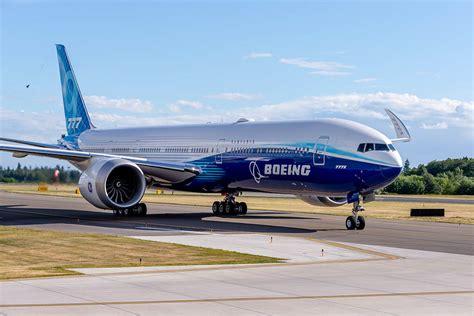
Under the clouded skies of the 2025 Paris Air Show, and in the wake of the somber aftermath of the recent Air India tragedy, Boeing kept a low profile. Yet, in the midst of scaled-down announcements, the company maintained one critical appearance: a detailed presentation on the Boeing 777X program, led by Justin Hale, Boeing’s Customer Leader for the 777X and Freighters. Despite the string of delays that have haunted the program over the last decade, Hale projected confidence, asserting that the aircraft is on track to enter service in 2026.
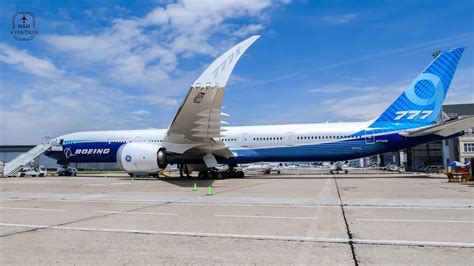
Boeing 777X: Positioned to Fill the Jumbo Jet Void
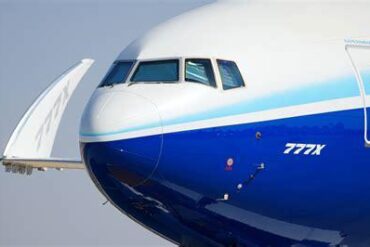
The Boeing 777X is more than a new aircraft — it represents the bridge between two aviation eras. With the gradual retirement of the Boeing 747 and the market exit of the Airbus A380, airlines are seeking a high-capacity, fuel-efficient, long-haul aircraft. The 777-9, the flagship variant of the 777X family, directly responds to this need. Offering up to 426 seats, it is currently the highest-capacity twin-engine aircraft in development. Its primary competition, the Airbus A350-1000, accommodates only up to 376 passengers, marking a significant edge in seating capacity.
Hale emphasized that the 777X is “uniquely positioned in a changing widebody landscape,” particularly for carriers seeking fleet renewal without the massive overheads of four-engine aircraft. “We’re building something that meets tomorrow’s demand,” he explained, underscoring Boeing’s faith in the aircraft’s future market relevance.
A Decade of Delays, Now With Renewed Confidence
Originally intended for entry into service in 2020, the 777X program has been plagued by regulatory hurdles, engineering setbacks, and supply chain disruptions. The timeline has been continuously pushed, prompting skepticism across the industry. Emirates, the largest customer of the 777X program with 205 orders, has been notably critical, suggesting 2027 as the more realistic delivery window.
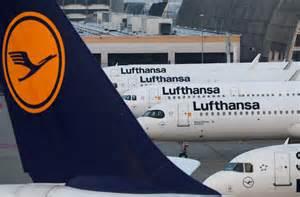
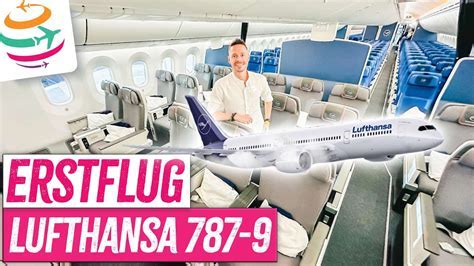
However, Hale clarified the nuance. Emirates is not the launch customer and has strategically chosen a later delivery position. “Lufthansa is our inaugural operator,” he noted. “When Emirates mentions 2027, it reflects their place in the queue — not the aircraft’s actual availability.”
Boeing maintains regular contact with all customers through biweekly calls and one-on-one sessions to share progress updates and address certification concerns. Hale’s statements reflect not just optimism, but active engagement with airlines across the globe.
A Three-Variant Strategy for a Changing Market
The Boeing 777X family includes three variants:
- 777-8 (smaller passenger version)
- 777-9 (larger passenger version)
- 777-8F (freighter variant)
The first to enter service will be the 777-9, followed by the 777-8F in 2028. The 777-8 has not yet been given a firm timeline but is expected to follow shortly after the freighter variant.
Currently, 551 orders are on the books for the 777X across 14 global airlines, with the largest commitments coming from:
- Emirates: 205 aircraft (170 777-9, 35 777-8)
- Qatar Airways: 124 aircraft (90 777-9, 34 777-8F)
- Singapore Airlines: 31 777-9s
- Lufthansa: 27 aircraft (20 777-9, 7 777-8F)
- British Airways, Cathay Pacific, and Korean Air also feature prominently on the list.
These orders underscore the industry’s long-term faith in the aircraft, even as short-term delays challenge operator planning cycles.
Overcoming Engineering Hurdles: The Thrust Link Breakthrough
One of the more significant recent milestones in the 777X program was the resolution of thrust link cracking issues. Boeing engineers discovered that the original engine thrust links — components that transmit engine thrust loads to the fuselage — exhibited cracking due to vibratory responses. These findings led to a temporary halt in flight testing, pushing back certification.
The fix involved a complete redesign of the thrust links, with Boeing affirming that the new components will not suffer from the same vibration-related failures. This progress represents a major step toward FAA and EASA certification, both of which have become more rigorous in the post-737 MAX regulatory climate.
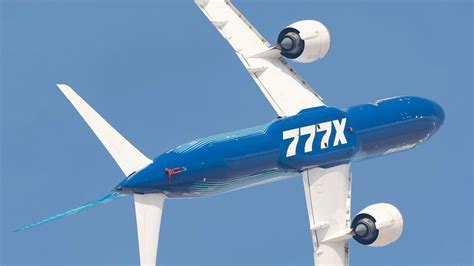
With this issue now behind them, Boeing is ramping up test flights, system checks, and simulation modeling to meet compliance standards.
Lufthansa First in Line, Eager for Modernization
Lufthansa, as the launch operator, is expected to take delivery of the first 777-9s. The German carrier has ordered 20 777-9s and seven 777-8Fs, aiming to replace aging long-haul aircraft like the 747-400 and older A340s. Boeing confirmed in an early 2025 earnings call that Lufthansa will be the inaugural recipient of the aircraft.
The 777X promises not just increased fuel efficiency, but also superior cabin comfort. Lufthansa is betting on the aircraft’s advanced design and fuel savings to enhance profitability on its transatlantic and Asian routes.
Emirates, Qatar, and Asia-Pacific Players Still Committed
Despite Emirates’ vocal skepticism, the airline remains the single largest backer of the 777X. Its massive fleet plans are centered around the aircraft, especially as it begins to retire its older Boeing 777-300ERs. Emirates President Tim Clark has historically been candid about program delays, but even he continues to affirm the plane’s necessity in the airline’s future fleet.
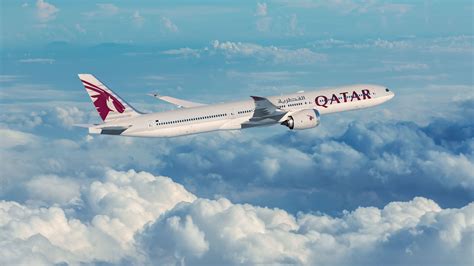
Qatar Airways, meanwhile, has signed on for a balanced fleet mix of both passenger and freighter versions, aligning with the airline’s aggressive cargo expansion. The 777-8F, in particular, is expected to play a crucial role in the Middle East’s freight market, competing with the 747-8F and future Airbus A350 freighters.
In Asia, Singapore Airlines, Cathay Pacific, and All Nippon Airways have shown faith in the aircraft’s value proposition, even as their delivery windows stretch toward 2027 and beyond.
Time Pressure Mounts As Airlines Extend Aging Fleets
Every year of delay adds cost and operational strain on carriers who must extend the life of aging jets. Airlines that planned to retire older 777s, 747s, or A340s now face increasing maintenance costs, potential downtime risks, and lower fuel efficiency. The 777X’s delay forces them to either defer fleet renewals or reassign capacity — an expensive compromise in the post-COVID recovery period.
Cathay Pacific, for example, has pushed its 777X deliveries to 2027 or later, delaying the debut of its new first-class suite. These deferrals impact everything from premium service rollout to route planning.
What’s Next: Certification and Delivery Race
As Boeing inches closer to certification, it is entering a high-stakes phase. The company must maintain its current engineering pace, avoid further testing interruptions, and ensure regulatory bodies are fully aligned with its updates. The FAA, EASA, and other authorities have all increased scrutiny post-MAX, making the certification pathway slower but more transparent.
With the thrust link redesign implemented, Boeing’s next steps involve:
- Completing an accelerated flight testing program
- Delivering final data packages to regulators
- Finalizing customer-specific interior installations
- Scaling up production to meet backlog demand
The market is watching closely, and the pressure is immense. Still, Boeing’s tone at the Paris Air Show suggests cautious optimism rather than blind assurance.
Final Outlook: A Crucial 2026 Ahead
The Boeing 777X may be late to the gate, but it hasn’t missed its flight entirely. With over 550 orders in hand and a firm commitment to certification milestones, 2026 appears poised to be the aircraft’s long-awaited breakthrough. Airlines are ready. Engineers are ready. All that remains is for Boeing to deliver on its confidence.
In the race to define the next generation of widebody aviation, the 777X remains Boeing’s strongest card — one it must now play with precision and execution.