The modern aviation industry runs on a quiet equation: range, efficiency, and demand density. Whenever those three variables align, airlines gain the freedom to open new routes and redesign global networks. Few aircraft embody this balance better than the Boeing 787 Dreamliner, a jet that has moved from a troubled development program into one of the most strategically important aircraft in commercial aviation.
In recent years, Boeing’s 787 production has rebounded sharply, reversing a pandemic-era slowdown and positioning the Dreamliner once again at the center of the global widebody market. The recovery has not happened by accident. It reflects a convergence of rising airline demand, strategic manufacturing investments, and the growing economic value of fuel-efficient long-haul aircraft.
Air travel has surged far faster than many analysts expected after COVID-19. Airlines that once deferred widebody orders suddenly face a different problem: not enough aircraft to handle expanding international traffic. This imbalance between supply and demand has created the conditions for Boeing to restart and accelerate Dreamliner production.
The Strategic Role Of The Boeing 787 In Modern Airline Networks
The Boeing 787 Dreamliner occupies a unique niche in global aviation. It was designed to replace aging Boeing 767 aircraft while enabling airlines to operate routes that previously lacked sufficient passenger demand for larger widebody jets.
Traditional long-haul aircraft relied on the hub-and-spoke model, where passengers were funneled through large airports before continuing to international destinations. The Dreamliner introduced a powerful alternative: point-to-point long-haul travel. Airlines could connect smaller cities directly, bypassing congested hubs and creating entirely new markets.
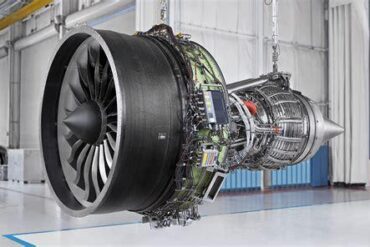
Technologically, the aircraft was a leap forward. The Dreamliner became the first commercial jet with a fuselage constructed largely from carbon-fiber reinforced composites, dramatically reducing weight and improving corrosion resistance. The aircraft also introduced an advanced electric architecture, replacing many hydraulic and pneumatic systems with electrically driven alternatives. Combined with next-generation engines such as the GE GEnx and Rolls-Royce Trent 1000, these innovations allowed the 787 to deliver fuel savings of roughly 20–25 percent compared with earlier widebodies.
Three variants allow airlines to tailor the aircraft to different market conditions:
- 787-8 for ultra-long, low-density routes
- 787-9, the best-selling variant and a versatile long-haul workhorse
- 787-10, a higher-capacity model optimized for shorter intercontinental flights
This flexible family structure has made the Dreamliner particularly attractive for fleet renewal strategies, especially as airlines seek to cut emissions and reduce operating costs.
From Ambitious Vision To Industrial Reality
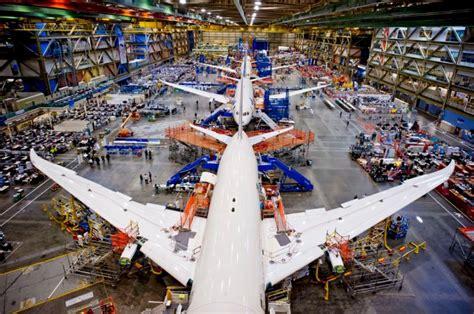
The Dreamliner program began with extraordinary ambition. When Boeing launched the project in the early 2000s, executives envisioned a revolutionary aircraft produced through a globally distributed supply chain. Major structural sections—from wings to fuselage barrels—would be built by international partners and flown to final assembly lines for integration.
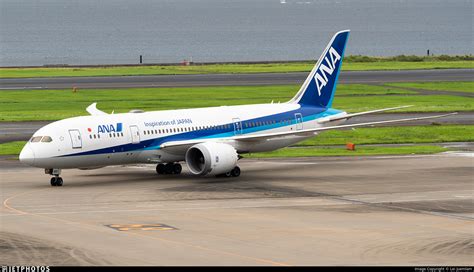
The concept promised efficiency but introduced massive complexity. Development delays quickly followed, and the first 787 did not enter service until 2011 with All Nippon Airways (ANA), several years later than originally planned. Costs ballooned, and the program became one of the most expensive aircraft development efforts in aviation history.
Technical challenges continued after entry into service. In 2013, lithium-ion battery failures triggered a global grounding of the fleet, forcing Boeing to redesign containment systems and restore regulatory confidence.
Yet industrial learning gradually improved the program. Manufacturing processes stabilized, suppliers refined composite fabrication techniques, and assembly efficiency increased. By 2018 and 2019, Boeing had reached a production peak of 14 aircraft per month, transforming the Dreamliner into one of the most productive widebody programs in history.
Then the pandemic struck.
Pandemic Disruption And The Production Reset
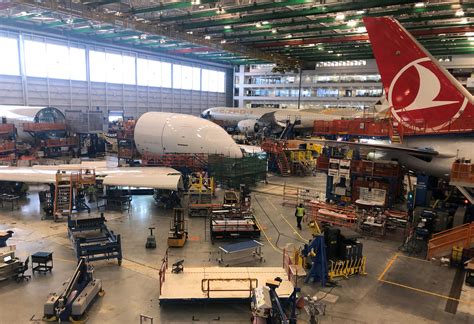
COVID-19 created an unprecedented shock to aviation. International travel collapsed almost overnight, and airlines postponed or canceled aircraft deliveries worldwide. Boeing responded by cutting Dreamliner production sharply and consolidating assembly operations at its North Charleston facility in South Carolina.
At the same time, new quality inspections revealed manufacturing inconsistencies in certain fuselage sections. Deliveries slowed dramatically while Boeing implemented corrective actions and strengthened oversight processes.
Production fell to a fraction of its previous output. In 2021, only a handful of Dreamliners were delivered, marking one of the lowest points in the program’s history.
The slowdown forced Boeing to rethink how the aircraft would be produced going forward. Instead of simply restoring previous rates, the company began planning a phased industrial rebuild, focusing on quality improvements, supplier stability, and long-term capacity expansion.
That strategy is now paying off.
North Charleston Expansion Powers The Production Comeback
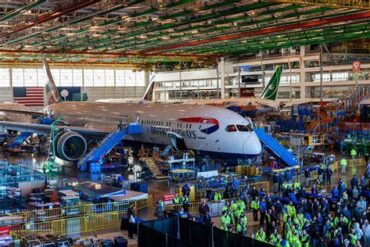
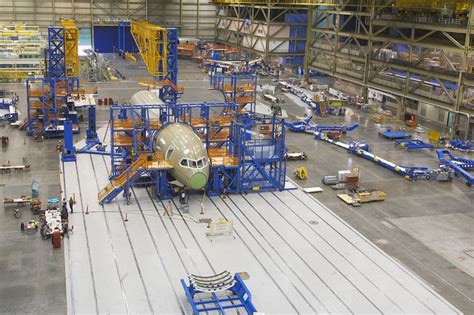
The center of the Dreamliner’s resurgence is Boeing’s North Charleston manufacturing complex. The company has invested roughly $1 billion to expand the facility and duplicate key assembly capabilities.
This investment allows Boeing to gradually increase production without overwhelming the supply chain. Early in 2025, output reached approximately five aircraft per month, and by mid-year the rate stabilized around seven aircraft monthly.
The next milestone is approaching quickly. Boeing aims to push production to ten Dreamliners per month by 2026, provided the Charleston expansion proceeds smoothly and regulatory oversight remains satisfied with quality metrics.
Longer-term ambitions are even more striking. Internal planning scenarios envision output rising toward 16 aircraft per month by the end of the decade, a level originally contemplated during the program’s early development years.
If achieved, that rate would make the Dreamliner the primary widebody production engine of Boeing’s commercial division.
A Massive Backlog Driving Production Pressure
Behind the production ramp sits a powerful economic force: overwhelming demand. Boeing currently holds a backlog of more than 1,100 unfilled 787 orders, and delivery slots are already sold out several years into the future.
This backlog reflects a structural shortage of modern widebody aircraft. Airlines around the world are simultaneously replacing aging fleets while expanding long-haul capacity to meet growing passenger demand.
The Dreamliner fits perfectly into that environment. Its operating economics allow airlines to open routes that would otherwise remain unprofitable with larger aircraft.
Several major orders illustrate the aircraft’s continuing appeal:
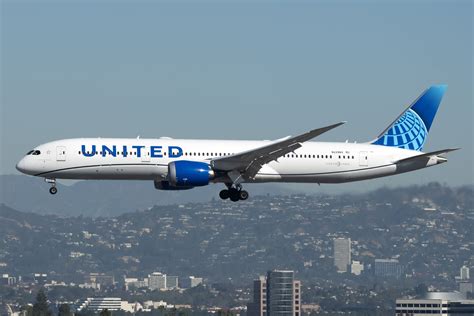
- United Airlines ordered 100 Dreamliners in 2022 and added 50 more 787-9 aircraft in 2023.
- Air India included 20 Dreamliners in its sweeping fleet renewal plan.
- British Airways committed to dozens of high-capacity 787-10 aircraft.
- Qatar Airways placed a large triple-digit order that further expanded Boeing’s backlog.
These commitments demonstrate how airlines increasingly view the 787 as the foundation of long-haul fleet planning.
Why Airlines Prefer The 787 Over Competing Widebodies
The Dreamliner’s strongest competitor in the mid-size widebody category is the Airbus A330neo. Both aircraft target similar markets, but the 787 maintains several structural advantages that have helped sustain demand.
First is fuel efficiency. The composite structure and advanced aerodynamics allow the Dreamliner to burn significantly less fuel per seat than older widebodies. In an industry where fuel can represent 30 percent or more of operating costs, this advantage translates directly into profitability.
Second is range capability. The 787-9 in particular offers the ability to connect city pairs separated by more than 7,500 nautical miles, opening routes that were once impractical.
Third is passenger experience, an increasingly important differentiator for airlines. The Dreamliner’s higher cabin humidity, lower pressurization altitude, larger windows, and smoother ride characteristics contribute to a noticeably improved long-haul travel environment.
Taken together, these advantages make the aircraft especially valuable as airlines modernize fleets and pursue carbon-reduction goals.
Risks That Could Slow Boeing’s Production Ramp
Industrial comebacks rarely proceed in a straight line. Boeing’s Dreamliner expansion faces several obstacles that could complicate the production ramp over the next several years.
One persistent vulnerability lies in the global aerospace supply chain. The 787 relies on highly specialized components ranging from composite structures to avionics systems, seating assemblies, and advanced electronics. Even minor delays in any of these components can ripple through the production process.
Engine availability also represents a critical variable. The Dreamliner depends on two powerplant families: the General Electric GEnx and the Rolls-Royce Trent 1000. If engine deliveries slow, aircraft completion rates inevitably fall.
Regulatory oversight adds another layer of complexity. Following recent safety incidents across the aviation sector, the Federal Aviation Administration (FAA) has maintained strict scrutiny over Boeing’s manufacturing processes. Production increases will likely remain contingent on consistently strong quality metrics.
Material availability presents additional uncertainty. Aerospace manufacturing depends heavily on titanium, aluminum alloys, and specialized composite materials. Supply disruptions—whether caused by geopolitical tensions, trade policies, or mining constraints—can rapidly affect production timelines.
Why Faster Deliveries Matter So Much To Boeing
For Boeing, increasing Dreamliner output is not simply about delivering airplanes. It is fundamentally about cash flow.
Commercial aircraft programs operate on a financial model where airlines pay most of the aircraft’s price at the moment of delivery. That means each completed aircraft immediately converts years of development and manufacturing work into revenue.
Accelerating 787 deliveries therefore improves Boeing’s financial performance in several ways simultaneously. Higher production spreads fixed manufacturing costs across more aircraft, reducing unit costs and improving profit margins. A larger production rate also increases Boeing’s bargaining power with suppliers, enabling better pricing for components and materials.
Just as importantly, reliable delivery schedules strengthen relationships with airline customers. Carriers planning long-haul expansions need confidence that aircraft will arrive on time. When production delays stretch too far into the future, airlines may shift orders to competing manufacturers simply to secure earlier capacity.
The Dreamliner’s Central Role In Boeing’s Future
The strategic importance of the 787 has grown even greater because of challenges facing Boeing’s other aircraft programs. The 737 MAX continues to operate under heightened regulatory oversight, while the long-delayed 777X has yet to enter commercial service and now faces potential delivery timelines extending toward 2027.
Against that backdrop, the Dreamliner stands as Boeing’s most stable and commercially successful widebody platform.
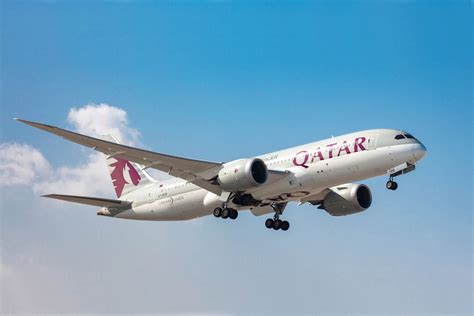
With more than 2,300 total orders and over 1,250 deliveries, the aircraft has already reshaped the economics of long-haul travel. If Boeing successfully scales production toward double-digit monthly output, the Dreamliner could dominate the mid-size widebody segment for the next decade.
The Bottom Line: A Program Reborn Through Demand And Discipline
The resurgence of Boeing’s 787 production illustrates how aviation programs can evolve over time. What began as an ambitious, troubled project has matured into one of the most strategically valuable aircraft in the global airline fleet.
Demand for efficient long-haul aircraft is surging, and airlines are rapidly replacing older widebodies with modern designs that reduce fuel burn and emissions. In this environment, the Dreamliner’s combination of range, efficiency, and flexibility gives it a unique advantage.
Boeing’s challenge now lies in executing the next phase of industrial growth. Expanding the North Charleston facility, stabilizing supply chains, and maintaining rigorous quality standards will determine whether the company can achieve its long-term goal of 16 aircraft per month.
If that ramp-up succeeds, the Boeing 787 Dreamliner will not merely represent a recovered program. It will stand as the core engine of Boeing’s widebody business, driving deliveries, strengthening cash flow, and shaping the future architecture of international air travel.