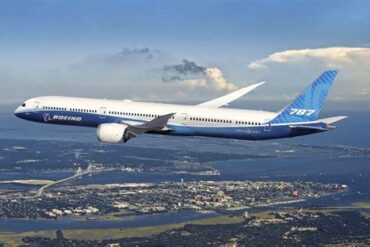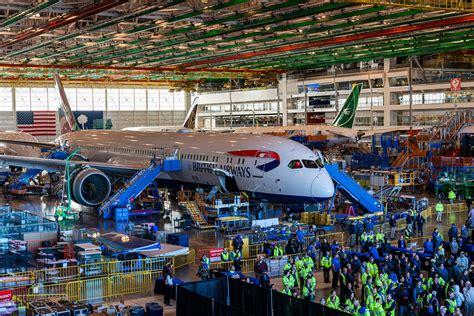
Boeing is preparing a significant operational shift that will further anchor the 787 Dreamliner program in South Carolina, relocating hundreds of engineering roles from Washington state as production momentum builds. The move marks another step in the aerospace manufacturer’s long-running strategy to centralize Dreamliner activity at its North Charleston site, aligning engineering, manufacturing, and final assembly under a single geographic umbrella.
Roughly 300 engineering and technical positions are expected to transition, according to industry reporting, though key details—including the transfer timeline and whether layoffs will occur—remain unresolved. The decision arrives as Boeing pushes to elevate 787 output rates, responding to sustained global demand and a deep order backlog that continues to position the widebody jet as a cornerstone of long-haul fleet renewal strategies.
For Washington’s aerospace ecosystem, the announcement lands uneasily. The region remains Boeing’s largest workforce hub, employing more than 65,000 people, yet it has already experienced a measurable contraction, including a reported 4% workforce decline last year. The relocation of specialized engineering talent introduces fresh uncertainty into an already shifting industrial landscape.
Production Strategy Drives Geographic Consolidation
Boeing’s logic is rooted in industrial efficiency. By concentrating engineering support alongside final assembly operations, the company can streamline troubleshooting, accelerate design feedback loops, and reduce logistical friction between factory floor realities and engineering solutions.
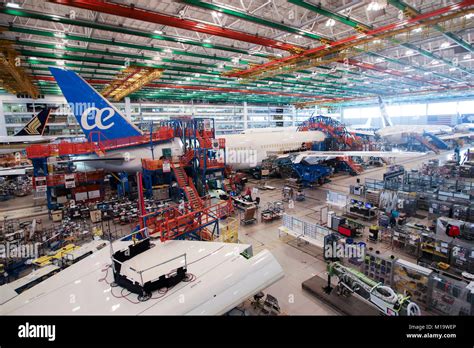
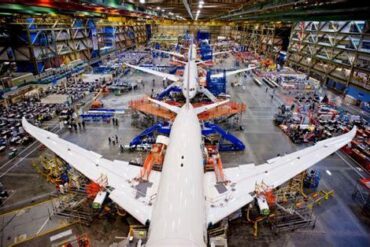
North Charleston has been the sole final assembly site for the 787 since Boeing ended Dreamliner production in Everett years ago. Now, with engineering functions following production southward, the facility evolves from a manufacturing center into a fully integrated program headquarters.
The consolidation coincides with Boeing’s plan to raise output to ten aircraft per month in the near term. Co-locating engineers with production teams is expected to support quality oversight, certification processes, and manufacturing optimization as build rates climb.
$1 Billion Expansion Signals Long-Term Commitment
Physical infrastructure is expanding in parallel with workforce realignment. Boeing recently broke ground on a $1 billion expansion of the South Carolina campus—effectively constructing a second final assembly building designed to mirror the capabilities of the existing plant.
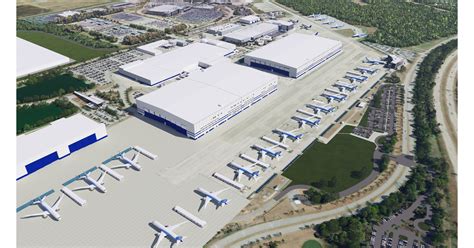
Once operational, the twin-facility configuration will dramatically increase throughput. The current plant can produce up to eight Dreamliners monthly; the expanded complex is projected to scale output to as many as 16 aircraft per month over time. Boeing ultimately aims to restore production levels comparable to the program’s pre-pandemic peak, when output reached 14 jets monthly across two assembly locations.
The expansion is also an economic development engine. State and local projections suggest the project could generate around 1,000 permanent jobs in South Carolina within five years, spanning manufacturing, engineering, and program support roles.
Union Backlash and Labor Tensions Intensify
Labor representatives in Washington reacted swiftly—and sharply. The Society of Professional Engineering Employees in Aerospace (SPEEA), representing thousands of Boeing engineers, stated the decision came with little warning.
Union leaders argue they were told only days earlier that no major workforce changes were expected in the “foreseeable future.” The abrupt reversal has fueled distrust ahead of critical contract negotiations scheduled for later this year.
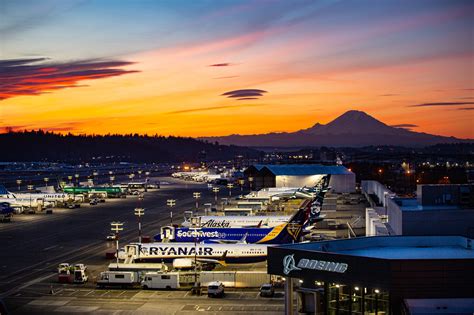
Beyond job displacement concerns, SPEEA has highlighted the broader strategic implication: transferring work from a heavily unionized state to a right-to-work, non-union environment. Labor advocates fear the shift could dilute collective bargaining leverage over time, particularly with SPEEA contracts set to expire in October 2026.
Despite the friction, Boeing has indicated it will hire additional engineers in Washington to support 737 program production, partially offsetting the Dreamliner transition. Whether that mitigation satisfies workforce concerns remains uncertain.
Demand Tailwinds Strengthen the Business Case
Industrial restructuring rarely happens in a vacuum. Boeing’s aggressive production ramp is underwritten by robust airline demand for fuel-efficient, long-range widebodies.
The 787 family maintains a substantial order backlog, bolstered by high-profile commitments from major global carriers. Recent deals include Delta Air Lines ordering up to 60 787-10s and Turkish Airlines committing to as many as 75 aircraft—agreements that reinforce long-term production visibility.
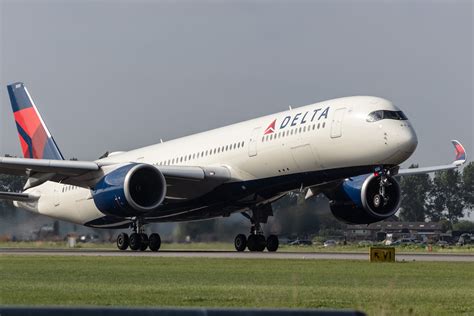
Airlines are drawn to the Dreamliner’s composite airframe, lower fuel burn, and long-thin route economics—capabilities that allow profitable service between secondary city pairs without relying on mega-hub traffic density. As international travel demand stabilizes and expands, these operational advantages become strategically valuable.
Industrial Realignment Reflects a New Boeing Playbook
The engineering relocation reflects more than a staffing shuffle; it illustrates Boeing’s evolving manufacturing philosophy. Centralization, vertical integration, and geographic specialization are increasingly defining how the company structures major programs.
By embedding engineering directly within production ecosystems, Boeing aims to reduce program risk, improve build consistency, and accelerate innovation cycles. For the 787—an aircraft whose early years were marked by supply chain complexity and production challenges—such proximity offers both symbolic and practical reassurance.
The tension between operational efficiency and regional workforce stability will not dissipate quickly. Yet from Boeing’s vantage point, aligning engineering talent with its expanding South Carolina industrial base is less a tactical adjustment than a structural commitment to the Dreamliner’s next production era—one measured not just in aircraft per month, but in how tightly design and manufacturing can move as a single organism.