Definitions
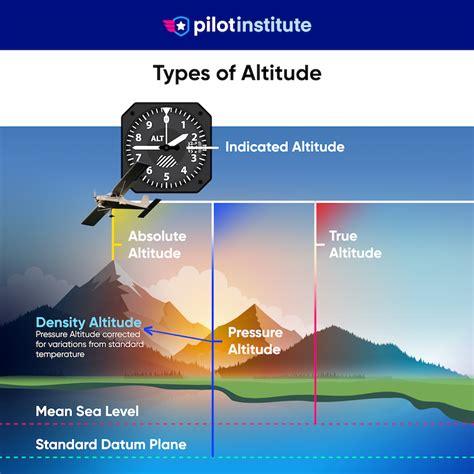
Transition Altitude: This is the altitude at or below which an aircraft’s vertical position is controlled using altitudes.
Transition Level: This refers to the lowest flight level available for use above the transition altitude.
Transition Layer: This is the airspace situated between the transition altitude and the transition level. (Source: ICAO, e.g., Doc 4444: PANS-ATM & Doc 8168: PANS-OPS).
North America
In the United States and Canada, the transition altitude is set at 18,000 feet. The airspace above this altitude is known as the Standard Pressure Region. When the QNH is at or above 1013 mb, FL180 becomes the lowest usable flight level. If the pressure is lower, the lowest usable flight level changes to FL190 or even FL200. This rule ensures that there is a minimum vertical separation of 1,000 feet between an aircraft at 17,000 feet on QNH and one at the lowest usable level in the Standard Pressure Setting.
When it comes to changing barometric pressure settings, all adjustments must occur in the standard pressure region (above 18,000 feet). The change should take place just after entering or right before leaving this area. In practice, pilots will switch to standard pressure (1013.2 hPa) as they climb through 18,000 feet. If cleared to FL180, making an early change is wise. During descent, even if cleared to an altitude after vacating the cruising level, altimeters stay on standard pressure until just before reaching the transition level.
It’s important to remember that the transition level ‘floats’ based on the atmospheric pressure at sea level (QNH). The lower the QNH, the higher the transition level. If the QNH is low and pilots delay changing the altimeter subscale until nearing FL180, a level bust could occur. Both primary altimeters should be adjusted simultaneously. In many modern aircraft, failing to do so can lead to an altimeter mismatch error. Depending on company standard operating procedures (SOP), the standby altimeter may also be adjusted at the transition altitude/level or at the top of climb/descent.
Europe
In Europe and much of the world, the transition altitude differs from airport to airport. It is a fixed value published in airport documentation, approach plates, and AIPs. The transition level will float with the QNH, representing the lowest assignable level (pressure altitude) that guarantees minimum vertical separation from an aircraft at the highest assignable altitude using local QNH.
The normal procedure for setting barometric pressure differs from that in North America. When climbing and cleared to a flight level, pilots should set the standard pressure (1013 mb). When descending and cleared to an altitude, they should set QNH. This adjustment is made regardless of the altitude relative to the TL/TA at that moment. The only exception occurs when the cleared vertical profile (SID or STAR) has a specific altitude crossing restriction, such as crossing DVR at FL160 or BRI at 4,000 feet. In such cases, the altimeter must remain on the appropriate reference until the restriction is met.
As before, both primary altimeters are changed at the same time. Changing the subscale of the standby instrument follows company SOP. According to ICAO Doc 7030 (EUR Region), effective March 7, 2015, the transition level must be located at least 300 meters (1,000 feet) above the transition altitude to allow both to be used concurrently during cruising flight, ensuring vertical separation. In the UK, this procedure has been applicable since May 25, 2017.