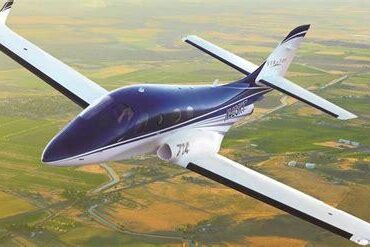
Overview of Very Light Jets (VLJs) and Entry Level Jets (ELJs)
Very Light Jets, often called Entry Level Jets in the USA, refer to small jet aircraft designed for single-pilot operation. These jets typically seat fewer than 10 passengers and have a maximum take-off mass of under 4,500 kg. Their popularity has surged among owner-operators and in air taxi services. VLJs are lighter than traditional business jets, with the Cessna Citation Mustang being a well-known example.
Pilot Workload in VLJ/ELJ Operations
The introduction of these complex single-pilot aircraft has led to studies focused on pilot workload and human factors involved in their operation. NASA researchers conducted exploratory studies to analyze pilot performance in busy airspace scenarios using a level 5 flight simulator. They also investigated how automation can assist or complicate single-pilot operations. The findings revealed that advanced cockpit technology does not always reduce workload during flights. In fact, high workload situations can overwhelm a pilot’s cognitive abilities, leading to navigation and control errors.
Best Practices for Operational Safety
The studies highlighted several best practices that could enhance safety in VLJ/ELJ operations, including:
-
Automation: Utilizing autopilot significantly decreases the workload for pilots in busy environments.
-
General Operation: Engaging in quiet “self-talk” can help pilots process ATC instructions and prepare for upcoming flight phases.
-
Speed Control: When leveling off, placing a hand on thrust levers can increase awareness of speed changes. For smooth transitions when climbing, start with vertical speed mode before switching to flight level change mode as you approach the desired speed.
-
Altitude Management: Vocalizing altitude milestones, such as “one to go,” helps maintain focus on reaching target altitudes. After receiving new altitude clearances, promptly input the altitude into the flight management system (FMS) to minimize errors.
-
Workload Management: Prioritize quick tasks, like adjusting the radio frequency, before tackling more complex ones, such as route changes. If additional time is needed for programming the FMS, requesting temporary radar vectors can be a valid strategy.
-
Positional Awareness: Utilize maps and approach charts on the multifunction display (MFD) to keep track of aircraft position.
-
Flight Path Control: Select new radar headings even while still receiving clearance from ATC.
-
Contingency Planning: Before takeoff, program the instrument approach frequency into an unused navigation radio to ease workload in case of an immediate return after departure.
Notable Examples of VLJs
Some well-known examples of Very Light Jets include:
-
Eclipse 400
-
Eclipse 500
-
Embraer Phenom 100
-
Cessna Citation Mustang