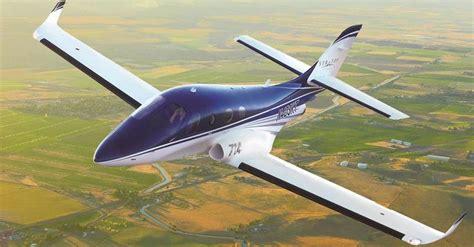
The Stratos 714 is not just another entry in the burgeoning very light jet (VLJ) market—it is a bold engineering statement. Designed to merge turbine performance, carbon composite strength, and aerodynamic finesse, this American-made jet aims to offer unprecedented performance and comfort for personal and business aviation. Developed by Stratos Aircraft, based in Redmond, Oregon, the 714 has gone from a concept born in 2008 to a proof-of-concept aircraft that has logged hundreds of flight hours.
Although still under development and not yet certified, the Stratos 714—and its evolved sibling, the 716X—promises a disruptive blend of speed, range, and efficiency in the VLJ sector.
Origins of the Stratos 714: An Ambitious Vision
The Stratos 714 was envisioned as a very light personal jet that outperforms existing four-seat aircraft in terms of both speed and range. Spearheaded by Carsten Sundin, an aeronautical engineer with experience at Lancair and Epic Aircraft, and CEO Michael Lemaire, the Stratos team brought deep knowledge in composite aircraft and performance design.
Their primary goal was to carve a new niche: a single-engine VLJ capable of cruising at 400 knots (740 km/h) and flying up to 1,500 nautical miles (2,800 km)—while keeping operational efficiency at the forefront.
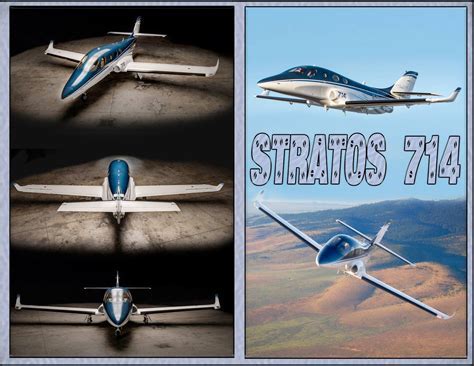
This ambition placed the 714 ahead of competitors like the Cirrus SF50 Vision Jet or the Eclipse 550, which either sacrifice performance for comfort or vice versa. The Stratos 714’s proof-of-concept aircraft first flew on November 21, 2016, marking a significant milestone in its journey toward certification.
Design Philosophy: Lightweight Composites Meet High-Speed Aerodynamics
At the heart of the Stratos 714’s promise lies a commitment to advanced composite construction, aerodynamic efficiency, and high-thrust propulsion.
The airframe is built primarily from Toray pre-preg carbon composites layered over Nomex honeycomb structures. This not only enhances strength-to-weight ratio but also improves fatigue resistance and corrosion tolerance. The engine is mounted in-line with the aircraft’s center of mass, avoiding the thrust-pitch coupling often found in single-jet designs.
Key Aerodynamic Features:
- Supercritical wing airfoil with 14–16.5% thickness ratio
- 198 sq ft wing area with double-slotted flaps
- Maintains laminar flow on 50–55% of the upper surface
- Engine intakes mounted above fuselage, outside the boundary layer
- Cruciform tail and retractable tricycle landing gear
- Winglets for improved stability and efficiency at high altitudes
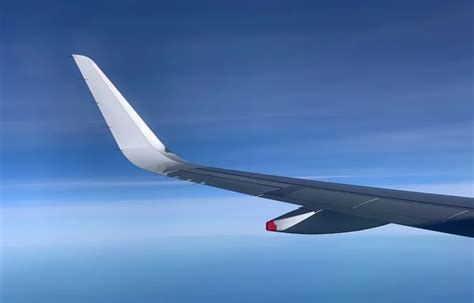
Such design elements allow the Stratos 714 to reach FL410 (41,000 ft) while maintaining a comfortable cabin pressure altitude of 8,000 ft, thanks to its 8.33 psi pressurization system. This altitude ceiling, typically seen in larger jets, enables faster and more fuel-efficient cruising.
Performance Metrics: Outpacing the Competition
The Stratos 714 isn’t just a promising design on paper. Its flight test data reflects a jet capable of competing with much larger and costlier aircraft.
Core Performance Stats:
- Max Speed: 402 knots (744 km/h)
- Cruise Speed: 320 knots (590 km/h)
- Range: 1,500 nmi (2,800 km)
- Takeoff Distance: 2,090 ft (637 m)
- Landing Distance: 1,510 ft (460 m)
- Fuel Consumption: 1.16 lb/mi (0.33 kg/km)
- Service Ceiling: 41,000 ft
This fuel efficiency surpasses many aging twinjets in the secondary market, while delivering greater dispatch reliability and modern avionics. The jet is powered by the Pratt & Whitney JT15D-5 turbofan in the prototype, but production versions will feature the PW535E, offering 22–27% more high-altitude thrust and improved TSFC (Thrust Specific Fuel Consumption).
Evolution to the 716X: More Room, Greater Ambition
As test flights revealed the strengths and limitations of the 714, Stratos Aircraft introduced the Stratos 716X—a stretched variant designed to seat six adults with luggage comfortably.
Unveiled at EAA AirVenture in 2018, the 716X features a 31-inch fuselage extension and a 2-inch cabin width increase, maintaining the original aircraft’s aerodynamic pedigree while improving space and payload.

It uses the same airframe design and carbon composite methodology but is optimized for the Pratt & Whitney Canada PW535, delivering 3,400 lbf of thrust. The aircraft made its first flight on July 2, 2020, marking the beginning of its dedicated flight test program.
Key 716X enhancements include:
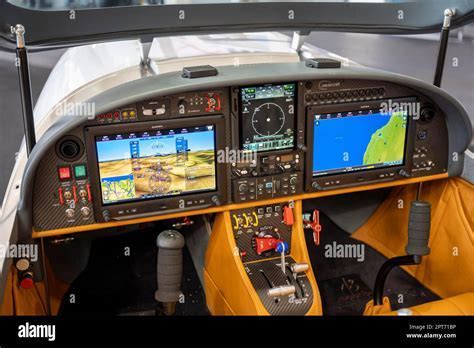
- Garmin G3000/G5000 avionics suite
- Larger, pressurized cabin
- Projected range of over 1,200 nmi
- Projected cruise speed close to 400 knots
This aircraft is initially being offered as a kit—similar to the Epic LT—for amateur construction. Each kit is expected to take 2,500 hours to assemble, with three kits per year planned until full certification and production.
Development and Certification Challenges
Despite its promise, the Stratos 714 faces a steep road to full FAA type certification. As of 2025, the aircraft remains uncertified, with funding constraints slowing progress.
Stratos initially estimated that type certification would require $100–150 million, but this number could balloon to $200–300 million, especially when integrating avionics systems, redundant flight controls, and full-scale production tooling.
To bridge the funding gap, Stratos has entertained the idea of interim kit sales and private investment rounds, avoiding risky speculative deposit models. No pre-orders or deposits are being accepted until the aircraft achieves a more concrete certification timeline.
Comparative Market Position: Cirrus SF50 vs. Stratos 714
The Stratos 714 is often compared with the Cirrus Vision Jet SF50, which currently dominates the single-engine VLJ space. However, significant differences separate the two.
| Feature | Stratos 714 | Cirrus SF50 Vision Jet |
|---|---|---|
| Cruise Speed | 400 knots | 311 knots |
| Range | 1,500 nmi | 1,200 nmi |
| Ceiling | 41,000 ft | 28,000 ft |
| Avionics | Garmin G3000 (planned) | Garmin Perspective Touch |
| Engine | PW535E | Williams FJ33-5A |
| Price Estimate | $3.0–3.5 million | ~$2.98 million |
While the Vision Jet boasts safety features like the Cirrus Airframe Parachute System (CAPS), the Stratos 714 delivers true jet speeds and higher altitude cruise, making it more suitable for long-range, time-critical business or owner-operator flights.
Outlook and Market Viability
The Stratos 714 and 716X occupy a unique intersection between high-performance VLJs and more traditional twinjets. With speeds and altitudes akin to legacy Cessna Citations and fuel consumption comparable to turboprops, the aircraft stands to be a category disruptor—provided certification can be completed and production scaled.
The VLJ segment is growing, with customers seeking faster, more efficient alternatives to turboprops and mid-size jets. The Stratos jets—particularly if priced competitively at $3–3.5 million—could attract a substantial share of that demand.
Conclusion: A Bold Entry with Aerospace Potential
The Stratos 714 exemplifies American aerospace ingenuity, mixing composite technology, efficient turbofan performance, and an aerodynamic platform designed for the next generation of private jet owners. Despite delays in certification and capital limitations, its design integrity, performance figures, and future expansion via the 716X reflect a product that could significantly shift the dynamics of the VLJ marketplace.
With ongoing testing, strategic partnerships, and steady investor backing, the Stratos 714 may soon soar from an ambitious prototype into a fully certified production aircraft, offering buyers an unrivaled blend of speed, efficiency, and next-gen technology.
FAQs
Q1: What is the current status of the Stratos 714 certification?
As of now, the Stratos 714 remains uncertified. The company has completed hundreds of hours of flight testing but requires significant investment—estimated between $150–300 million—for full FAA type certification.
Q2: How does the 714 compare to other VLJs like the Cirrus SF50?
The Stratos 714 offers significantly higher cruise speeds (400+ knots), a higher operating ceiling (FL410), and longer range than the SF50. However, it lacks the CAPS parachute and currently has no certified version available.
Q3: When will the Stratos 716X be available for buyers?
The 716X is currently offered as a kit aircraft, with production of certified versions projected in the next few years, pending continued flight testing and additional funding.
Q4: Is the Stratos 714 suitable for owner-operators?
Yes. The aircraft is designed with owner-operators in mind, offering a side-stick control interface, intuitive avionics, and performance tailored for fast personal or business travel.